Title Image

Title Image

About:

This blog is predominately about camera trapping in California. We camera trap to save our souls and to teach primary school students about biology and conservation. We will also touch on other camera trapping news and musings, sets from afar, mediocre herpetology, sucky birding, and other natural history discussions.

Monday, October 15, 2012

Dart Frog Mate Choice

I first saw a paper on Dart Frog mating choice being discussed in a blog post journal club. Molecular Ecology.  Might be my favorite topic! F Epigenetics.

The first image in the blog post immediately struck me. It was of an Strawberry Dart Frog, Oophaga pumilio. Note that this frog used to be in the genus Dendrobates, most have accepted to the switch to its own genus Oophaga and I will use that. This one was a deep orange, with minimal small black spots and a nice creamy-white belly. It looked exactly like a small population that occurs on Isle Bastimentos in Panama. But not just on Isla Bastimentos, a population that only occurs on part of the island, a population that I have spent two different trips getting to know. A similar morph also occurs on Isle Solarte, but again is limited in its range on Bastimentos. As you move East and South on Bastimentos the frogs again get redder and have minimal to no spotting, but the creamy white belly gets greener and darker and climbs up from the feet up the legs. I went back and read the caption that stated
"Strawberry dart frog, Dendrobates pumilio, photographed at La Loma Jungle Lodge on Isla Bastimentos, Panama." 
And this was where I got excited. It was the same population I was thinking of. I too saw these guys on the property of La Loma Jungle Lodge. If you go west on the Island the frogs got brighter red and the black spots got much larger, almost like a lady bug. These large spotted frogs can also be yellow, greenish or blue, but always have large black spots. There are different morphs on this single Island, and many other morphs on other islands in the archipelago and on mainland Panama and Costa Rica.

I then realized that I met the senior investigator on this paper at La Loma, three or four years ago. If I remember right she was working through the MVZ at UC Berkeley and was recording calling male dart frogs at La Loma and was also doing some of the work that appears in this paper and a previous one at the Smithsonian Tropical Research Institute Field Station in Bocas. Dr Richards-Zawaki now has her own lab at Tulane University. I was able to talk to Cori when she got in from the field at the lodge. She invited my girlfriend and I out to the Field Station the next day before we took a flight to Panama City. She was kind enough to take over an hour giving us a tour of the station, including research done on coral reefs, birds and her own on dart frogs. She explained her experimental set-up and showed us her pairings on pumilio of different morphs (check Fig 1. in second paper cited below) and how she was testing for color selection in mating type choice and was doing experiments to determine if tadpoles raised by a parent of a different morph (she switched tadpoles and gave them to foster parents) chose mates based on what morph they were or what morph "they were raised as" (my words) ie. the morph of the foster parent.

Now this is where I am going to use this post to shamelessly plug some of my Oophaga pumilio, images taken 3 and 4 years ago at the La Loma Jungle Lodge.  The folks who own and run La Loma, Henry and Maggie, their son Lucho, and their head assistant Mr. Kelly are fantastic people and it is a great place to stay. It is a true Eco Lodge in that has only three cabins, not one of those giant fake Eco Lodges. They do a great job and the food is fantastic. The Maracuya custard is to die for. Oh to be a rich lab tech again. *sigh*

All images of wild frogs.

IMG_2611.JPG


IMG_2582.JPG


Dendrobates Pumilio Bastimentos


IMG_2890.JPG


IMG_2700.JPG


IMG_2607.JPG


IMG_2575.JPG


IMG_2706.JPG


Look for another Oophaga pumilio post in a couple of weeks.

Works Cited:
Richards-Zawacki, C. L., I. J. Wang and K. Summers. 2012. Mate choice and the genetic basis for color variation in a polymorphic dart frog: Inferences from a wild pedigree. Molecular Ecology, 21: 3879-3892.

Richards-Zawacki, C.L. and M. E. Cummings. 2011. Intraspecific reproductive character displacement in a polymorphic poison dart frog, Dendrobates pumilio. Evolution, 65: 259-267.

Santos, J. C., L. A. Coloma, K. Summers, J. P. Caldwell, R. Ree, and D. C. Cannatella. 2009. Amazonian amphibian diversity is primarily derived from late Miocene Andean lineages. PLoS Biol. 7:448–461.


Friday, September 28, 2012

Joining the Aplodontia Club

This post is a long time coming ...

Struck out on the elusive Mt. Beaver two years in a row and on my third season in the Sierras I finally got the little guy. Fairly decent pictures of him too, but I wish more images were in full-frame. Now that I got him I can concentrate on getting the perfect picture next year.

DSC01711
Smile for the camera!

I was so busy right after picking up this cam at the Codger's annual camera trapping workshop that I didn't get around to processing them several months later. The nice part about that though was going back through the images was almost like going through them the first time.

DSC01642
Early afternoon Mt. Beaver. Also looks like he is going through a molt. Not sure what is the new coat and what is the old coat though.
Check out that human-like ear


DSC01685
Early evening Mt. Beaver


DSC01688.crop
NOM NOM NOM.  Look at those claws!
No wonder they are able to build such elaborate tunnel systems.
Cropped image


DSC01643


DSC01687


A few more pictures, because, well why the hell not. Keep going to the bottom of the post for a short discussion on the set.

DSC01712
Great look at the ear


DSC01717
Sniff ... Sniff ... Sniff


DSC01739


DSC01742
Go! Go! Go!
A bit blurry but this guy was hauling down the tunnel right at lunch time
This set took pictures for only 6 days. A following post will discuss the flash-activating battery destroyer.

However, every photo of an Aplodontia was taken during daylight hours which is very surprising to me.  The flash still fired during many of the day photos because the camera was situated in a dense alder thicket that did not have a lot of light.

It took roughly 24 hours to get the first Mt. Beaver shot. A Mt. Beaver then visited the camera every day (+5) until the batteries died.

  • Day 2: 1:45PM and 2:31PM (considered 1 visit)
  • Day 3: 11:03AM
  • Day 4: 4:54PM, 5:16PM and 5:24PM (considered 1 visit)
  • Day 5: 6:32AM and 7:13AM (considered 1 visit)
  • Day 6: 7:11AM and 1:48PM (considered 2 visits)

I think these are likely all the same individual even though the amount of red/brown looks a bit less in some images than in others. I think that might be just an artifact of the camera, but maybe this is more than one critter.

UPDATE:  Per RT's suggestion in the comments another cropped, image.

DSC01739.crop

Tuesday, September 25, 2012

Pelagic Trip Part II

You heard about our first pelagic trip in a post by Christian.

So now some crappier pictures and duller thoughts from me (JK).

I too was really worried about getting seasick. I laid off the beer and bourbon blend the night before, took a dramamine before bed, another when I woke up and one more on the boat at about the 5 hour mark. Went to the store and bought ginger snaps, ginger beer and sunscreen. I failed to use all three and only the lack of sunscreen came back to bite me. Never got sick, never really got close, so that was a huge positive.

MB_pelagic-7399
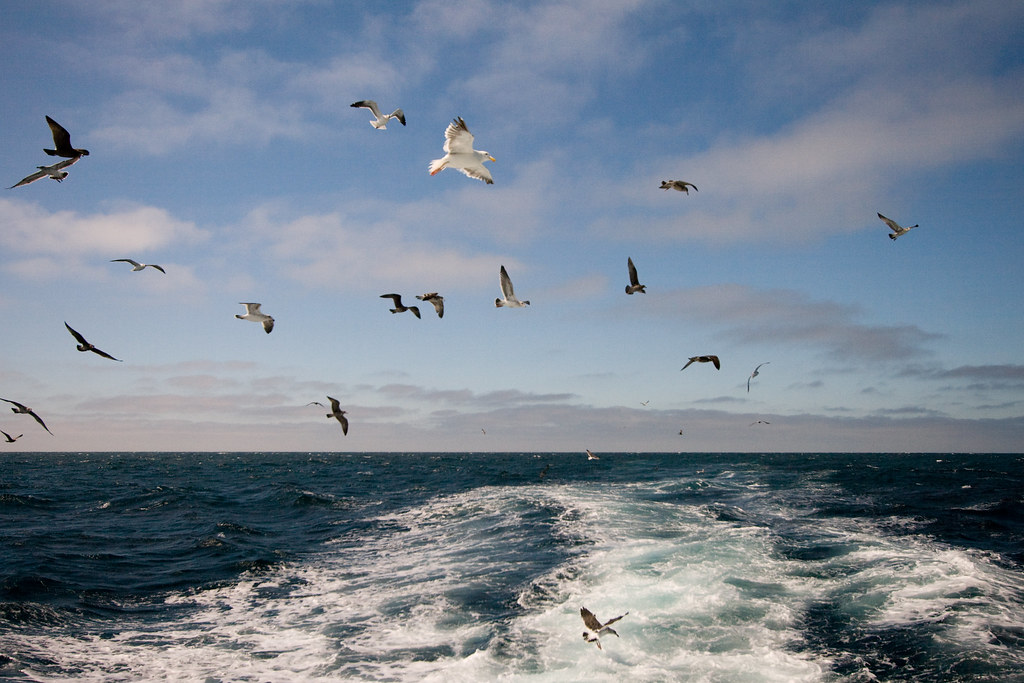
Seas not too rough but a little windy

I meant to rent a nice sharp zoom lens, but put it off until it was too late, so I shot all of these pictures with an unsharp 18-270mm Tamron lens. I like the lens a lot for its versatility when hiking and you only want to carry one lens, but it is a major compromise. My 100mm Canon is quite sharp but I didn't think it would have the reach I needed and outside of the gulls right off the stern wouldn't have done me much good. So non-sharp images it is. Also the higher ISO to get quicker shutter times is probably a contributing factor.

MB_pelagic-7397
Western Gull


MB_pelagic-7407
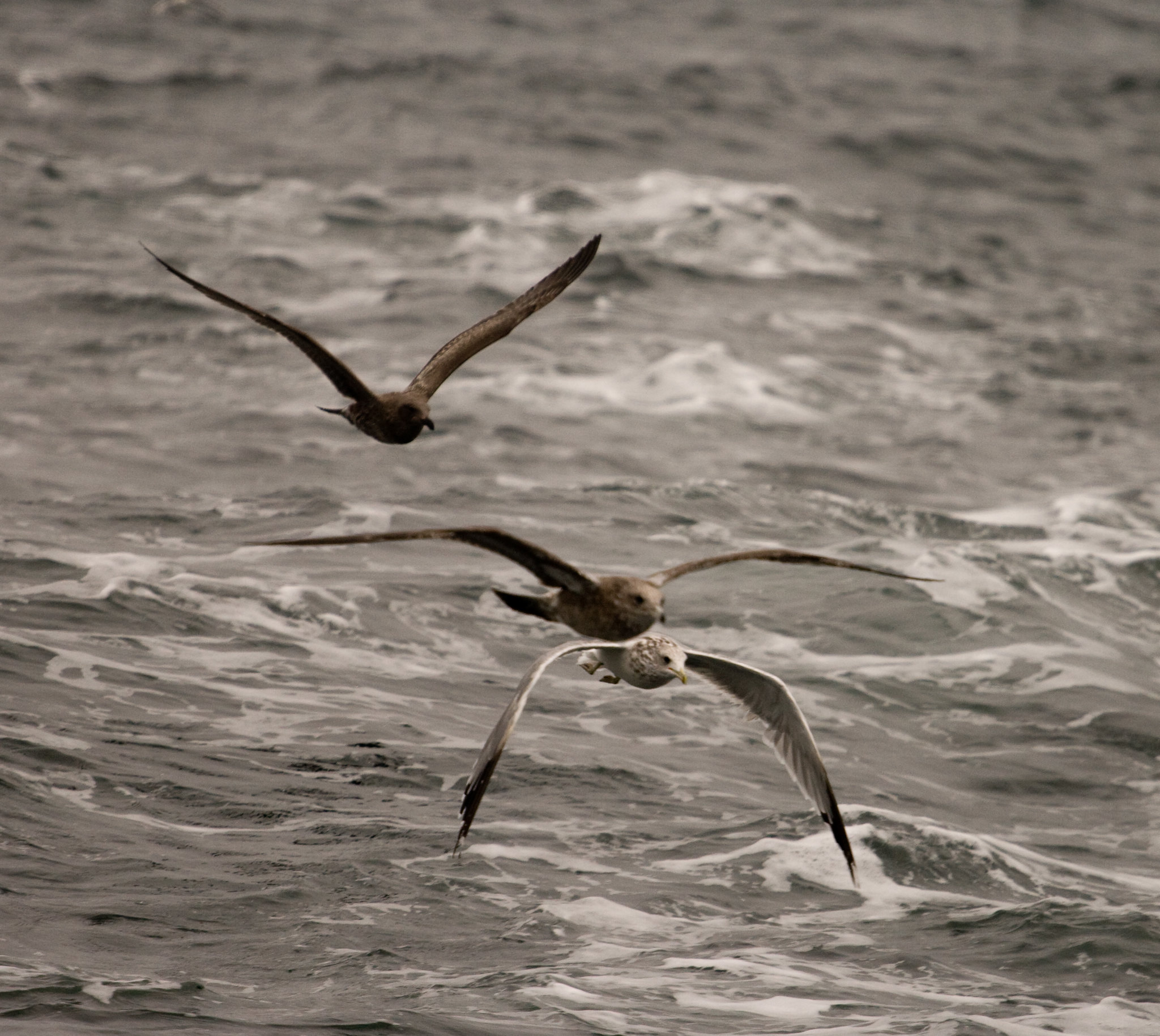
I suck at birding. Not sure if these are Western or California gulls


MB_pelagic-7427
Pomerine Jaeger (lifer)


MB_pelagic-7491
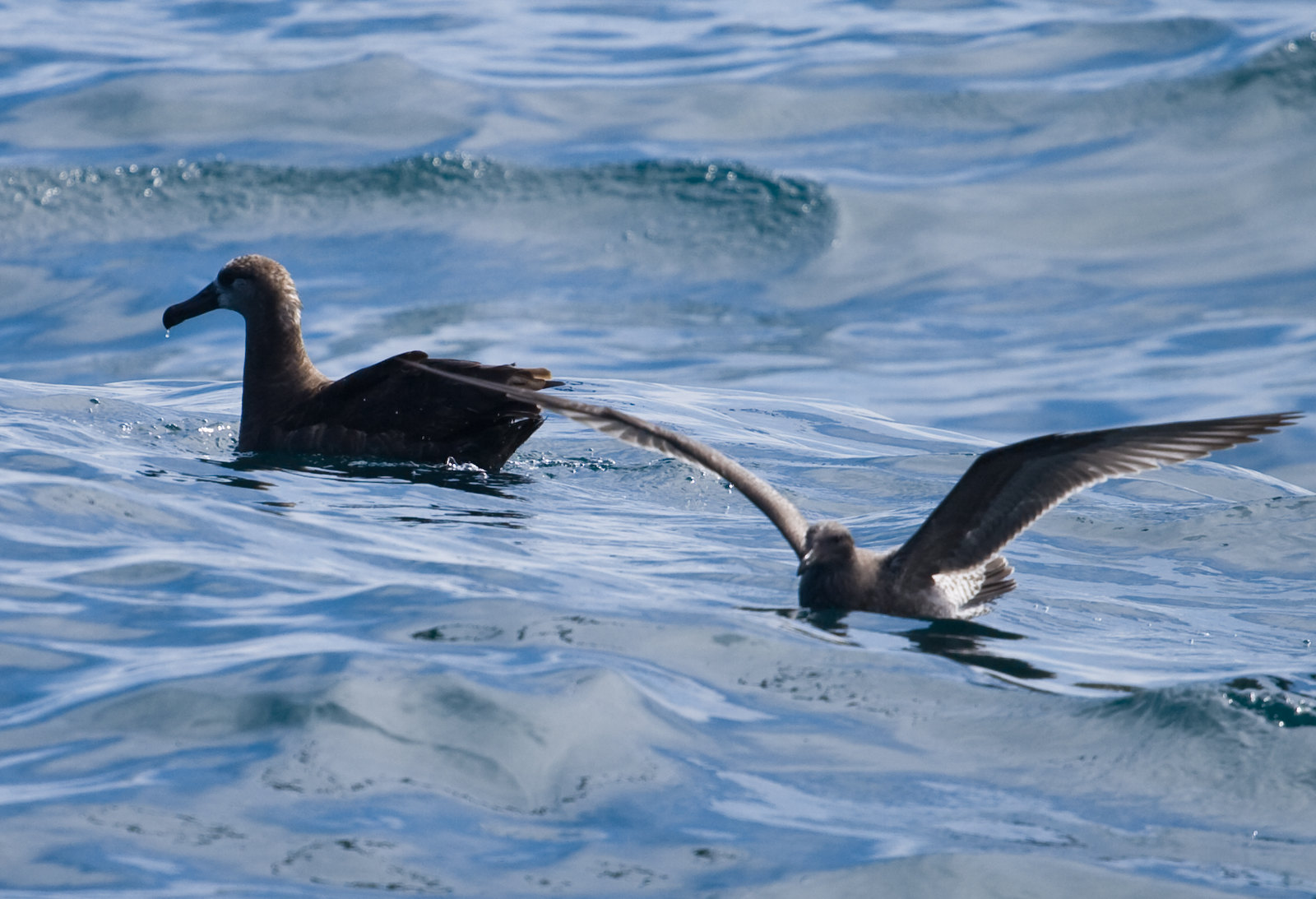
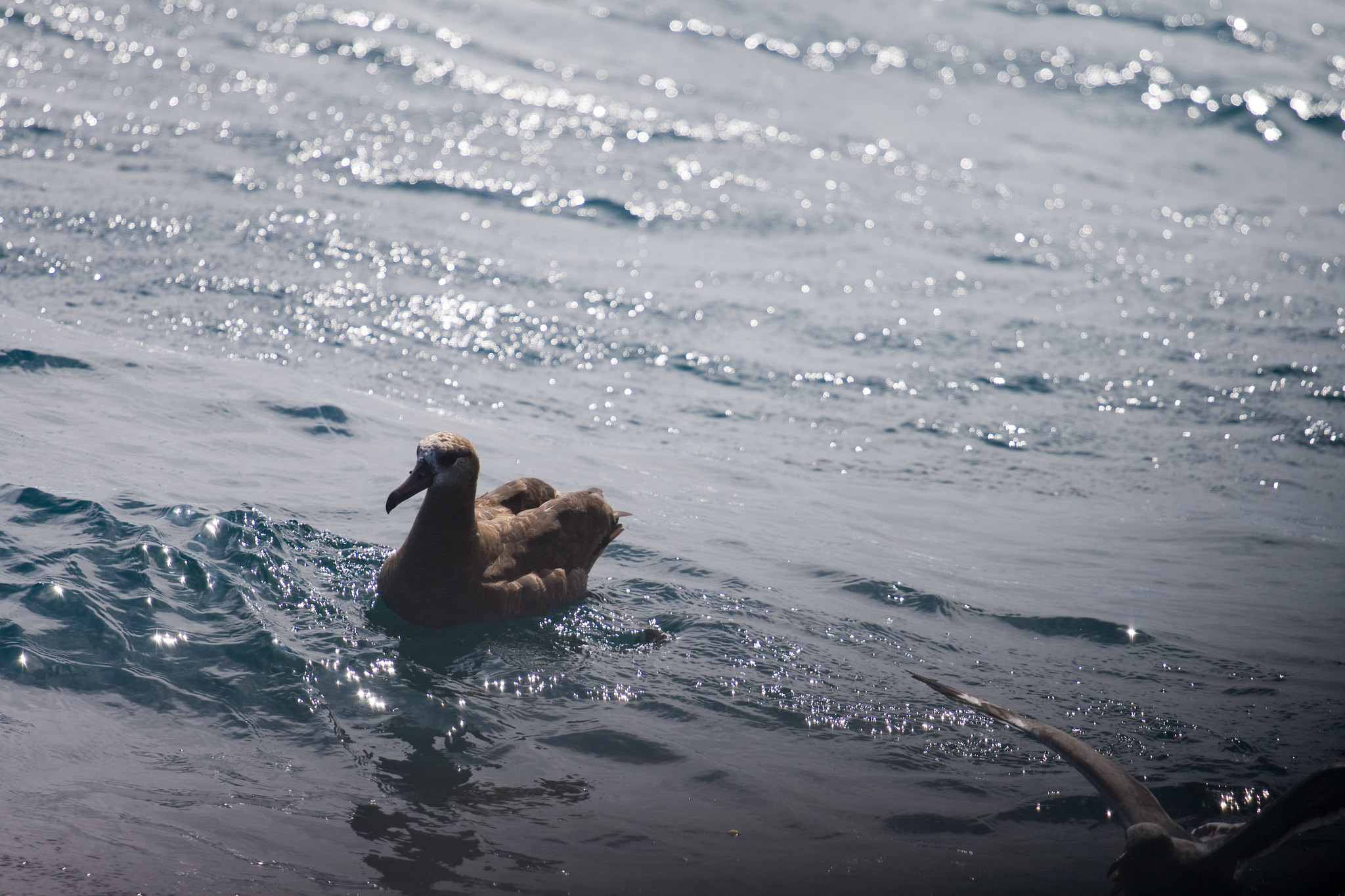
Black-footed Albatross (lifer)


MB_pelagic-7428
Another Pomerine Jaeger


MB_pelagic-7408
Heerman's Gull (lifer according to ebird profile. I am sure I have seen before, but not paid close enough attention too. I tend to ignore gulls, which is a huge detriment to trying to learn more about birds. Would be kind of like a herper just ignoring all Ambystomas, poor form)


MB_pelagic-7414
This Pomerine Jaeger is much more badass than the one's above


MB_pelagic-7418
Pink-footed Shearwater (lifer, no pics of the Buller's Shearwater, also a lifer)


MB_pelagic-7468
More Black-footed Albatross. Totally fell for these gals.
Call Me, Maybe?


MB_pelagic-7462
Western gull(?) not being nice to my Albatross friend

Additional photos on Flickr in the Pelagic Set.

Want to also thank Seagull Steve and his pals, Christian (a different one than CTC Christian) and Amy, for their good company and most importantly putting up with our novice questions. Nice, wittier than all hell, sarcastic and a little vulgar. Couldn't ask for anything more in company on a long day. They all even decided a day of pelagic birding was not enough and that they needed to go find a first county record the next morning. Steve will have to return to the birder rankings as that might be enough to move up to #6 in the U.S. of A. Seagull Steve is promising photos from the trip soon and they will blow mine out of the water so check his blog often.

Good Birding!

Thursday, September 20, 2012

This Birding Life: Pelagic Trip


It might have been mentioned here before, but we suck at birding.

Yet, we keep coming back to it and diving in deeper than before.

The latest excursion: a pelagic trip out of Monterey with Alvaro of Alvaro's Adventures.

guys, these guys look serious

 The expectations were mixed. Obviously with the first time out on the ocean, some sweet life birds were going to be seen.

BLACK-FOOTED ALBATROSS

BLACK-FOOTED ALBATROSS
The stereotype of birders loomed over: socially-awkward weirdos lacking the fun gene carrying around a zoom lens akin to a shoulder cannon. Now, a couple of those terms have been lobbed in my direction at times, so maybe a weirdo should respect a different weirdo?

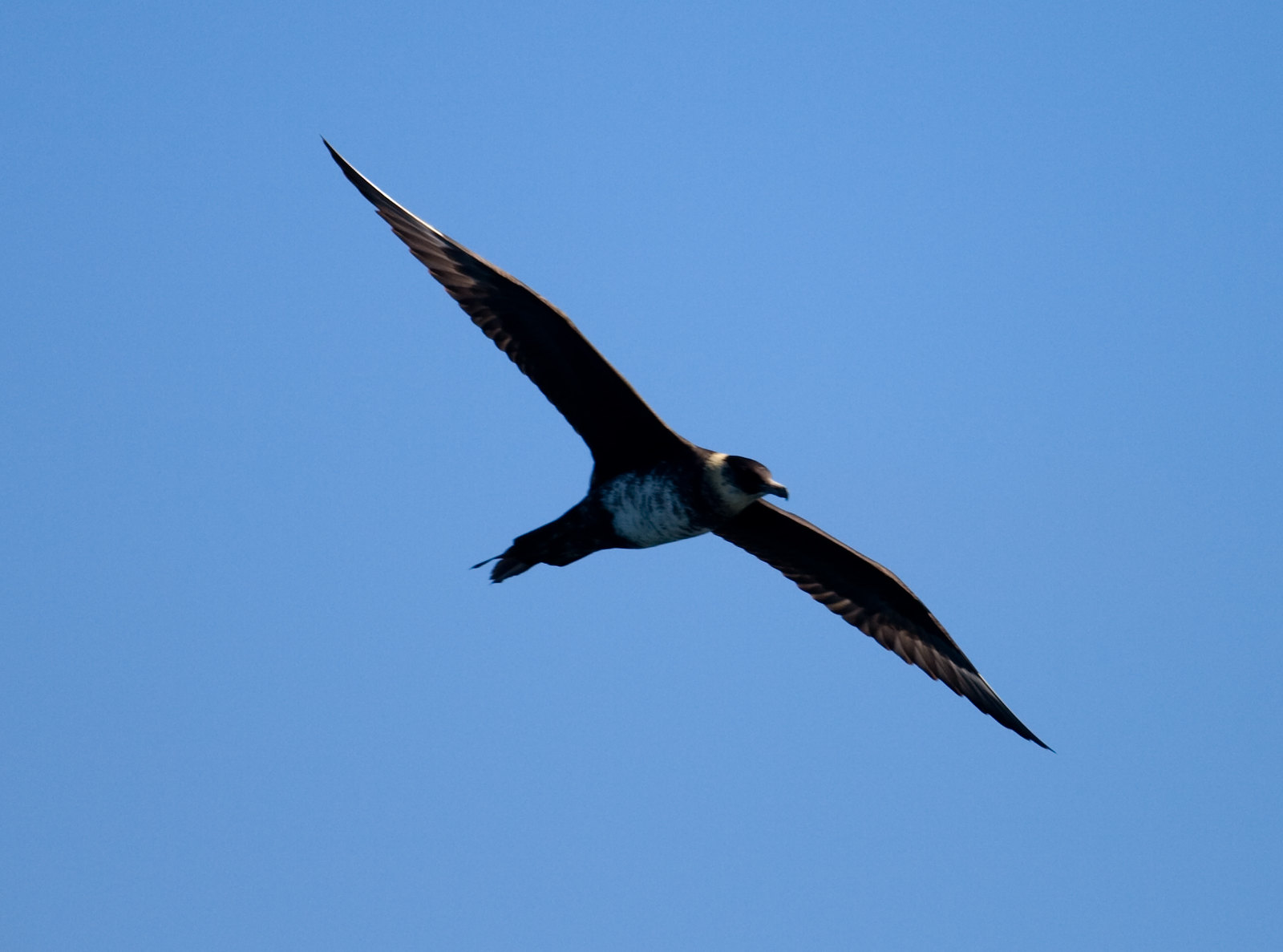
POMARINE JAEGER


POMARINE JAEGER. I'LL GO THIS WAY.
Additionally,  the intimidation factor of being in the presence of the number seven birder in the nation !

ELEGANT TERN

Really, I was worried about losing it over the side. I haven't truly been out on the ocean since a disastrous deep sea fishing trip as a young brat on vacation in Hawai'i, where the vomit was flying.


But all was good this time and I maintained focus like a ninja, for there was a great prize to observe.
No, not the Great Skua, immortalized in song by the mighty British Sea Power,


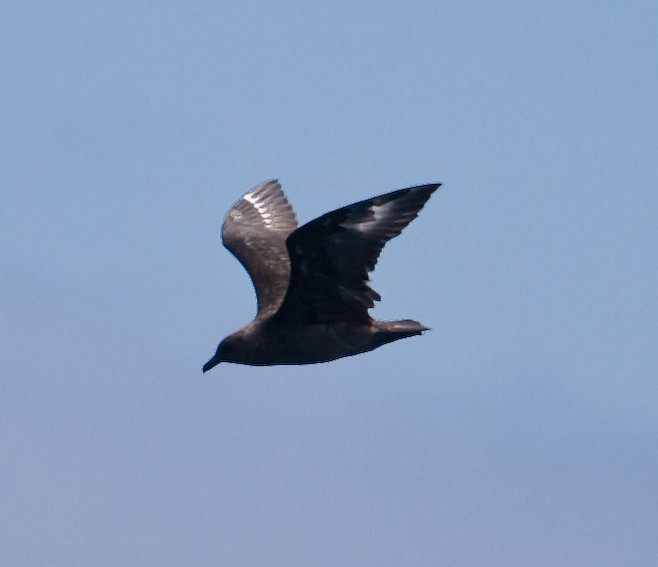
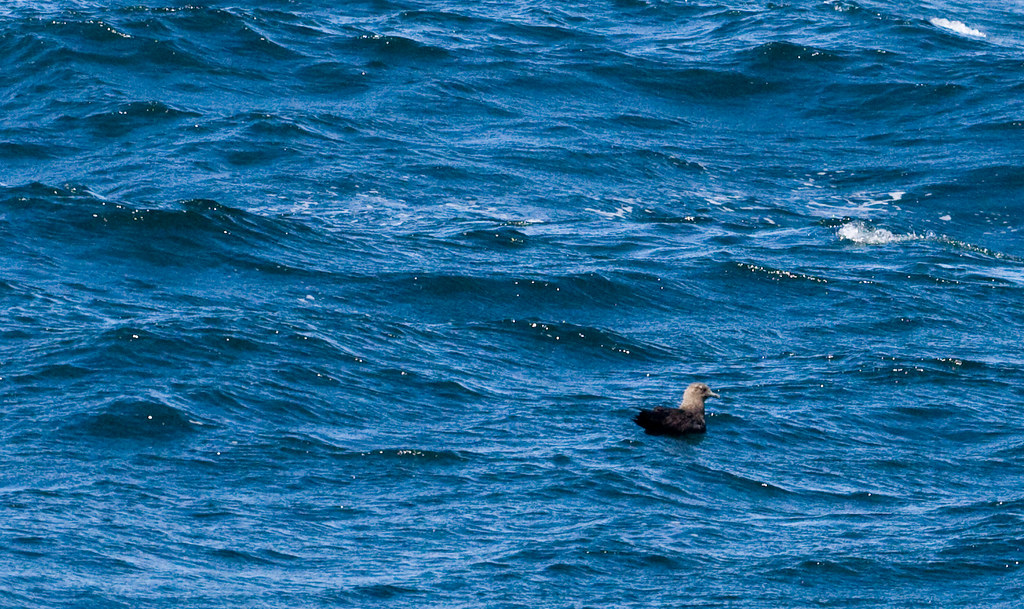
on the Pacific we are treated to the SOUTH POLAR SKUA


 Yeah, I didn't get great photos, but still amazing to see at this distance -- we actually had about 7 total observations! Another pelagic trip on the bay spotted not a one Skua.

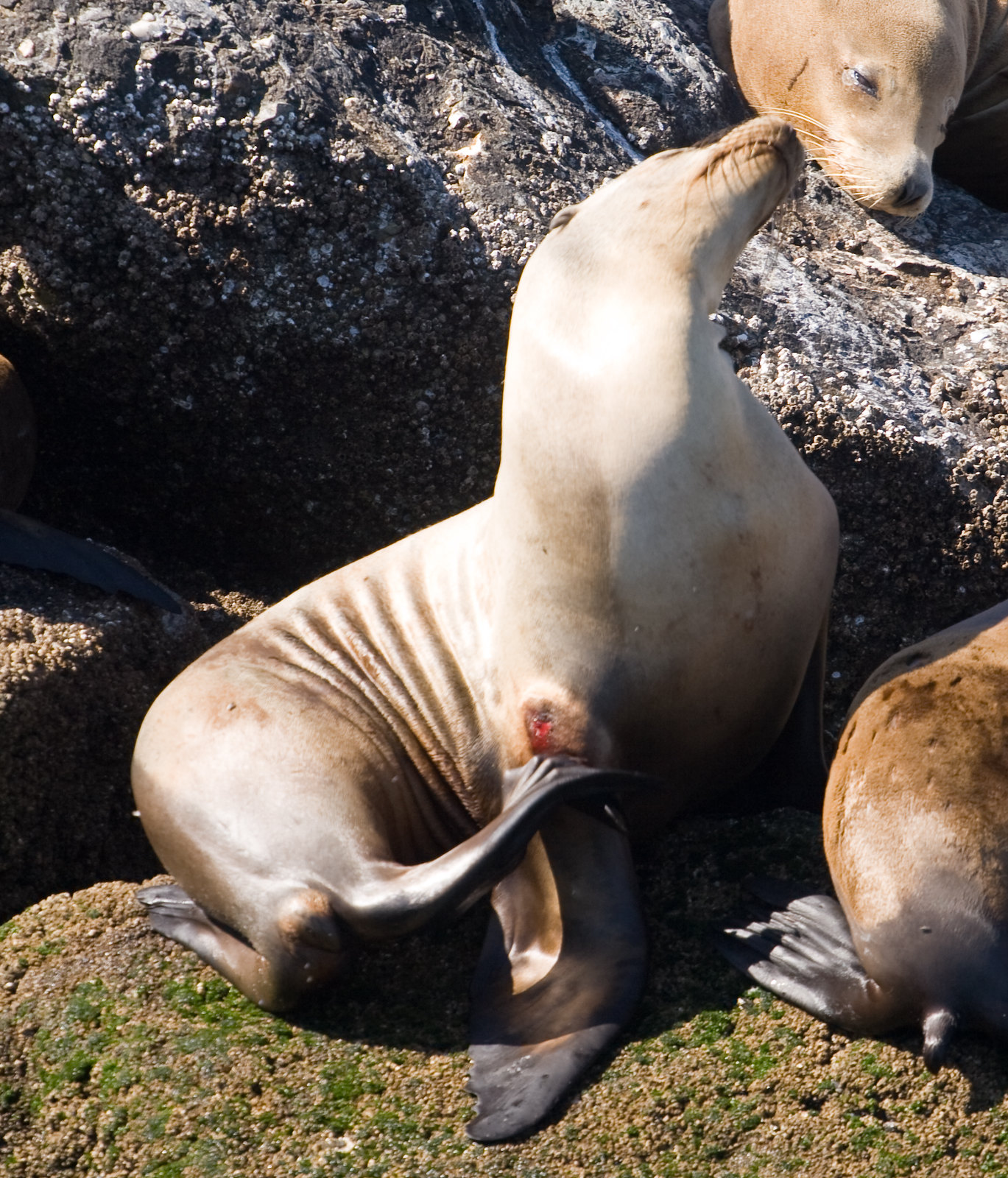
 The trip ended with some clowns lounging about.

NEIGHBORHOOD SQUABBLE

small wound on this sea lion

Overall a pretty great trip -- everyone aboard was helpful, friendly and there were no mentions of jizz (though the hilarity of a jizz drop might have been pretty incredible?).

And despite some slow moments, a great selection of birds were on display and now one of my students thinks I am a god because I have seen an albatross.

Jake's thoughts next!
Good Birding !