Title Image

Title Image

About:

This blog is predominately about camera trapping in California. We camera trap to save our souls and to teach primary school students about biology and conservation. We will also touch on other camera trapping news and musings, sets from afar, mediocre herpetology, sucky birding, and other natural history discussions.
Showing posts with label herping. Show all posts

Tuesday, May 8, 2018

24 hours in Pt. Reyes

I met up with Ken to head up to Pt. Reyes to meet up with some UC Berkeley folks for 1 day of adventure in and around Pt. Reyes National Seashore. We planned to do a little small mammal camera trapping, birding, herping, and mammaling(?).

Since this is supposed to be a camera trapping blog I will start with a few pictures from an old barn where the targets were mice and small carnivores. In one night the only guy to show up was a Peromyscus maniculatus, Deer mouse. Handsome fellow. The scat on a board we found didn't seem to entice anyone.


On the mammal front, on a lead from Christian (a different one) we staked out a structure within Pt. Reyes at sunset trying to grab a few pictures of a gray fox in the after sunset fading light. Considering the photography conditions I'll take this photo 8.5 times out of 10.
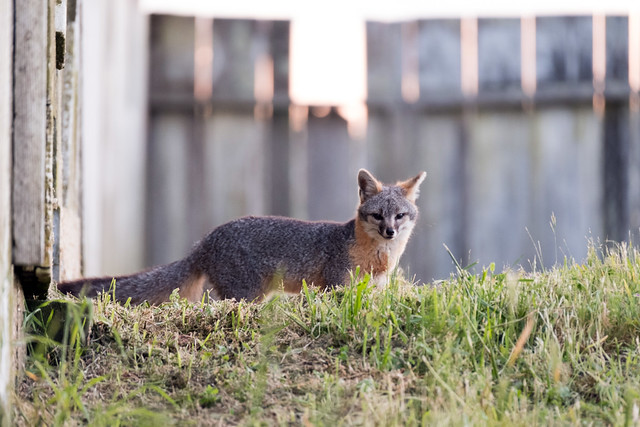
PtReyes-1276

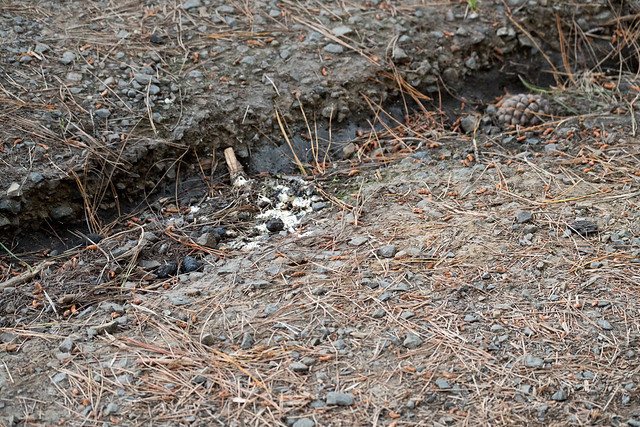
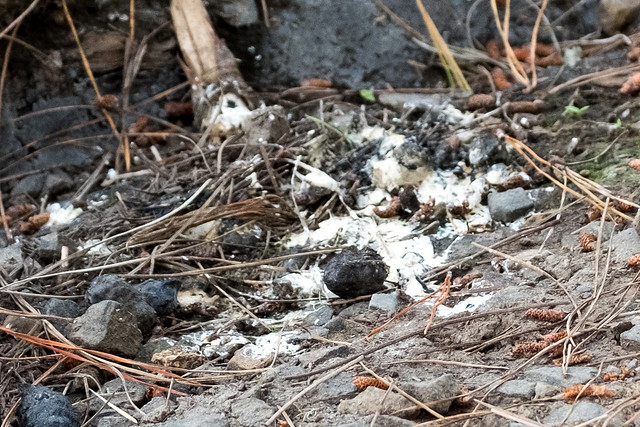
The benefit of hiking with a herper is that we are looking down a lot. It means we can miss a lot of birds because they tend to be up, but in this case it allowed us to find this little owl. I first noticed the large amount of whitewash on the trail, which made me look up into the darkness of a tree overhanging the trail and see a little ball of puff 10-12 feet off of the ground. Again the photography conditions were brutal (This was the catalyst that pushed me over the edge to buying a monopod currently in route).

!!!LIFER ALERT!!!

A Northern Saw-whet owl. If I am being honest with you, we mis-ID'ed this one in the field though. We thought it was a Pygmy Owl until looking at the photos at home (and adjusting the exposure a bit). It just seemed so small IRL. Does it still count after being misidentified in the field? We'll have to ask the birding rules committee. Either species would have been a (non-heard-only) lifer so real-time excitement was not diminished.
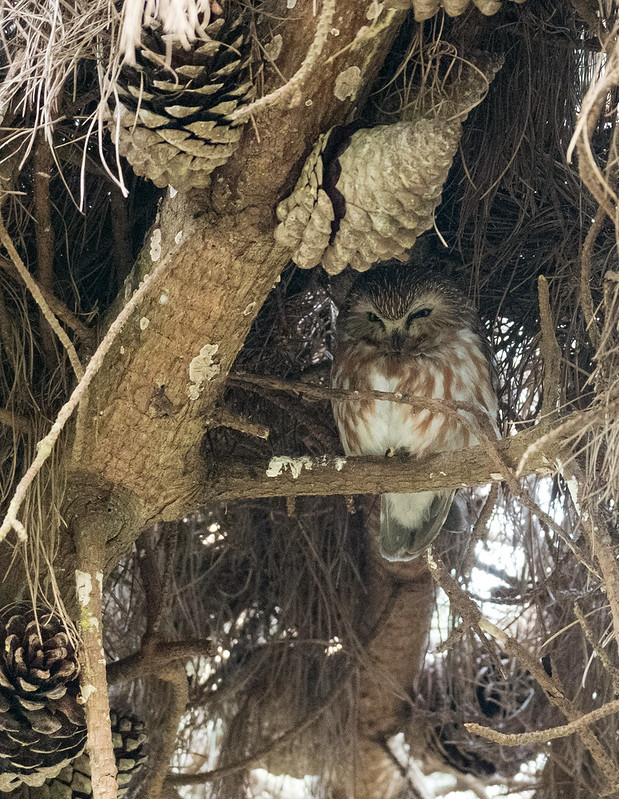
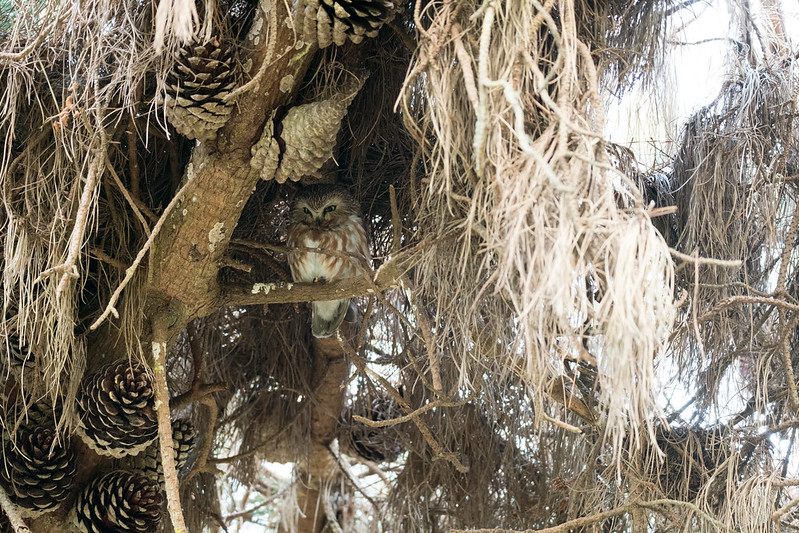
PtReyes-1253

PtReyes-1241

PtReyes-1249

Zoom in on that mess.

PtReyes-1249_crop

Don't forget to look down sometimes and then back up when you see a whitewash.

On CTC's secondary brand - the herping - it was amazing. We found ~25 snakes and I had two of the best cover boards of my life. But before those we saw a couple of Thamnophis elegans garter snakes on a short hike including one sad DOR youngster. I still don't have a macro lens for my newish camera so herp photos are limited and taken on my phone.

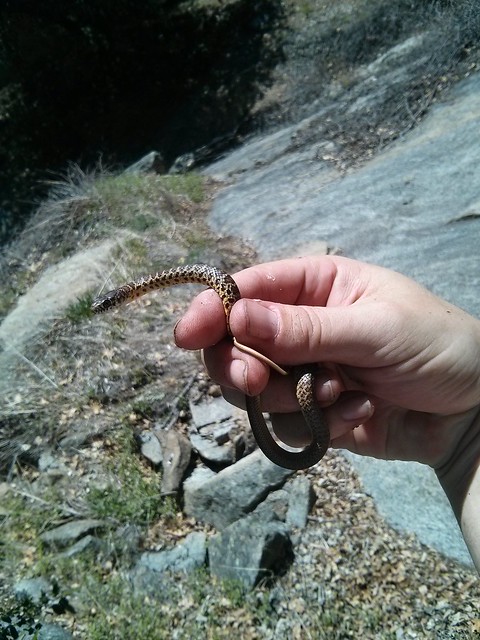
The first snake under a board was a 2-3' Pacific Gophersnake - Pituophis catenifer catenifer that I didn't manage to take a picture of because seconds after I lifted that board, screams from another board being lifted gave a hint to at least 8-10 Pacific Ring-necked Snakes, Diadophis punctatus amabilis. Here I hold 3 of them in my hand at once. Most were in shed, which seemed slightly curious.


Under the next board was a smorgasbord of snakes. I think we got 2 of 3 species of garter snakes but in the chaos and fleeting looks as snakes darted in every directions I can't be 100% sure.

(1) Aquatic Gartersnake -Thamnophis atratus likely integrades in Marin County.

(2) Coast Gartersnake - Thamnophis elegans terrestris. There may have been some integrades with Mountain Gartersnake - Thamnophis elegans elegans because some of the individuals we saw had a lot of blue and almost no red at all to them, but I am not really sure if that is the best field mark for determining subspecies, certainly not better than location that suggest T. e. terrestris.

(3) California Red-sided Gartersnake - Thamnophis sirtalis infernalis. I believe this is the one we dipped on, but it might have been in there as there were some snakes with a lot of blue like I said above (but not a lot of red).

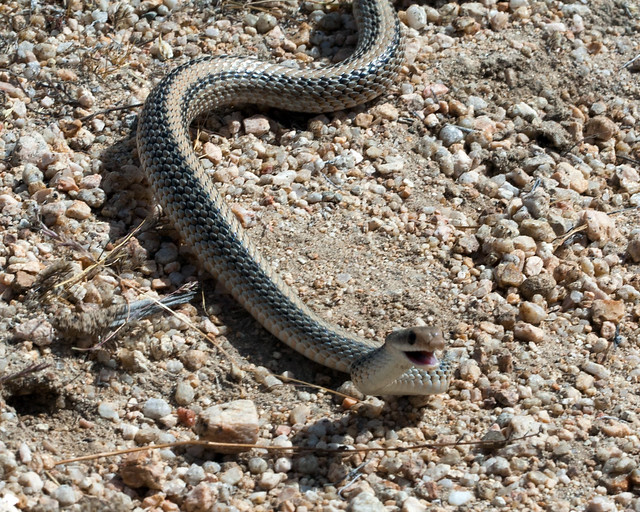
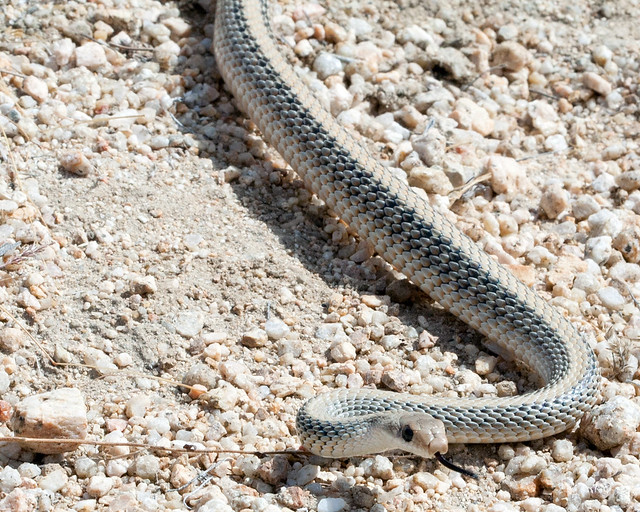
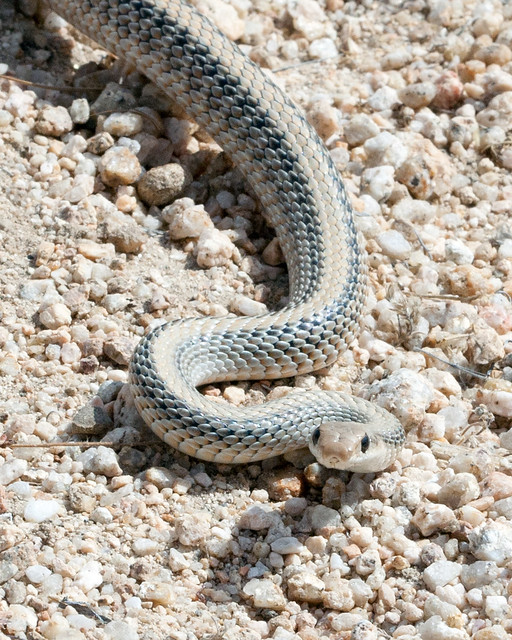
Garter snake IDs were incomplete because under that same board there were better snakes to grab including several Western Yellow-bellied Racer, Coluber constrictor mormon.

But the real winner and Snake O' the Day was a male Northern Rubber Boa - Charina bottae. What a treat!


Other mammals seen were loads of Tule Elk, distant coyote, a bobcat, and several raccoons.
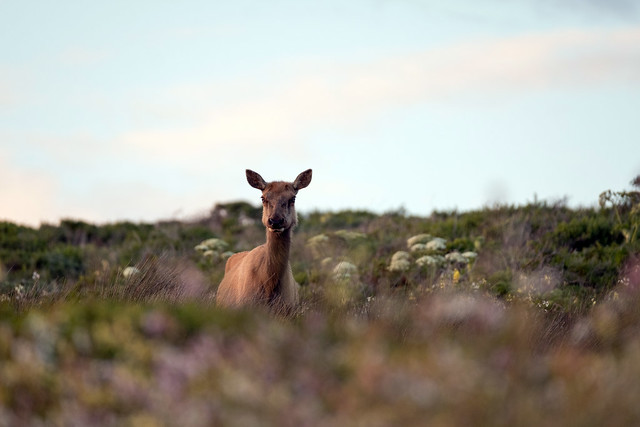
PtReyes-1257

At Bolinas Lagoon we didn't spot any otters but the Harbor seals were making noise and a Clark's Grebe was looking regal.
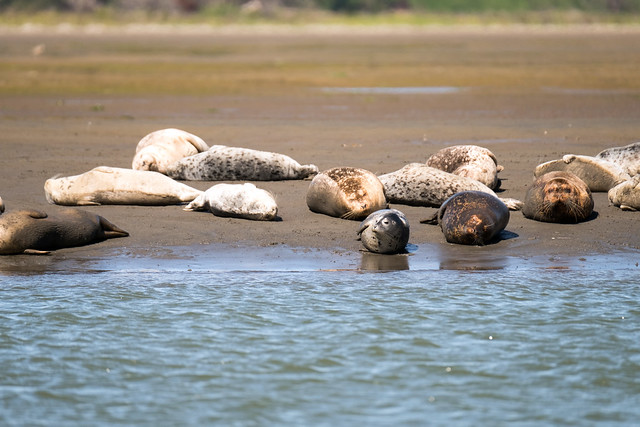
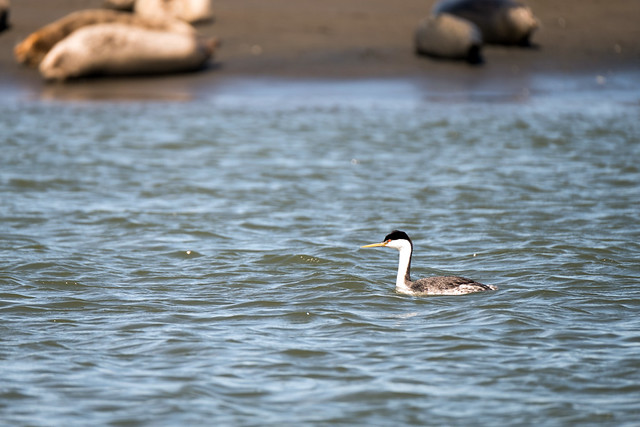
PtReyes-1297

PtReyes-1293

All in all a fantastic 24 hours in Pt. Reyes.
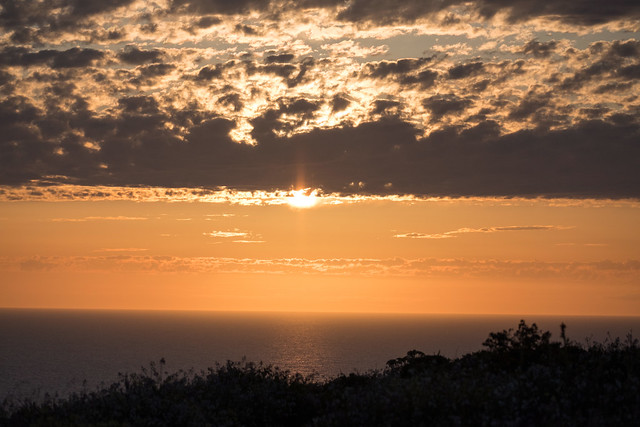
PtReyes-1266


Friday, August 12, 2016

Herp Holiday 2016

For the first time since starting my postdoc I was actually able to make it down to the Mojave Desert with the gang (blogmate Xian and Randomtruth included) for a few days of herping, botanizing, and general tomfoolery.

It was a bit of a weird trip. Despite being the latest trip in the year we have ever done it may have been the coldest. The wind blew and hoodies and jackets were necessary as soon as the sun went down. These factors lead to very poor night driving conditions and we put in only minimal effort during the witching hours on the road.

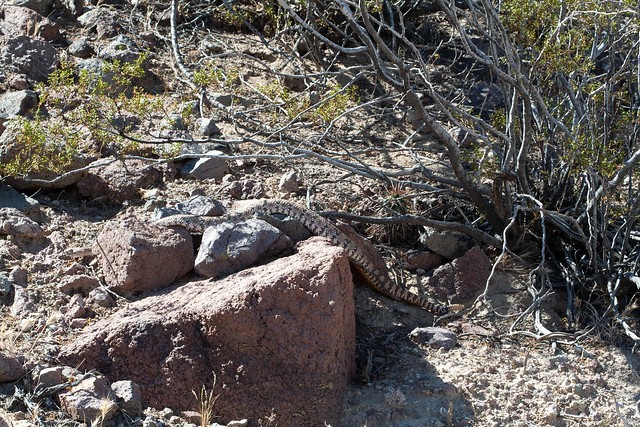
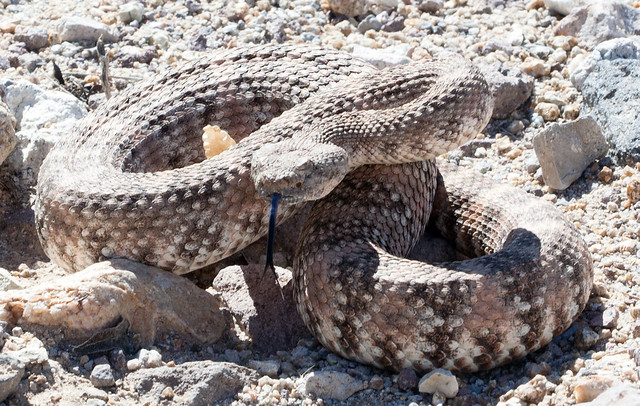
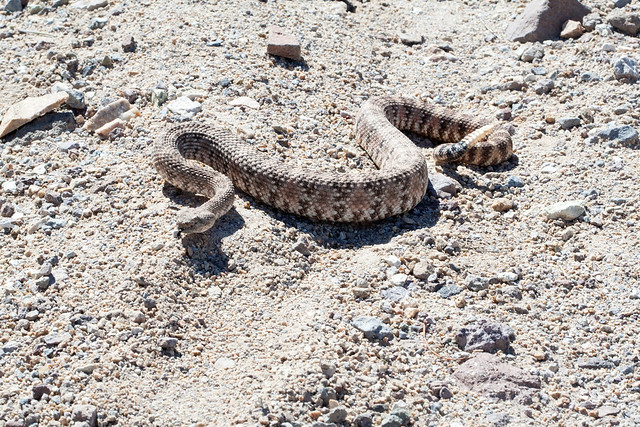
Most of the herps we saw were during the day including this nice Speckled Rattlesnake, Crotalus mitchellii. We saw this nice girl in sunning herself on some rocks in a wash near the Trilobite Wilderness in the Marble Mountains.

Mojave2016-9100

Mojave2016-9123

Mojave2016-9116


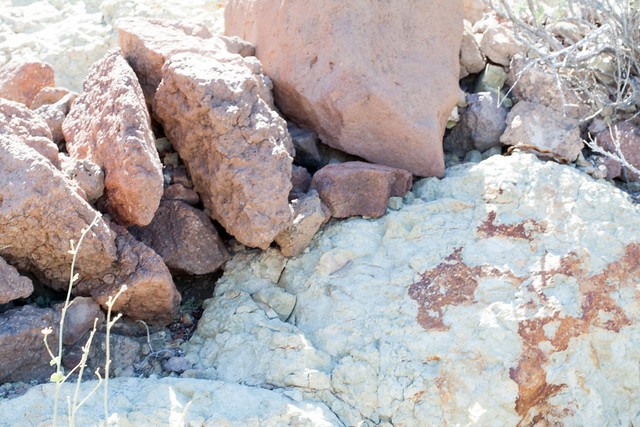
This was a new area of exploration for us and a place I'd really like to check out further. We saw plenty of sign of Desert Bighorn Sheep, but no actual animals. Still sweet though. While fossils looked pretty picked over there seemed to be a few one could see still in big rocks (to my untrained eye). I would love to go out there with someone who really new their geology. There was a lot of this really cool seafoam green rock. The camera didn't capture the color as it was IRL.

Mojave2016-9134

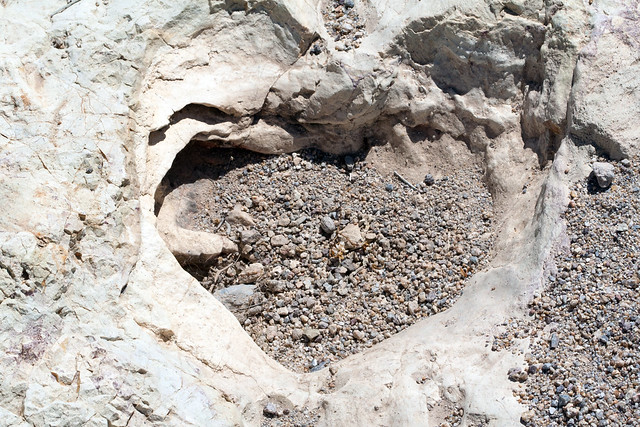
I like to think there was some dinosaur out there with heart shaped feet making these marks, but alas just Mother Nature being random and my human eyes picking out a familiar shape.

Mojave2016-9140

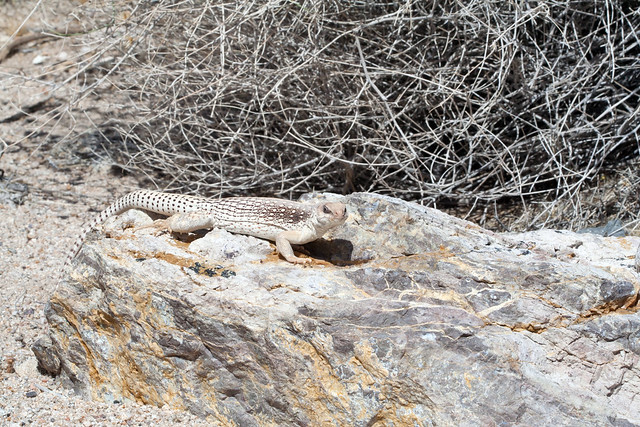
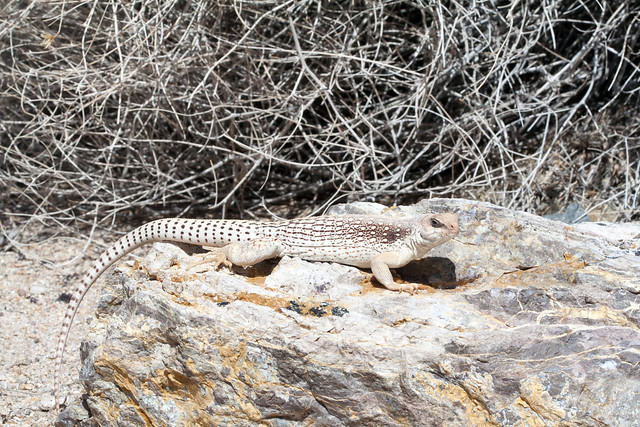
We found a very cooperative Desert Iguana not far from the car on the way back from the end of the hike in Trilobite.

Mojave2016-9158

Mojave2016-9160

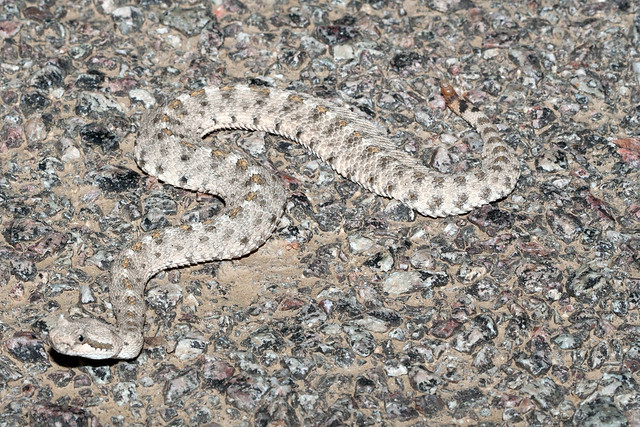
Our single night of driving the roads gave us only two living species with a few individuals of each. First a very young Sidewinder, Crotalus cerastes.

Mojave2016-9169

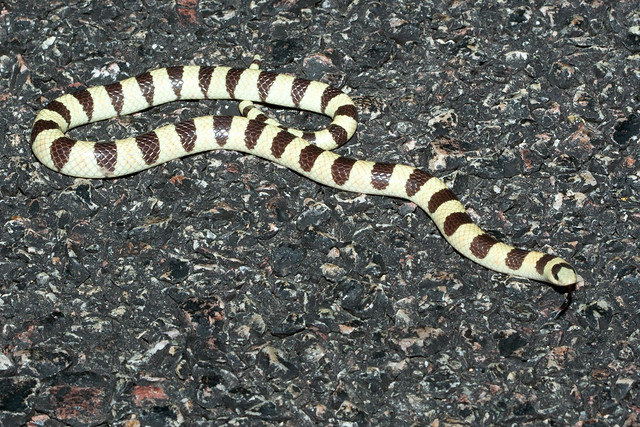
Then a black and white morph shovel-nose

Mojave2016-9177

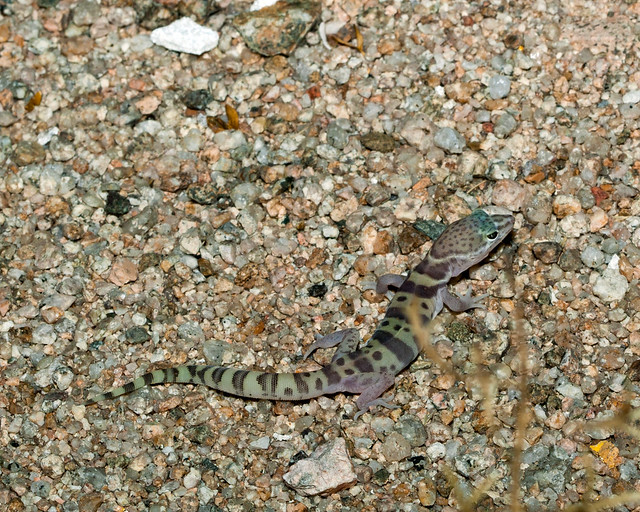
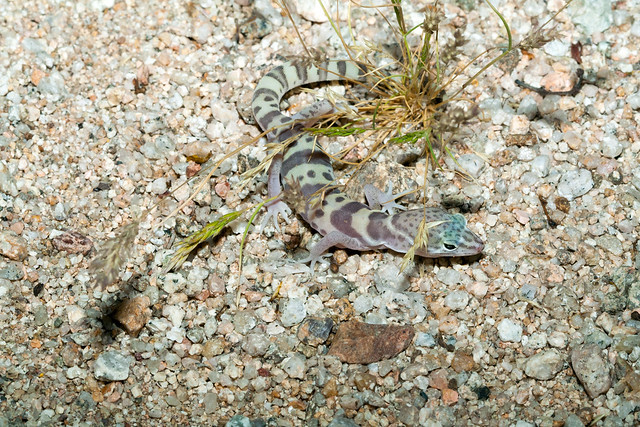
And a few Desert Banded Geckos, Coleonyx variegatus variegatus. This one and a few others appear to be hypomelanisitic. We have noticed apparent hypomels before in the Eastern Mojave, but it would be nice to know if they bred true and this was a simple genetic trait. Maybe someone out there has done this research.

Mojave2016-9181

Mojave2016-9186

Next a Desert Patchnose, Salvadora hexalepis mojavensis, that we found in the Granite Mountains.

Mojave2016-9193

Mojave2016-9194

Mojave2016-9197


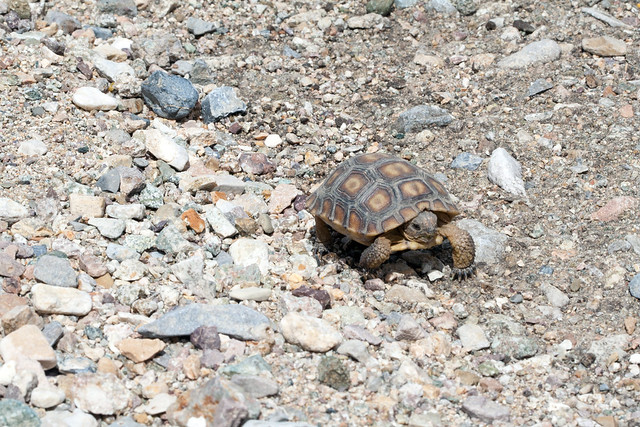
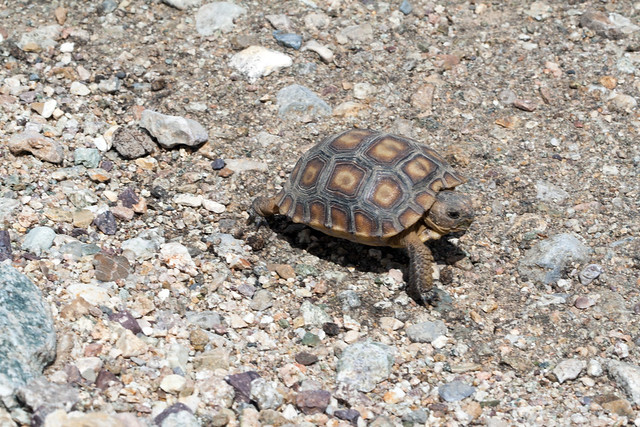
And finally the best herp of the trip, a baby Desert Tortoise. It is always so great to see the majestic tortoise, but even better to see a young one, knowing that recent breeding efforts have been successful. This baby was found less than a mile in the same wash that we found an adult female a few years ago. Maybe it is her offspring?

Mojave2016-9219

Mojave2016-9223

A flower post to follow, maybe in something like 18 months from now with the rate of posting I have accomplished the past couple of years.

UPDATE: Meant to include the statement that we do NOT collect on these trips, just in case anyone was worried.

Thursday, September 18, 2014

Herps in Belize

No not herpes. I came back from Belize with one disease, but not herpes.

Readers of this blog should be familiar with herps, our ectothermic friends, the amphibian and reptile.

Honestly, it was not the greatest herping trip and my photos are even worse. It rained. A lot. Even though it was the dry season, which meant I often was without a DSLR and often completely nude of photo taking devices.

However, I did manage to get a few photos from an old point and shoot on a night hike in the Cockscomb Basin Wildlife Sanctuary. If you find yourself in Belize you have to stay in the sanctuary in one of the rustic cabins. Be prepared to cook for yourself and buy your groceries in Belize City before getting on a long bus ride to Maya Center and then into the Sanctuary.

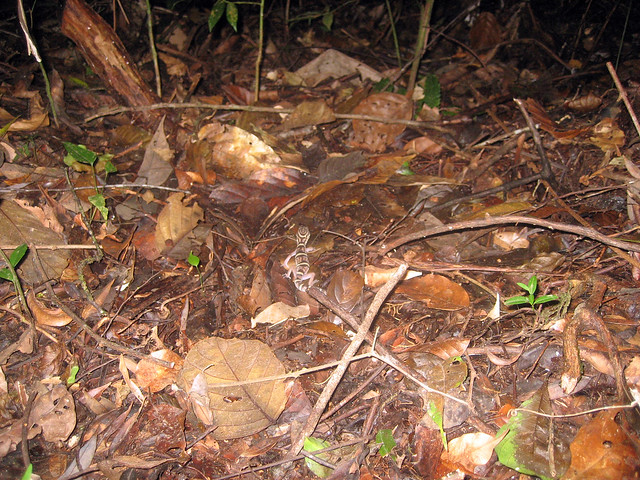
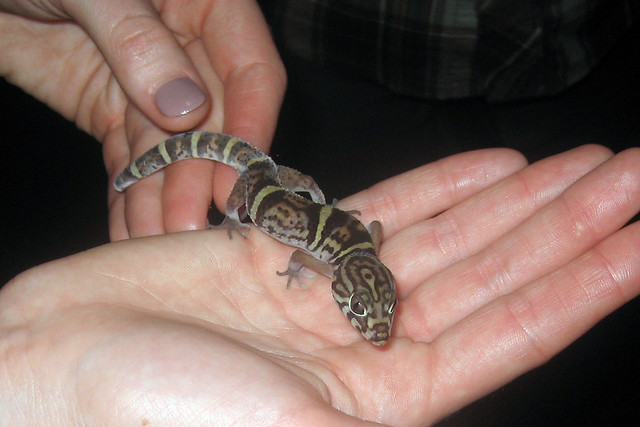
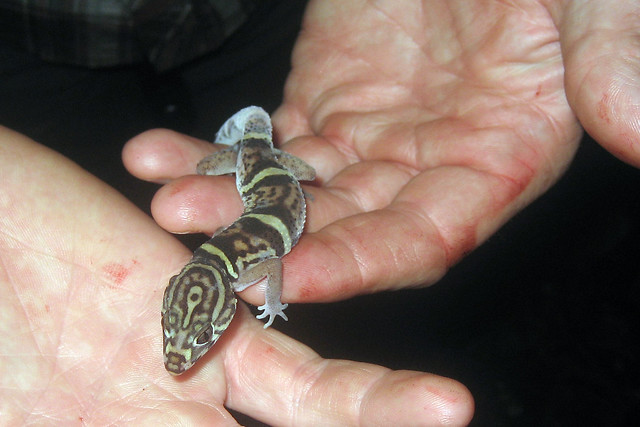
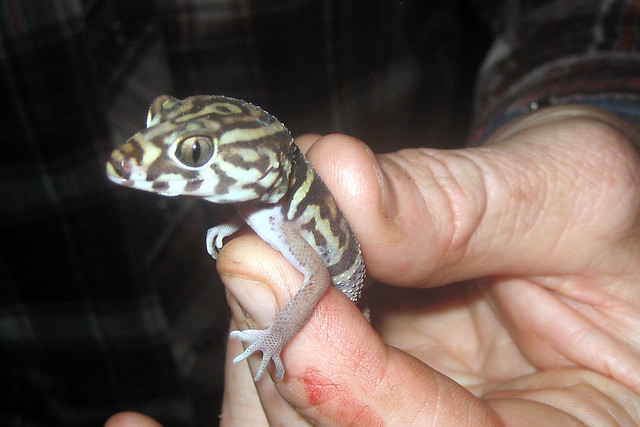
Our first herp of the night was a Yucatan Banded Gecko, Coleonyx elegans. This is in the same genus as the banded gecko we find in the Mojave Desert or one might find in Arizona. Its impressive to see what I think of a desert gecko in a secondary rainforest that was getting a lot of rain (a few inches in a few hours the next day).

IMG_0171


IMG_0170


IMG_0168


IMG_0167


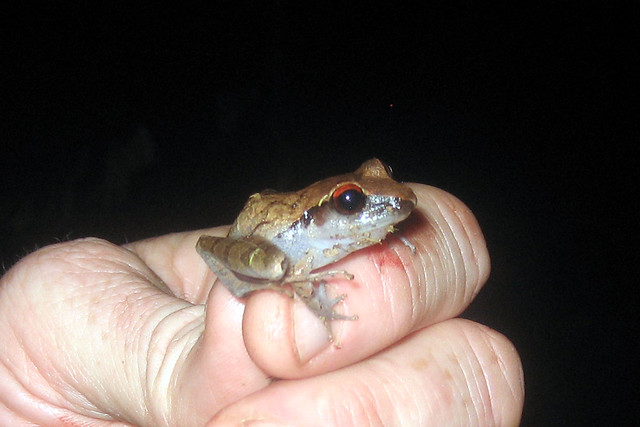
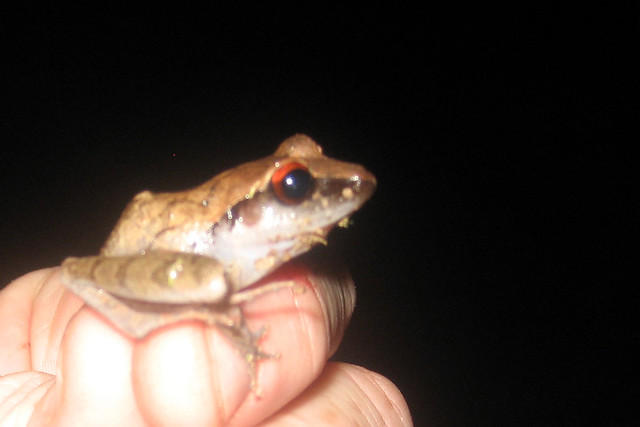
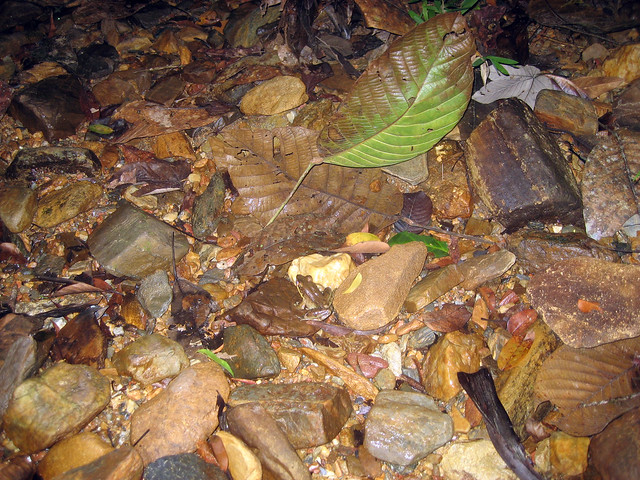
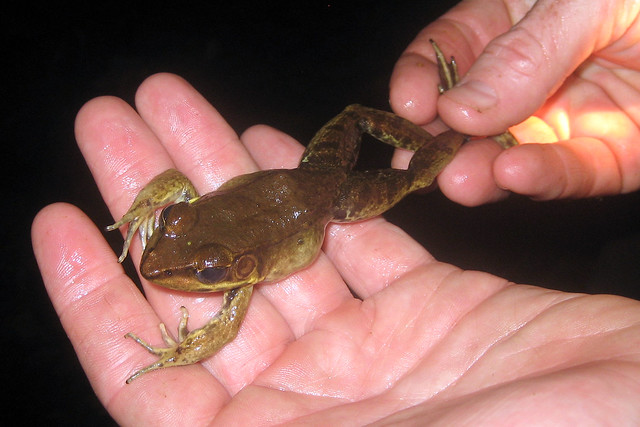
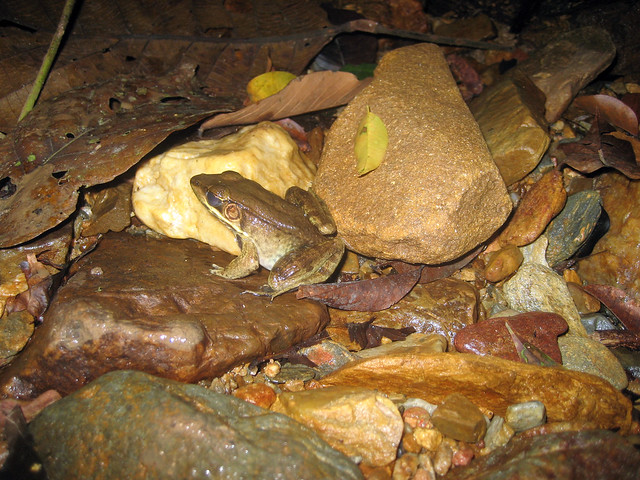
The next are a couple of Ranids that I am having a beast of a time IDing. Every time I think I have it down, I change my mind. I guess I cannot even be certain that the two individuals I am going to show you are different species. I am fairly familiar with Vaillant's frogs Rana (Lithobates) vaillanti from previous trips to Central America. The small ones have a lot of green on them, which made me think this frog was not a Vaillant's. That led to the endemic Maya Mountain frog Rana (Lithobates) juliani. We figured we could go home, look at a bunch of other photos online and figure this mystery out, but I think that has left me more confused. There are likely a lot of mis-identified photos of both of these species in the interwebs. Shocking I know, someone on the internet is wrong. Maybe it is one of the Rain Frogs, Craugastor (Eleutherodactylus)?

IMG_0173
Is that a distinct white stripe on the upper lip, indicative of juliani? The upper lip is white but I don't know if that qualifies as distinct. Fingers seem slightly expanded at tips. No good look at toes, but looks like they are webbed. Tympanum looks equal to eye, not larger.

IMG_0172
Blurry but trying to show the eye to tympanum size ratio

Below is was the first frog of the night. In the field we were calling this a Vaillant's frog, but that was before I had really considered Maya Mountain frog. We only started thinking juliani when we found the second frog (first frog in this post, confusing I know) and thought it just seemed different than the first. From Juilan Lee's A Field Guide to the Reptiles and Amphibians of the Maya World, the tympanum to eye ratio is a some what useful key.

Valliant's Frog: Eyes, moderately large, equal to or exceeding diameter of tympanum ... limbs well developed; toes extensively webbed; tips of digits slightly expanded
Maya Mountain Frog: Eyes large, exceeding tympanum in diameter ... Fingers unwebbed, slightly expanded at tips; toes extensively webbed

IMG_0162


IMG_0161
Extensive webbing on back toes, fingers appear to be unwebbed


IMG_0165
That is a fairly large tympanum. Is that the distinctive white strip on upper lip? It extends pretty far past the jaw though.

So all opinions on these two frogs are welcome. So so confused.

Not pictured here was a very large adult Vaillant's frog that we saw the following night.

Also not pictured was a coffee snake Ninia, likely the red-backed coffee snake Ninia sebae. In an embarrassing lack of recklessness we saw this snake moving through the grass at night and the white neck stripe seemed to appear in more than one place as it moved, reminding us just enough of a coral snake that we didn't attempt to pick it up right away. By the time we realized it was a harmless Ninia, our guide's answer to "Is it venomous?" was "Only a little" and it was gone all in a matter of 5 seconds. Huge bummer as it turned out to be the only snake of the trip.

More posts from Belize, including some crappy bird photos, to come, maybe ...

Wednesday, September 10, 2014

Finding My White Whale

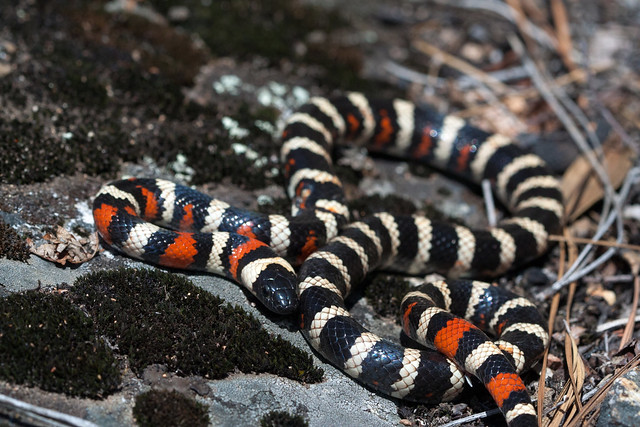
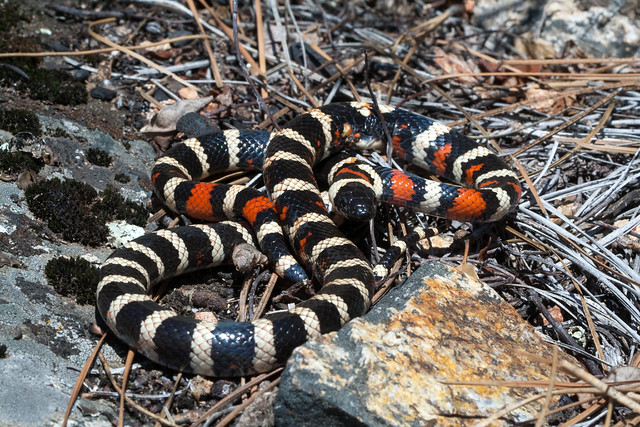
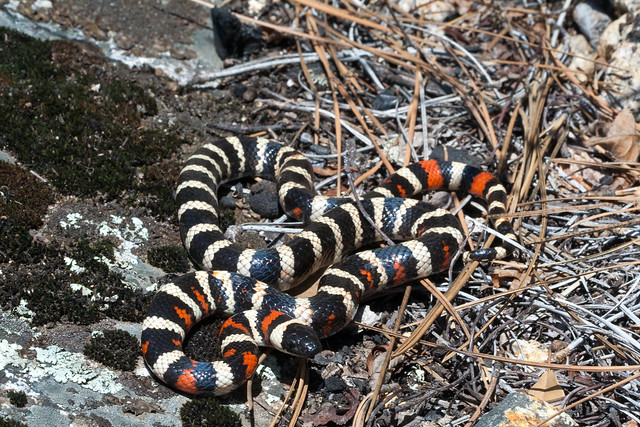
In Spring of this year, I got the call from Sean that we were on for a Zonata hunt, if I could get out during the week. Coming with us (more accurately taking us) was the esteemed California Mountain King researcher Mitch Mulks. If I was finally going to slay my white whale, Mitch was the person to help me do it. Mitch is the author of a beautiful book with lots of great photos of the different locales of Zonata (which looks to be out of print and going for $300 on Amazon!, maybe I need to sell my spare copy?!?). You should still be able to buy a copy for less than that at the East Bay Vivarium though.

We wandered around El Dorado County a bit and actually found this snake at the first spot we stopped at after about 30 minutes of searching. It was in a crack in the rocks, barely exposed. Mitch called me over to see it in situ before we pulled it out to get a good look. I have to admit I never would have seen it, and I don't know how he did. I guess thousands of hours in the field looking for Mt Kings make your eyes sharper. We admired it for 10 minutes and photographed it and then put it back in its little crack of a home.

ElDorado-8203


ElDorado-8202

We never sexed the snake, but we did notice an old wound on its side that was mostly healed. It looked like maybe it had been pecked with a beak.

ElDorado-8198

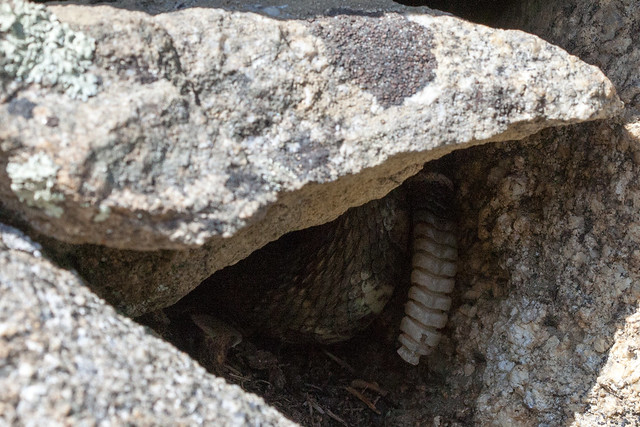
The other guys had seen 4-5 rattlesnakes on the day and I hadn't seen a single one. In the midst of complaining about this fact, while walking along stacked granite wall, I got buzzed good. The rattles came about 12" at thigh height and I did the hip sway dance as I passed them. Walking back there were two individuals in this crack. One was calm and not bothered, the other shook that rattle constantly. I snapped a couple of proof photos and let them be.

ElDorado-8209


Lastly we had a few other snakes on the day. This young yellow-bellied racer that I managed to mis-identify originally. My mind went to gopher snake, even though I knew it wasn't right by body shape and size. This was likely born this year.

We also saw, but didn't photograph including three whipsnakes, and a couple of garternsnakes.

IMG_20140409_133020

The scenery wasn't half bad either. Remember when California Creeks had water in them?

IMG_20140409_152607

Many thanks to Mitch for playing tour guide and sharing some of his spots with us. Looking forward to doing it again next Spring.

Wednesday, April 10, 2013

SC Mt. Herping

A few weeks back a handful of us went out for a little spring herping in the Santa Cruz Mountains. We had a productive day even if we struck out once again on L. zonata. I am bordering on Adam Dunn territory for this species. On the day we got 9 species of herps. Not pictured in this blog post are: Arboreal Salamander, Slender Salamander, Alligator Lizard (Likely Southern), Western Fence Lizard, and Ensatina. To make up for it I included photos of two non-herps.

SC Mts-7604
Neonate Western Rattlesnake, Crotalus oreganus


SC Mts-7627
Uroctonus mordax, I believe. Two different subspecies have been described in the area.


SC Mts-7624
The prize of the day. A very small Pacific Giant Salamander, Dicaptodon tenebrosus


SC Mts-7612
Young Western Skink, Plestiodon skiltonianus


SC Mts-7618
Adult Western skink with an almost thrown tail (not because of anything we did. We found it that way)


SC Mts-7607
A missed focus shot of a juvenile Santa Cruz Black Salamander, Aneides niger. There is little to no yellow in the armpits which distinguish it from the juvenile Arboreal Salamander which we also saw. I really should have taken a picture of one for comparison.


SC Mts-7605
Banana Slug AKA Dicamptodon dinner


And a few additional images of two of the individuals above.


SC Mts-7619


SC Mts-7625


SC Mts-7623


SC Mts-7603


SC Mts-7602


All in all a good day.