Title Image

Title Image

About:

This blog is predominately about camera trapping in California. We camera trap to save our souls and to teach primary school students about biology and conservation. We will also touch on other camera trapping news and musings, sets from afar, mediocre herpetology, sucky birding, and other natural history discussions.
Showing posts with label Mojave Desert. Show all posts

Friday, August 12, 2016

Herp Holiday 2016

For the first time since starting my postdoc I was actually able to make it down to the Mojave Desert with the gang (blogmate Xian and Randomtruth included) for a few days of herping, botanizing, and general tomfoolery.

It was a bit of a weird trip. Despite being the latest trip in the year we have ever done it may have been the coldest. The wind blew and hoodies and jackets were necessary as soon as the sun went down. These factors lead to very poor night driving conditions and we put in only minimal effort during the witching hours on the road.

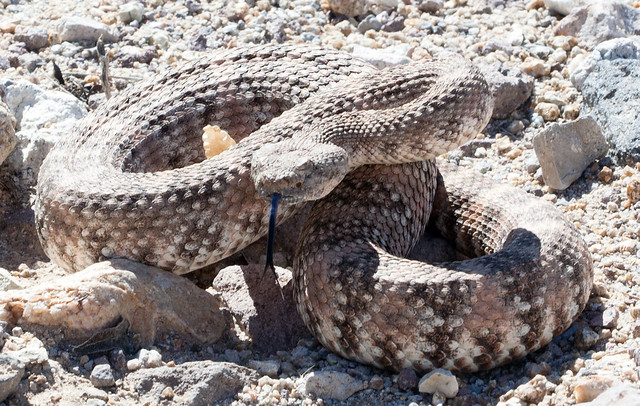
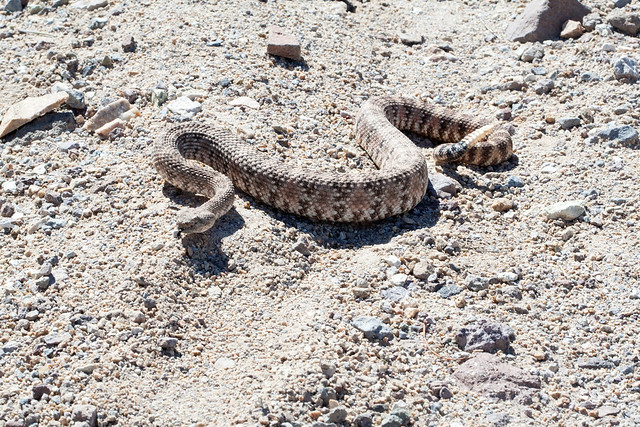
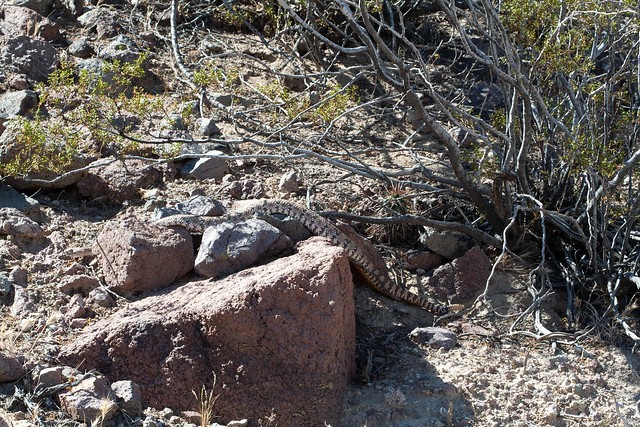
Most of the herps we saw were during the day including this nice Speckled Rattlesnake, Crotalus mitchellii. We saw this nice girl in sunning herself on some rocks in a wash near the Trilobite Wilderness in the Marble Mountains.
Mojave2016-9100

Mojave2016-9123

Mojave2016-9116


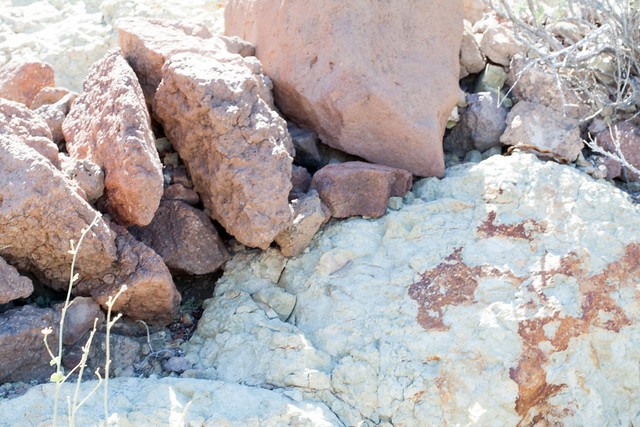
This was a new area of exploration for us and a place I'd really like to check out further. We saw plenty of sign of Desert Bighorn Sheep, but no actual animals. Still sweet though. While fossils looked pretty picked over there seemed to be a few one could see still in big rocks (to my untrained eye). I would love to go out there with someone who really new their geology. There was a lot of this really cool seafoam green rock. The camera didn't capture the color as it was IRL.
Mojave2016-9134

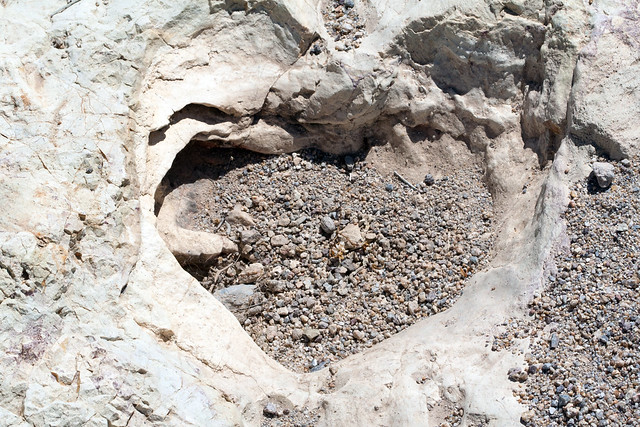
I like to think there was some dinosaur out there with heart shaped feet making these marks, but alas just Mother Nature being random and my human eyes picking out a familiar shape.
Mojave2016-9140

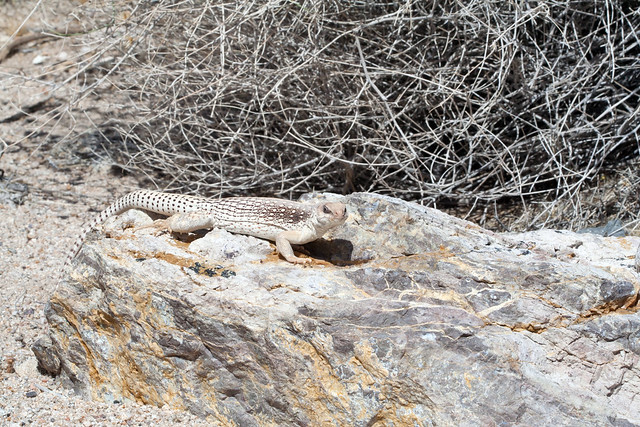
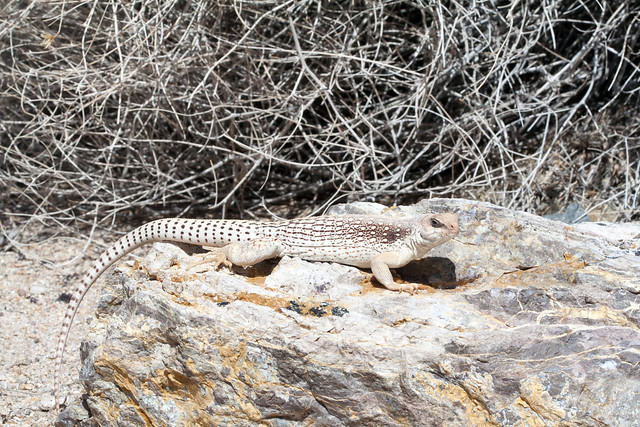
We found a very cooperative Desert Iguana not far from the car on the way back from the end of the hike in Trilobite.
Mojave2016-9158

Mojave2016-9160

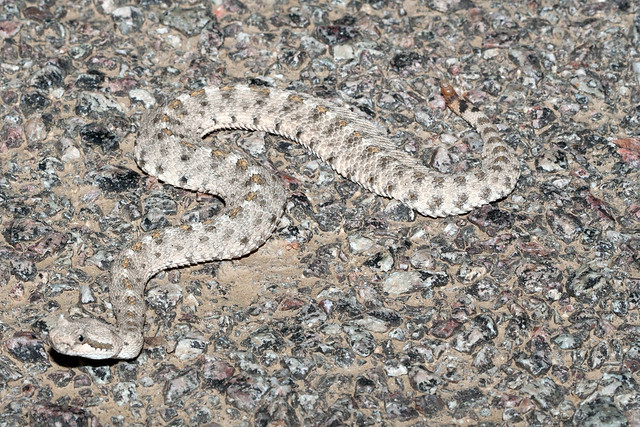
Our single night of driving the roads gave us only two living species with a few individuals of each. First a very young Sidewinder, Crotalus cerastes.
Mojave2016-9169

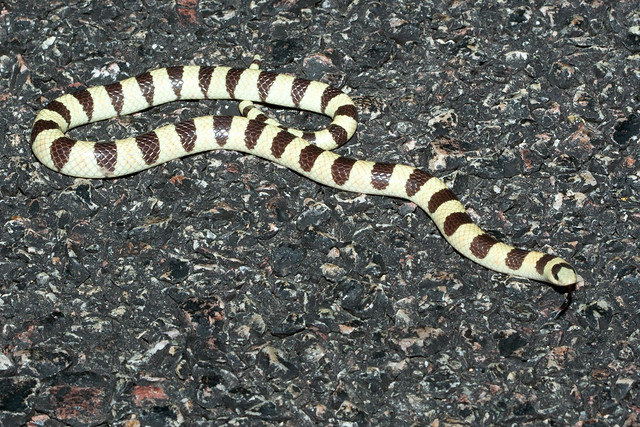
Then a black and white morph shovel-nose
Mojave2016-9177

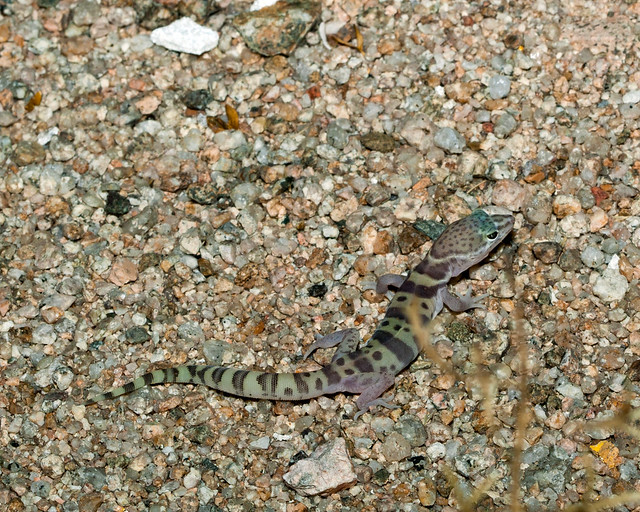
And a few Desert Banded Geckos, Coleonyx variegatus variegatus. This one and a few others appear to be hypomelanisitic. We have noticed apparent hypomels before in the Eastern Mojave, but it would be nice to know if they bred true and this was a simple genetic trait. Maybe someone out there has done this research.
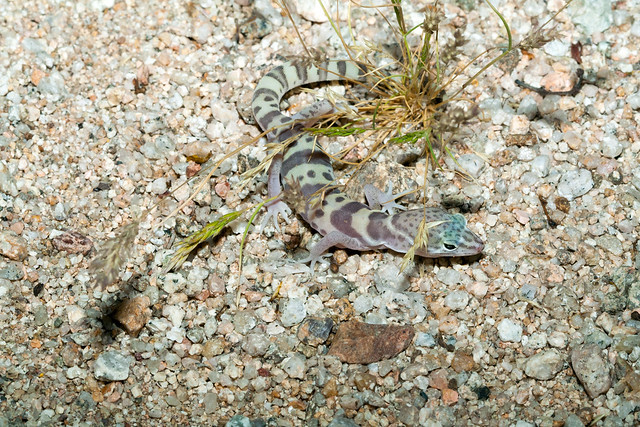
Mojave2016-9181

Mojave2016-9186

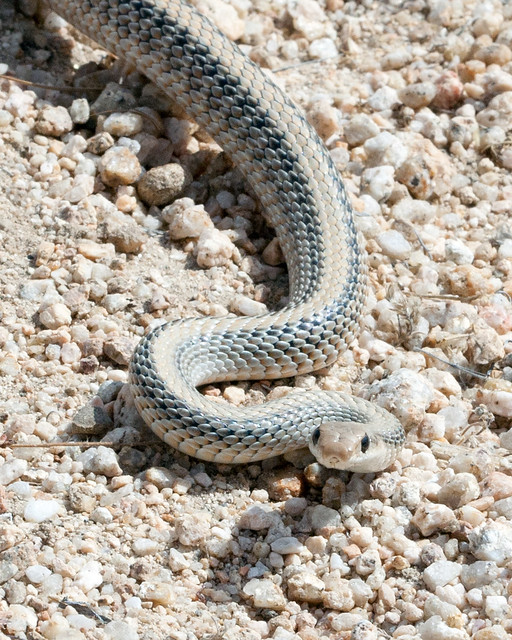
Next a Desert Patchnose, Salvadora hexalepis mojavensis, that we found in the Granite Mountains.
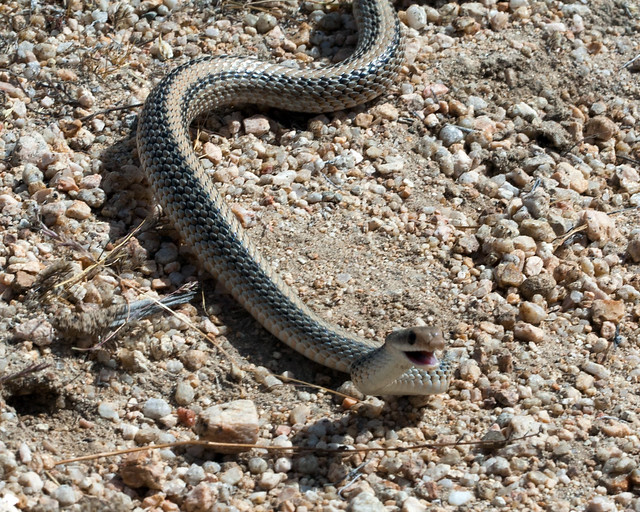
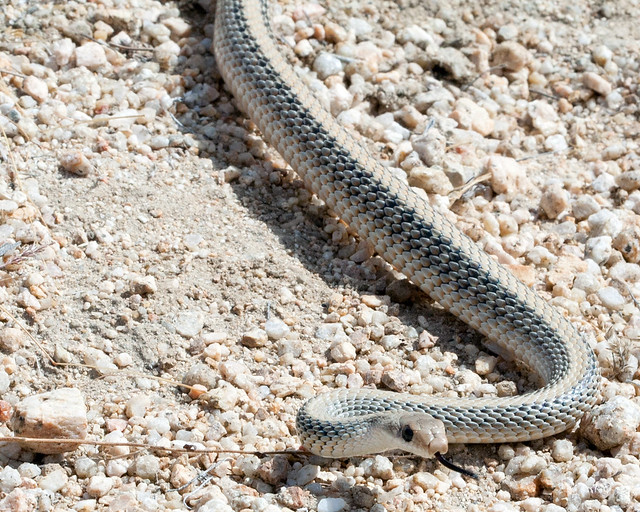
Mojave2016-9193

Mojave2016-9194

Mojave2016-9197


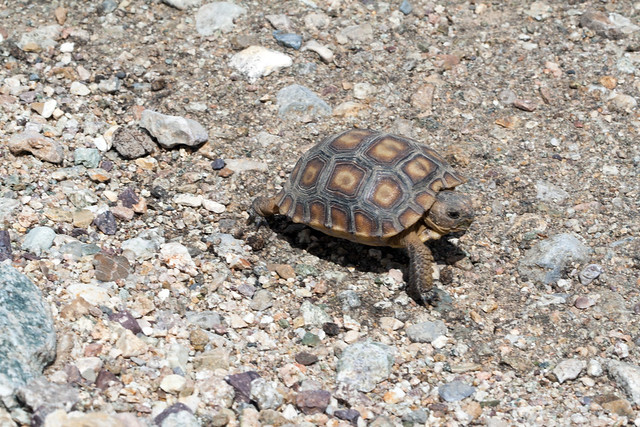
And finally the best herp of the trip, a baby Desert Tortoise. It is always so great to see the majestic tortoise, but even better to see a young one, knowing that recent breeding efforts have been successful. This baby was found less than a mile in the same wash that we found an adult female a few years ago. Maybe it is her offspring?
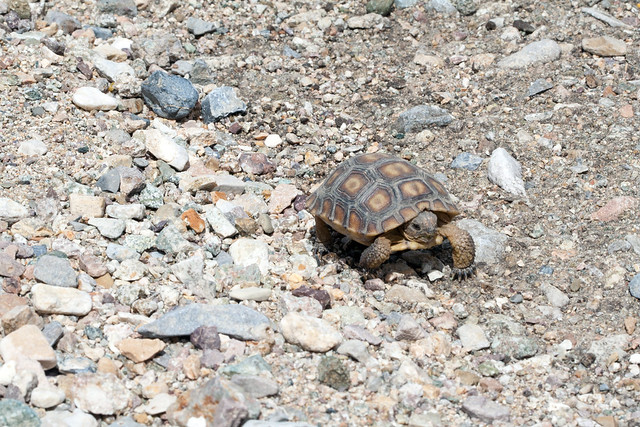
Mojave2016-9219

Mojave2016-9223

A flower post to follow, maybe in something like 18 months from now with the rate of posting I have accomplished the past couple of years.

UPDATE: Meant to include the statement that we do NOT collect on these trips, just in case anyone was worried.

Tuesday, July 31, 2012

Herps of the Mojave: Redondo Dos

Granite Mountains

First one more snake. A speckled rattlesnake, Crotalus mitchelli. I didn't get a single half decent image of it but Christian did. A couple of pictures when it was on the hook. This was a lifer for both of us and was actually one of the species on my 2012 Wish List.

Speckled Rattlesnake

Speckled Rattlesnake

A commenter on Flickr, who has a lot of great herp and desert shots himself, suggested that we should be careful with gravid females, which I totally agree with. This might have been a gravid female, but I am not sure. It certainly looks plump in the mid-section in this image, but we did not handle it enough to determine sex, let alone whether it was gravid. When we were looking at the snake in live time, I don't remember thinking it was gravid, but it is certainly possible we over-looked this in our excitement, and now I am starting to convince myself that this is sounding a little familiar. However, we simply moved it to a safer spot where it quickly disappeared into the rocks. What do you guys think in regards to it being gravid?

Another King of the Rocks, who will also disappear into the cracks when you try and sneak up on him. Otherwise he is macho and likes to do push-ups for all of the other chucks to see. Look at those biceps.

Chuckwalla

Chuckwalla

And a few pictures of a juvenile chuckwalla, the guy above was not the dad though, their ranges are not that large. The baby was found several miles down the road. My first baby Chuck.

IMG_4336

IMG_4334

IMG_4327

Finally, the only desert tortoise of the trip, but this was the third year in a row we have seen one of these majestic critters. There really is no better way to start your day than stumbling upon a desert tortoise in the early morning light. This one was crossing an old dirt road.

IMG_4421

IMG_4427

IMG_4429

IMG_4431

IMG_4433

She didn't need any help across the road. Made it across just fine herself, thank you very much.

Desert Tortoise

Desert Tortoise


We did pull the cholla needle out of her eye for her though.

Photo Credits: First 5 photos and last 2 by Christian. Remaining by JK.
As always, but it bears repeating, no animals were collected on our trip.

Monday, July 23, 2012

Herps of the Mojave

All of these Mojave Desert posts and I have been holding back the herp pictures from you. Here I present to you the herps without legs.

Wait a Mojave post that actually has Herps in it! I know shocking.

The herping on this year's desert trip was very different than 2011. I got two life species, and one hombre that has been going to the Mojave for 25 years got a lifer for this part of California. That being said we saw much fewer reptiles in both numbers and species than we did in 2011. There were probably two main factors (1) Less rain = less plant seeds = less rodent food = less snake food and (2) It got cold quick. The road was under 80°F a mere hour after sunset.

The first night of driving we split into two cars and one car saw four sidewinders, all babies and the other car spotted one sidewinder, again a baby, at the meet-up point so car 1 got their fifth snake of the night.


IMG_4348


IMG_4345


When we got back to camp we found another group of campers had parked right next to us and set-up their tents within 100 feet of ours.  WTF. 1.6 million acres to chose and you set-up right next to another group. It would have been a total bummer of a night if not for late night fajitas, tequila and a good campfire. We got two visiters right before bed, one wasn't really welcome, no we don't want to share our campfire with you, but the other was most welcome. Ben happened to find our second visiter on his way back from peeing on some rocks.

Believe it or not this is a lifer for me. I have seen plenty in captivity but my first wild Rosy Boa. In a locale that I wasn't really convinced they even existid in to boot.

She, yes she, no spurs, was not very cooperative when it came to photography though. She really wouldn't sit still so these are not the best or photographs.


IMG_4357

IMG_4363

IMG_4364

IMG_4369


The following night we saw but a single snake on the road. Again a species we had already seen, but this time an adult.


IMG_4410

IMG_4420

IMG_4419


And one shot of some herpers on the ridge in the middle of the day falsely thinking they can turn up something other than a whiptail


IMG_4397


Some herps with legs next week.

Tuesday, June 12, 2012

We Suck at Birding

I gotta admit we suck at birding.  We spent a day arguing over a bird and trying to chase it down only to realize that it was two different birds and we were talking past each other the whole time. Maybe Mojave 2013 will require the presence of a real-life birder.

MacGillivray's Warbler, one of the birds in question

A couple of shots of a likely Crissal's Thrasher from a camera trap that was supposed to get ground squirrels, but only got this dang sunrise bird.


1-DSC00567
What's up?


Crissal's Thrasher?
Crop of above image: what looks like a light iris, white mustache, slightly more gray than brown.

2-DSC00568
Beauty of a morning

Thanks to Seagull Steve for suggesting the possibility of Crissal's, rather than LeConte's, but in no way hold him accountable if this is not a Crissal's. I sent him low-resolution images when getting his opinion and neglected to resend high-resolution images.

Occasionally, we were able to identify a few feathered friends.

Red-tailed Hawk in nest.

And yet there were still questions…


Gray Flycatcher? Migrating Hammond's? UPDATE: Or Neither Townsend's Solitaire

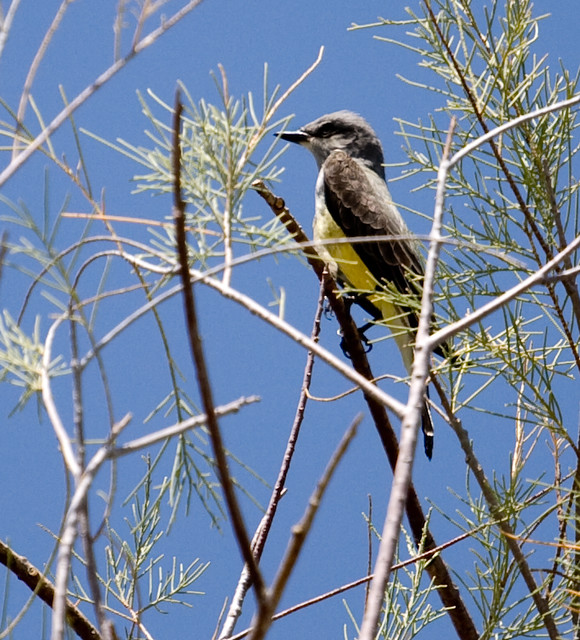
Cassin's or Western Kingbird. F! Update: Western it is

Because we suck at birding feel free to correct our IDs if needed. Birding by photography can be tough because you often don't have all the angles necessary to make a good ID later.

UPDATE: Some IDs fixed thanks to Seagull Steve in the comments


Tuesday, June 5, 2012

Squirrel Butt

This is not a great capture but it is the only one I got of a new to us camera-trapped species. We were hoping for more interesting Ground Squirrels like the Mohave ground squirrel, Xerospermophilus mohavensis, or Round-tailed ground squirrels, Spermophilus tereticaudus, but all we got was this White-tailed antelope ground squirrel, Ammospermophilus leucurus.

If you are really into ground squirrels at least you can take solace in the fact that he is showing off his money maker.


1-DSC01441

2-DSC01441-001
Crop of the above image