Title Image

Title Image

About:

This blog is predominately about camera trapping in California. We camera trap to save our souls and to teach primary school students about biology and conservation. We will also touch on other camera trapping news and musings, sets from afar, mediocre herpetology, sucky birding, and other natural history discussions.
Showing posts with label UCSC. Show all posts

Friday, December 27, 2013

Wintering Say's Pheobe

I've have been waiting for the Say's Phoebe that over wintered on the UCSC campus the last two years to show up and was starting to think it might have met its maker. Finally on Christmas Eve, as I was leaving the lab I saw a Say's Phoebe in the usual spot. I don't know that this is the same individual for sure, but I like to think it might be.

As you can see from one of the photos it likes to perch and hunt from a fence right next to the road so I get to do some road birding on my way into and out of campus every day.

In 2012-2013 I saw a Say's Phoebe in this spot as early as November and then saw it pretty regularly (several times a week with a 40 second search as I drive by, so pretty reliably) until February.

In the 2011-2012 Winter I saw one in January through February 2012.

We'll have to wait and see who leaves the UCSC campus first this Winter, me or the old Say's Phoebe.

IMG_7599


IMG_7600


IMG_7601


IMG_7598


IMG_7595


On a totally separate note, it has been a while since I have posted at the Flickr rework has made it really difficult to embed photos using hmtl into a post. Looks to be the new frames feature. I'm also not super happy with the apparent loss of the old organization tab in Flickr. I'll need to spend some time with the new lay out to try and figure it all out and hopefully I will grow to like the changes, but as of now, get off my lawn Yahoo.

UPDATE: After posting this I started reading some Flickr forums and realized that the new Beta photo page is fucked if you want old school html embedding. So I opted out of Beta until they get it fixed and reembedded the images in this post. I also found the old batch organizing tool which is now called Organizr and is in a submenu rather than the header. Damn Flickr.

Wednesday, October 9, 2013

Missing Weasel


SEE UPDATE BELOW:

UCSC press release below.

SHAME ON YOU. 

Look out for a stuffed weasel.

October 9, 2013

To:  UC Santa Cruz Community
From:  UC Santa Cruz Police Department
Re:  Community Crime Bulletin  (488 PC - Theft; Case # 13-759)

On Tuesday,  September 24, at 6:15 p.m., a stuffed weasel specimen was stolen from a table at the UC Santa Cruz Fall Festival. Affectionately referred to as Winston the Weasel (see photograph), this specimen had been in the possession of the UC Santa Cruz Natural History Museum for many years and been a part of many student projects, displays, and events.

It is the only mounted weasel specimen that the museum possesses.

Anyone with information regarding the whereabouts of Winston is encouraged to contact the UC Santa Cruz Police Department immediately at 831-459-2231, or the Environmental Studies Department located in the Interdisciplinary Sciences Building, room 410.

Tips may also be made ANONYMOUSLY to the UC Santa Cruz Police Department by calling 831–459–3TIP (459–3847) or online at http://police.ucsc.edu.

Thank you.

Nader Oweis, Chief of Police
University of California, Santa Cruz

This Bulletin is in Compliance with 20 U.S.C. Section 1092 (f), the “Jeanne Clery Disclosure of Campus Security Policy and Campus Crime Statistics Act” (“Clery Act”), and the Code of Federal Regulations (CFR).


___________________

UPDATE: 10/12/2013

October 10, 2013

To:  UC Santa Cruz Community
From:  UC Santa Cruz Police Department 
Re:  Community Crime Bulletin  UPDATE  (488 PC - Theft; Case # 13-759)
The UC Santa Cruz Police Department wishes to thank the community for their assistance in the safe recovery of Winston theweasel.  It was anonymously returned this morning to the Police Department, and will be given back to the Environmental Studies Department.  No charges will be filed in this case.

Anyone with information regarding suspicious activity or crime in progress is encouraged to contact the UC Santa Cruz Police Department immediately at 831-459-2231, ext. 1, or by dialing 911 for in-progress emergencies or activities.

Tips may also be made ANONYMOUSLY to the UC Santa Cruz Police Department by calling 831–459–3TIP (459–3847) or online at http://police.ucsc.edu.

Thank you again,

Nader Oweis, Chief of Police
University of California, Santa Cruz

This Bulletin is in Compliance with 20 U.S.C. Section 1092 (f), the “Jeanne Clery Disclosure of Campus Security Policy and Campus Crime Statistics Act” (“Clery Act”), and the Code of Federal Regulations (CFR).

Thursday, April 25, 2013

Happy DNA Day


Today is DNA day. The anniversary of the publishing of the structure of DNA by Watson & Crick (& Wilkins & Franklin).

I celebrated by giving a guest lecture (the professor was out at a study section) in the upper division Genetics BIOL105 course here at UCSC. Enrollment is about 300 students, but being an 8AM class there was probably around 100 students who actually showed up. 100 was certainly less intimidating than 300 for my first large lecture ever. We covered some good ole' classical genetics: linkage, map units and three-point crosses.

Followed that up at the bench with some genomic DNA isolations. So yeah, not too many a day goes by that I am not celebrating DNA by working with it. The joys of working on a thesis whose main topic is DNA Structure and Organization.

Its before noon still, so the shot of rye to the godfathers (and very important godmother) of the field will have to wait a bit ... but not too long.


Tuesday, April 2, 2013

Monday, March 11, 2013

Beautiful Day in the Redwoods

Sorry East Coasters but your life is not as good as ours this fine Spring day.

Monday, March 5, 2012

Salamander season ... What Salamander season?

God, Salamander season has been rough.

As I posted earlier, the weather here in Northern California has been warm and sunny all "Winter" long.

But we finally got a good rain on leap day morning, so that afternoon I headed out to the center of campus for a little 'phib hunt while my model organism did its thang for a few hours.

I flipped a dozen or so Ensatinas in about an hour. All looked about the same and I neglected to put in the effort it takes to snap a photo of a single one.

See my goal was not Ensatina, or Batrachosep, which shockingly I got shut out on, but the elusive Santa Cruz Black Salamander, Aneides niger. I had found juveniles last year and was on the hunt for an adult.

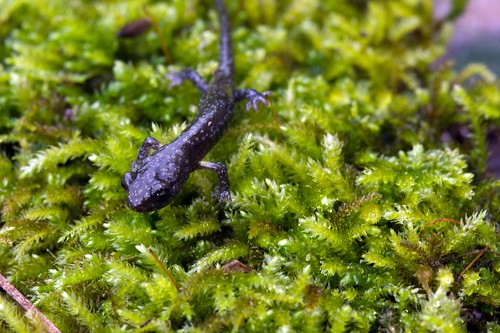
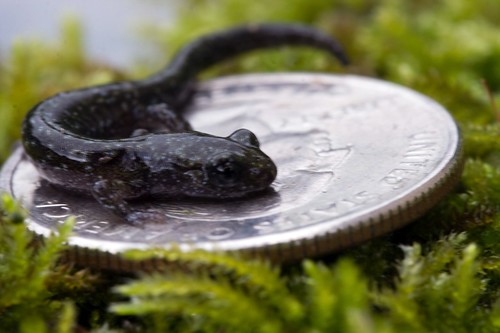
I had given up about 20 rocks ago, but half heartedly flipped a couple dozen more rocks and under the third to last rock I flipped was this little guy.  And when I say little, I mean TINY!


UCSC-7312.jpg

UCSC-7311.jpg

UCSC-7310.jpg


This youngster was under a rock that was on very wet dirt.  Adults are usually found under rock on rock. However, every (3, small sample size warning) juvenile I have found has been rock on dirt rather than rock on rock.


UCSC-7308.jpg

UCSC-7316.jpg


No adults, so back to the drawing board, but they have to be close by for a baby like this to exist.  Might already be too late this year, but the good news is that it was wet enough this season to produce this little guy, so the breeding season was not lost.

I still have not gotten my flash fixed so apologies for the less than perfect long-exposure images, but thought they were still worth sharing.

Thursday, February 9, 2012

Mt. Lion talk on UCSC campus

Upcoming talk at UCSC open to the public. Classroom Unit 2 holds a couple hundred people so there should be plenty of room.

Do you want to know more about mountain lions, our large feline
neighbors that have been in the news recently with several reported
sightings near campus?

Environmental Studies Professor Chris Wilmers, who has been tracking
and studying mountain lions in the Santa Cruz Mountains for three
years, will discuss his research at an informational seminar "Mountain
Lions and People in the Santa Cruz Mountains,"  7 p.m. Monday,
February 13, in Classroom Unit 2
.

All are welcome and bring your questions.

Wilmers will explain what he and his colleagues are learning about
mountain lion travel, habits, and behavior as part of  the  Santa Cruz
Puma Project.

Monday, January 30, 2012

Beware of the Mountain Lions

We have had two different Mt. Lion warnings on the UCSC campus in the last couple of weeks.  When I got the text message for the second warning last week I decided to walk out to the area of the sighting and see if I could see myself a cat.  Alas, I was not attacked nor did I see a Mt. Lion. For that matter I could not even find any sign of Mt. Lions. No footprints, no scat.  I did not really expect to find much, but was still a bit disappointed. I have been busy finishing the last few experiments and getting figures and a manuscript ready for publication so I have not gotten outside much at all in January.  Hopefully February will be better and you will be seeing more frequent posts on CTC again.

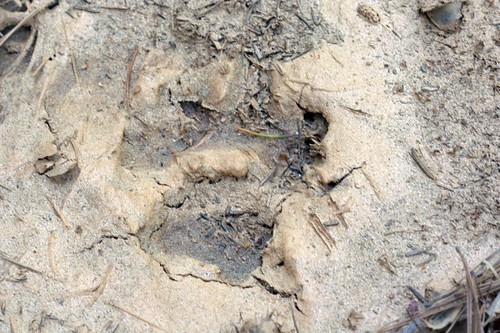
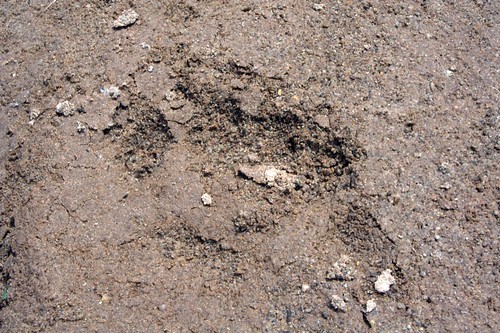
I will have to just leave you with a couple of Mt. Lion footprints from 2011.

The first I found in the Yuba Gap placing cams ahead of the Codger's workshop.


IMG_6935.jpg


The second was found a few days later at the Chimineas Ranch while exploring a canyon with Randomtruth.


IMG_6900.jpg


Lastly an out of focus image of Mt. Lion scat. I can now proudly make bets in a bar that I could distinguish Mt. Lion poop from the other large American carnivores with my eyes closed and my nosed turned up. Just leave out the Southern 40 Miles of Arizona and New Mexico, Jaguars, Ocelots and Jaguarundis; my scent palate is not that refined yet.


IMG_6933.jpg


On another note, what is the currently excepted binomial nomenclature for the mountain lion?  I see it as both Panthera concolor and Puma concolor in fairly recent guides and sources.

Thursday, October 20, 2011

Another Big Buck

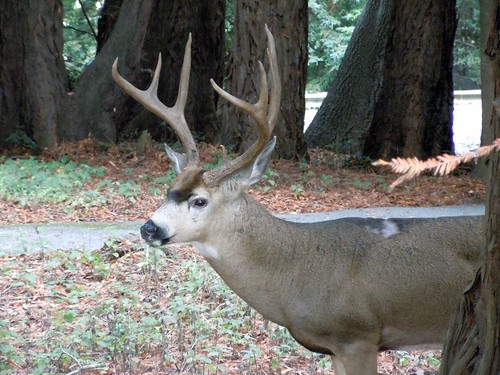
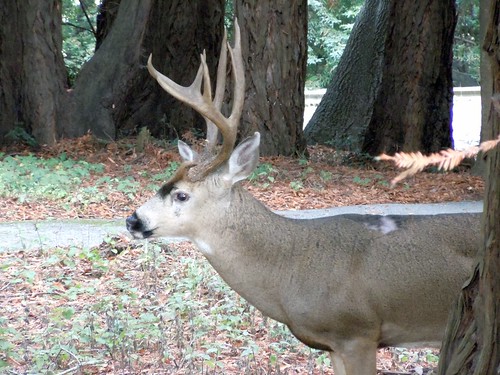
Not sure if this is the same guy I photographed two years ago (probably not), but he is a big one.  He was standing by the side of the road on campus as I was heading into lab this past Saturday, but I only got the images on my computer tonight.


DSCN0404.JPG
DSCN0402.JPG
DSCN0399.JPG

Thursday, March 17, 2011

Herping UCSC Part 2.

Last time I checked in I shared some photos from herping in the Santa Cruz Mountains.  In Part 2 we herp the UCSC Upper campus Reserve and the Campus proper.

Heading down Empire Grade we hit up the Upper Campus Reserve at a flooded meadow.  There we found a Pacific Tree Frog, Pseudacris regilla.

SC-6407.jpg


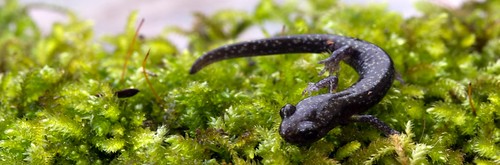
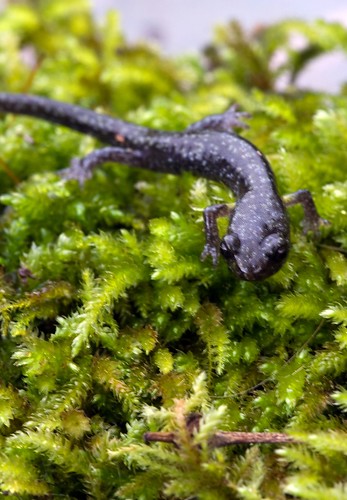
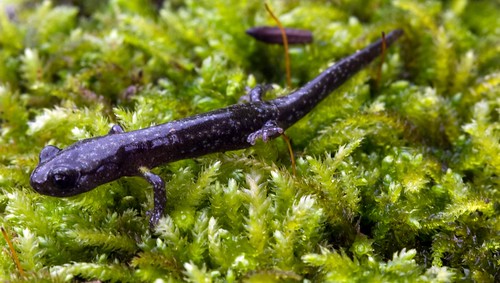
We finished our day on the UCSC campus proper on the hunt for the Santa Cruz Black Salamander, Aneides flavipunctatus niger or just Aneides niger if you prefer.  This is a sub-species (or species if you prefer) that is endemic to the Santa Cruz Mountains.  One isolated population is here on campus, so we headed down to the old quarry to flip some rocks.

At the first site all we could find were Ensatinas and Slender Salamanders, Batrachoseps gavilanensis.  I somehow managed to forget to take a picture of an Ensatina with their beautiful split green eye, but here is a handful of Slenders found under the same rock.

SC-6443.jpg


Leaving the quarry proper we flipped a few rocks on the ground.  Previously we had been looking for rock on rock hideouts.  However, these ground rocks yielded four juvenile nigers!  In person they seemed much more solid black.  The flash accentuates the blue/white flecking.  I had never noticed that green hue that showed up in one individual.  These guys were probably the find of the day.

SC-6427.jpg


SC-6432.jpg


SC-6418.jpg

Heading back to the car we found this arboreal Salamander, Aneides lugubris, under a log.  It was completely patternless but in need of a bath.

SC-6438.jpg

SC-6441.jpg

We also found a very nice scorpion, Uroctonus mordax spp, who was not too happy we had lifted up his rock and this unidentified millipede.

SC-6435.jpg

Tuesday, March 15, 2011

Herping in the SC Mountains and the UCSC Campus Part 1

My buddy John from the East Bay Vivarium came down this past weekend and we did some feasting and herping.  The only thing we collected were the following pictures.  I have to say the weather was not perfect.  Warmish, but some cloud cover.  Not the best for reptiles nor for amphibians. None-the-less we had an excellent day.  More species than I had expected, although we got shut out on Rubber boas and Zonata.  I never expected Zonata; it is still too cool and early but it would have been nice.  Come May hopefully I can bring you some Zonata pictures.

First we headed up Empire Grade to hit some spots on the side of the road.  Flipping an old carpet and another rubber mat we ran into our first herps.

Under the rubber mat was a pair of Northern Alligator Lizards, Elgaria coerulea.  The normal female was gravid with a uterus full of babies that she will give live birth to in a few months.  The male was stunning and patternless.  Even this far north in California the Southern gators are more common so this was a great treat.  I always enjoy seeing wild morphs, such as the leucistic Coleonyx we find in the Mojave Desert.

SC-6344.jpg
Patternless male

SC-6355.jpg
Gravid female

Next under the old carpet we found my first snake of 2011.  It was a nice adult Ring-necked snake, Diadophis punctatus.  In the third photo notice the mangled tail.  The evolved defense mechanism worked!

SC-6358.jpg


SC-6373.jpg


SC-6370.jpg
Mangled tail means the defense mechanism worked
Also under the mat was a Western Skink, Eumeces skiltonianus. We found four or so more at the next stop too.

SC-6377.jpg


Next we hit up another Empire Grade spot and found a pile of roofing tile.  John was much more ambitious than I was and started digging through the 200 plus tiles.  We found Blue-bellies, Sceloporus occidentalis, under every few tiles.  We must have seen 40+ individuals.  Nearly all the adults were female (9 out of 10 or so).  There were also dozens of youngsters running around among the tiles.

SC-6402.jpg


At the bottom of the one of the tile piles was this gopher snake, Pituophis catenifer catenifer.  It looked as if it was just coming out of hibernation, maybe throwing a coil or two out when the sun shined its life giving rays near the tile pile.


SC-6398.jpg


Stay tuned for Part 2 when we get to the Amphibians.

Tuesday, February 8, 2011

Genetic Health

Bison
Photo by H Dragon used under a Creative Commons License
There is controversy brewing between environmentalists and cattle ranchers in Wyoming as plan to cull the Yellowstone Bison herd are put on hold.  Original plans were to cull all bison who test positive for brucellosis, but new data suggests this may cause irreparable damage to the genetic health of the herd.
But the study from Thomas Pringle, a biochemist on the genomic team for the University of California at Santa Cruz, faulted the government as overlooking a hereditary weakness in the bison herd that could be amplified by the culling program.

He found that most Yellowstone bison whose DNA were tested carried a genetic mutation that affects cellular metabolism and makes bison lethargic, rendering them less capable of foraging in deep snow, fending off predators and competing for mates.

Pringle, whose work on other genomes has appeared in professional journals such as Science and Nature, said his bison research demonstrates that culling of the wild herd based on brucellosis, rather on the health of their genes, may push the species over the edge into a form of extinction.

"They're taking a really high risk of killing bison with healthy genes and getting into a situation where they can't go back; the good DNA will be lost," said Pringle, whose paper relies on published genetic data, analyses of bison fossils and samples from herds at national parks like Yellowstone.
Genetic analysis has already become a powerful tool in managing captive populations.  Zoos regularly use basic genetic analysis in choosing mating pairs to maximize genetic diversity.  This method is based on pedigree analysis and is slowly moving towards a true genetic analysis.  However, it is time to use genetic tools to manage wild populations.  Whatever the outcome in this particular case, it is encouraging that newer science is getting a foothold in wildlife management.

Thursday, January 27, 2011

Back from the Brink

Photo by Daniel Gluesenkamp, Marin Independent Journal
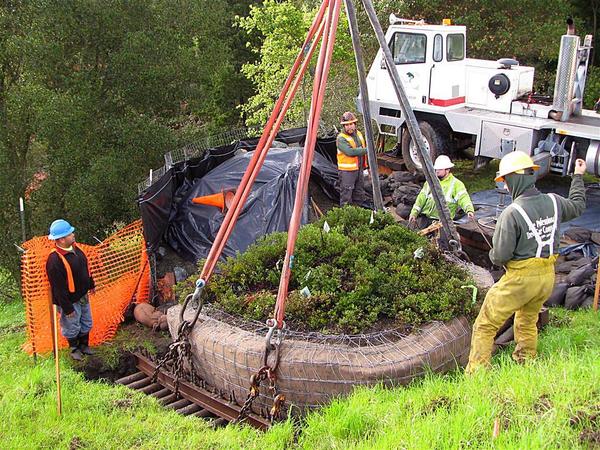
The Franciscan Manzanita once thought extinct was saved when a lone plant was found on a median during Golden Gate Bridge construction.  It is now being propagated through clones at Arboretums around the state including UCSC.  Our friends at Audubon Canyon Ranch in Marin played an instrumental role in relocating the plant from the median a year ago yesterday.  A year to the date later, young clones are hitting the soil in places around California.

Rescued from the verge of extinction, a single wild specimen of a rare California plant now has hundreds of progeny -- celebrated Wednesday in a festive planting ceremony at the UC Santa Cruz Arboretum.

A reversal of fate at a time of so many tough environmental challenges, the future of the Franciscan manzanita now seems secure.

On a sun-drenched afternoon, two of the precious seedlings were nestled into holes along an ocean-facing hillside, gently covered with soil, then ogled by admirers.

Wednesday, December 1, 2010

Bad day to leave the DSLR at home

Bobcats two days in a row!

This time a pair at Younger Lagoon Reserve.  I had a Canon point and shoot with me at the time but did not bring my DSLR.  This was supposed to be an in and out mission to check on a camera and only possibly move it, so I went light.  I won't make that mistake again.

The pair of bobcats were pretty bold and one of them sat there watching me for 5 minutes or so as I snapped a few photos and watched it fill up my binoculars.  They were a little different in size and I suspect the larger bolder one was the male and the smaller shyer one the female, but this is pure speculation.  Bobcats do not show strong sexual dimorphism, but when they do it is strongest in the coastal low-elevation portions of their range (Dobson SF and Wigginton JD).  Considering the bobcats could hear the waves of Monterey Bay from where they watched me I think that qualifies as coastal.  I watched them for a bit and might have been able to sit there for hours without them spooking, but unfortunately they were sitting in the path I needed to go down.  I turned back to where I had come from a waited and few minutes and then came back around the corner but the larger one was still sitting there blocking my way.  I decided to very slowly keep moving towards them and they eventually, very calmly, sauntered into a willow patch.  It was such a treat to see them and have them never spook, just retreat at their own leisurely pace.

White-tailed Kites, Elanus leucurus, were putting on an aerial show, chasing each other and hunting in the fields.  I saw at least 5 individual kites today with a total of 8 sightings.  Some sightings may have been a previously seen kite.  Next time I am out there I will have to try and photograph these guys with a DSLR.

Bobcat photos below:

Not super easy to see, but both of are in this photo.

The larger bolder animal.  Sat there looking at me for quite some time.

The shyer, redder, smaller animal

These three photos were cropped.

Dobson SF and Wigginton JD, Environmental influences of the sexual dimorphism in body size of western bobcats, Oecologia, Volume 108, Number 4, 610-616, DOI: 10.1007/BF00329033


Tuesday, November 30, 2010

Bobcat Sighting

No pretty pictures, but saw a bobcat this morning in the field across from the West Entrance to campus.  It was just to the west of the "High St" (no jokes) label.  See where the tree line goes north-south then jogs west-east quick before going back north-south?  Saw it in the open field heading towards the east end of that west-east treeline if those directions make any sense.

View UCSC in a larger map

Wednesday, October 20, 2010

First Camera is out.

Put my first camera out today (10/17/10) on campus.  I will leave it up for about two weeks and then pull it down.  I will be moving my camera around a bit to keep the hippies from finding it and stealing it even if it means missing out on some of those species that don't like to visit the your trap until a month after it is set.  The camera I have up now is a ScoutGuard.  I still need to buy yeti boards and have RandomTruth help me hack some Sony S600s.

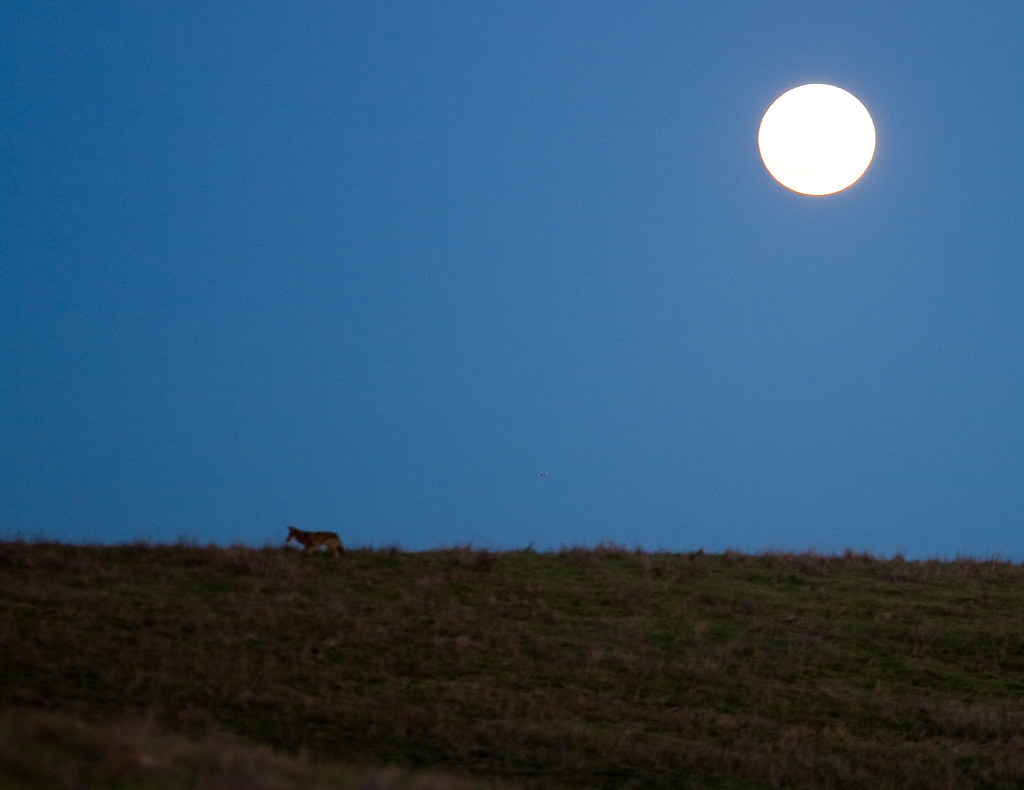
I scouted locations for a couple of weeks and ran into a coyote, well almost ran into.  I came up over a ridge and we were about 10 feet from each other by the time either of us realized the other was there.  I was not quick enough to get my DSLR up and photograph it.  It bailed quickly down the hill.  I tried circling around the ridge hoping to pop out at the top of the ridge and cut it off.  Almost made it, but there was a creek with steep banks that I was not expecting separating us.  Fired off a couple of long distance shots in very low light.  You can almost tell it is a coyote.

IMG_5897.jpg