Title Image

Title Image

About:

This blog is predominately about camera trapping in California. We camera trap to save our souls and to teach primary school students about biology and conservation. We will also touch on other camera trapping news and musings, sets from afar, mediocre herpetology, sucky birding, and other natural history discussions.
Showing posts with label Callipepla californica. Show all posts

Monday, February 6, 2012

A Cast of Critters

I did not get very many good pictures on my last set of 2011, but I am going to post a few anyways. We cannot just have a bunch of link dumps and no original content.

So I present some birds of YLR. All images have been cropped.


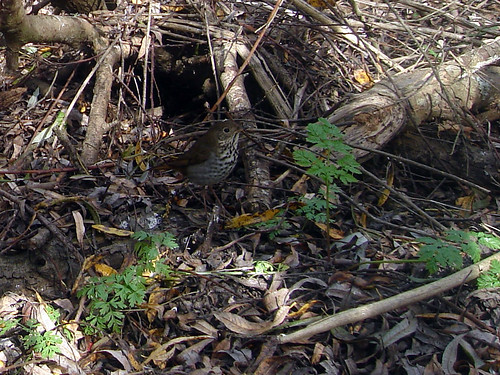
DSC00529.JPG
The Hermit Thrush (Catharus guttatus)
Pale eye-ring, pale chest spots on throat and smudged spots on breast


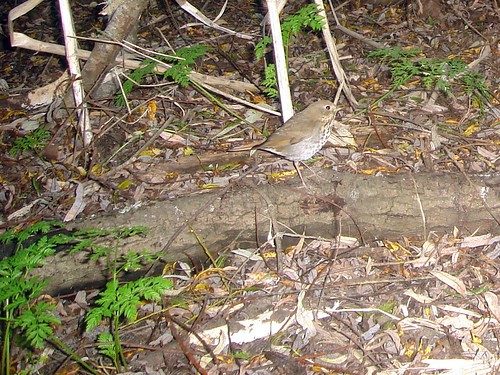
DSC00521.JPG
Good look at the eye-ring and pinkish legs

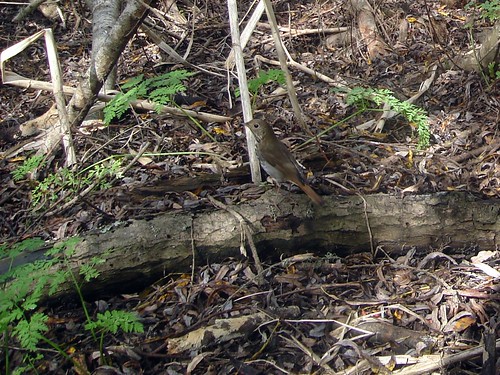
DSC00508.JPG
Brown head and back with "distinctly warm, reddish tail"

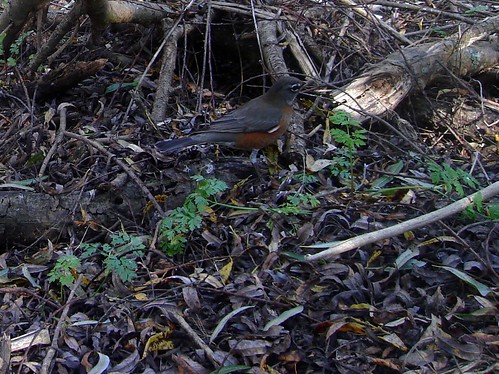
DSC00519.JPG
American Robin, Turdus migratorius

DSC00507.JPG
Another American Robin

DSC00499.JPG
California Quail Callipepla californica

DSC00515.JPG
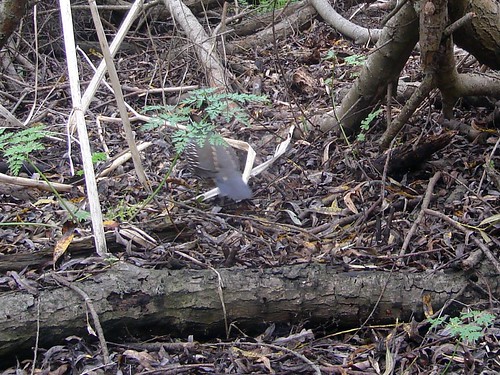
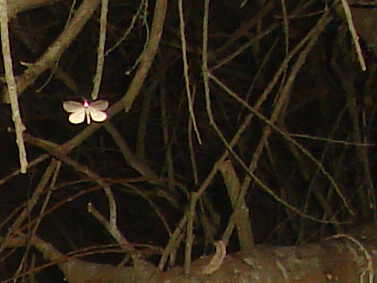
Unidentified flying critter


===============
Cornell Ornithology Lab Links:

Hermit Thrush 
American Robin
California Quail

Sunday, May 8, 2011

The Great Highway

We return to Younger Lagoon for the last set before our current short break to dry cams and plan the next step.

For this last set, we leave behind the High Plateau and the marsh for a new location. Near one of the first set locations is a fence that encloses the reserve on the south and stretches to farmland that surrounds Younger to the east and north. This is also where we came upon a coyote late last year.

I call this location The Great Highway for during the 54 days in operation it featured 7 indentifiable species in transit and 1.7 positive camera trap triggers per day. Not amazing stats, but one must take into consideration the deluge of rain that pounded the Northern and Central California Coasts throughout the months of February and March.

The most common visitor was the Brush Rabbit, with 14 unique visits.


California Quail were also frequent travelers, often in a flock of at least 16 individuals.


Black-tailed Deer and Striped Skunk made several appearances, but the stars of this set were the Younger Lagoon resident family of bobcats.


'sup