Obviously, I am going to continue writing about foxes.
Here in the Bay Area we have two species of fox:
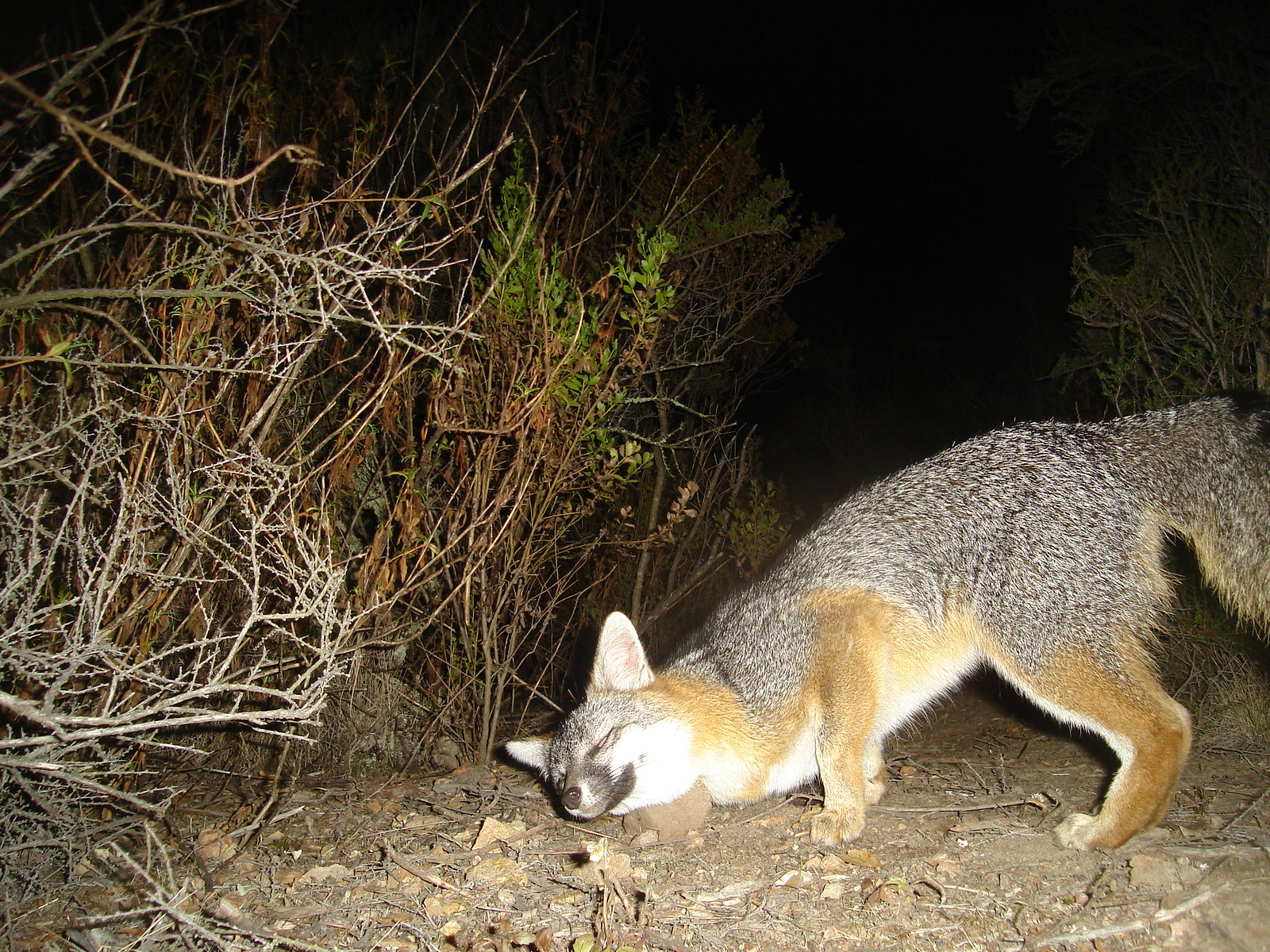
The native gray fox (Urocyon cinereoargenteus), is a mesopredator that has been a constant presence in my Marin County sets, whether deep in redwood/fir forests, throughout maritime chaparral or, the edges of suburbia. It is a handsome creature that I have gown fond of over the past few years.
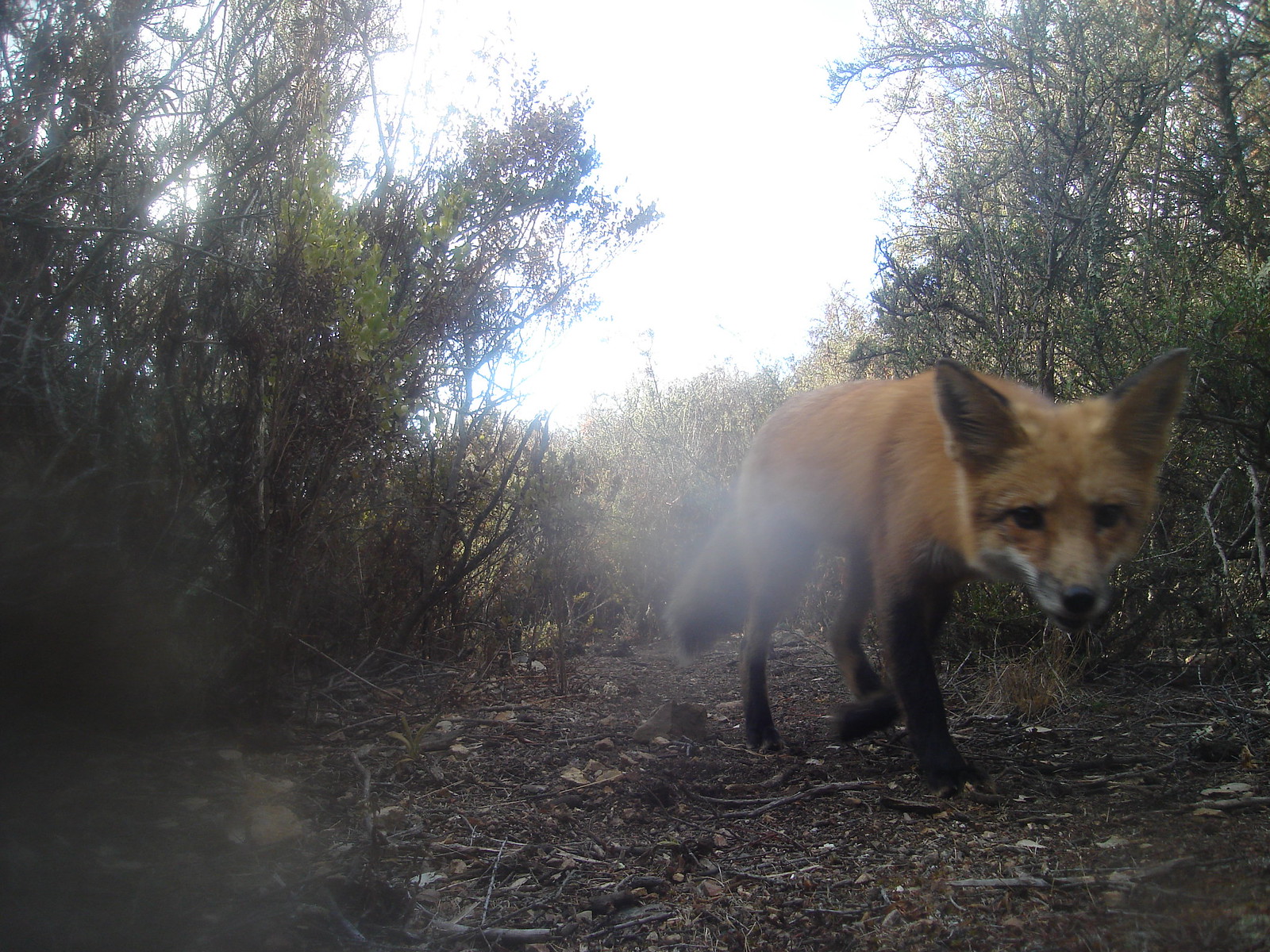
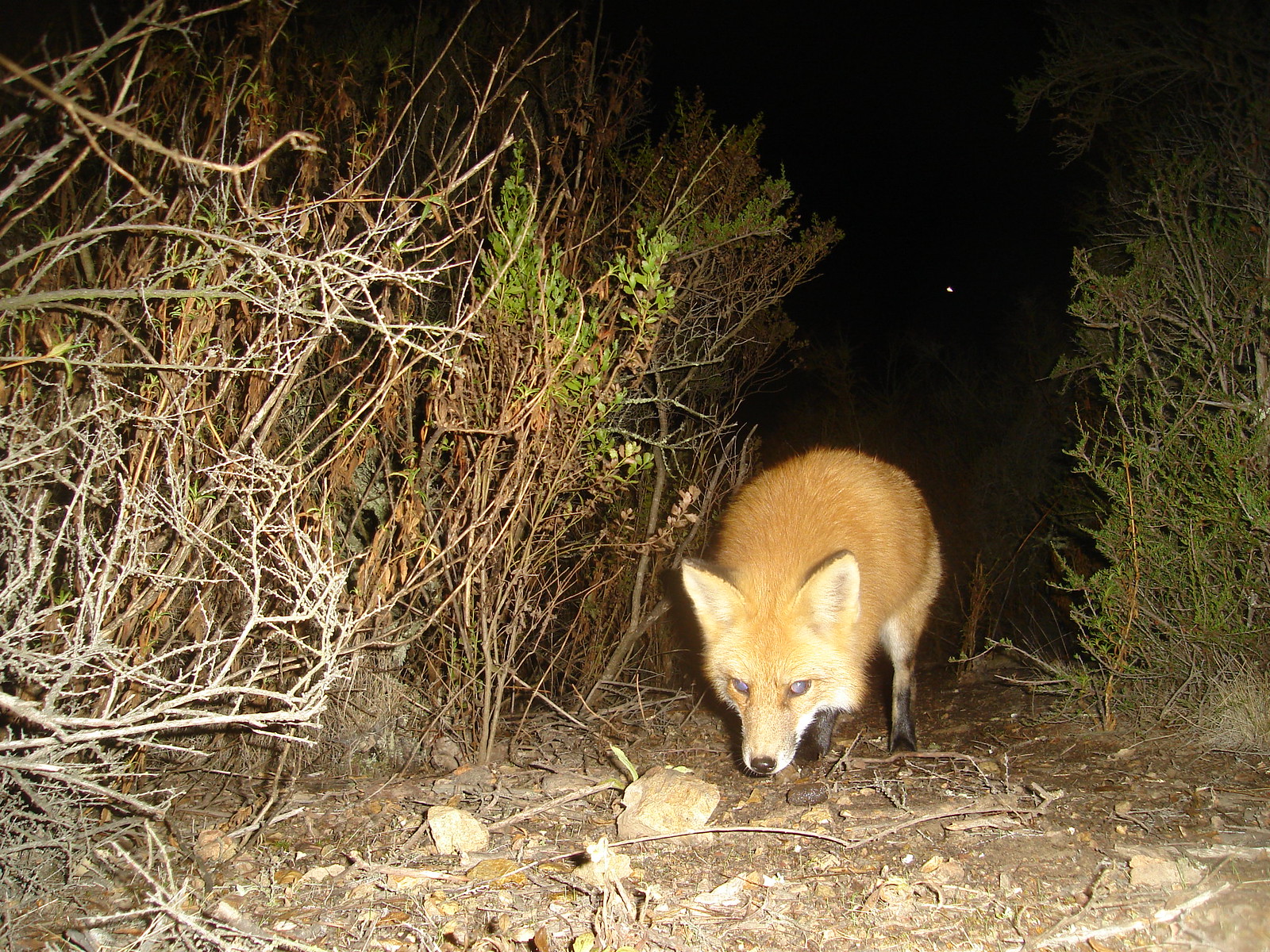
The red fox* (Vulpes vulpes), an alien from the east that was was introduced to California by hunters or escaped from commercial fox farms and probably descended from stock introduced from the Midwest (Red foxes studied in the Sacramento Valley are more like red foxes (V. v. regalis) from the Northern Great plains) -- possibly as early as construction of transcontinental railroad post-Civil War . These alien red foxes soon spread to southern, coastal central and northern California. They are as crafty and adaptable as their cousins, but have not penetrated the forests nearly as much, due to their lack of tree-climbing skills.
Up until this September I had never seen a red fox in California.
As a pretty much lifelong resident of the Bay Area, the majority of my explorations had been in native Sonoma County and nearby Marin, Napa and San Mateo Counties. This summer I began to explore the outdoors of my new residence in the East Bay. In the Oakland Hills, I quickly discovered a wonderful spot that is relatively unknown and quite feral when compared with parks such as Tilden and Huckleberry that are well visited.
As our awesome Indian Summer arrived in full force, I introduced camera traps in my explorations of this park and on my second visit, I caught a glimpse of a red fox quickly fleeing into the oak woods at dusk. They were soon to be frequent visitors to my cameras.
There is not a consensus over the relationship between competing red and gray foxes, though many believe that the reds drive out the grays from more open, treeless habitat. If this is true, then it was nice to see several appearances of the gray fox.

Now, what could explain the lack of previous red fox sightings, especially in Marin, where I have camera trapped for three years?
As the red fox spread through California, their tremendous impact could be seen with a few sensitive species, most notable the endangered and beloved California Clapper Rail. A delicate saltwater marsh resident, its decline accelerated in the 1980s with the arrival of the red fox.
A predator management plan was put into place for the San Francisco Bay in the early 90s which include the use of non-lethal (barriers, live trapping) and lethal measures (when necessary, selectively and humanely). The plan was deemed a success and continued with slight adjustments in 2011.
Much of Marin is connected to these marshes, patrolled by larger predators such as coyote and mountain lion and otherwise is the type of dense forest that is realm of the tree-climbing gray fox.
In the East Bay, the wildlife corridors down from the hills to the wetlands are not as present as in Marin and perhaps trapping and lethal measures were not deployed as much. This is conjecture, for I was unable to find data on specific locations where these measures were used. I also know that there are significant clapper rail populations in Marin (Las Gallinas) and Southern Petaluma, while a smaller population resides in Alameda County (MLK Shoreline).
* The threatened Sierra Nevada Red Fox (V. v. necator) is native to California
Sources:
Foerster, K.S., Takekawa, Jean E., Strong, Cheryl M. “San Francisco Bay National Wildlife Refuge Predator Management Plan” US Fish and Wildlife Service March 1991, Modified November 2011
Lewis, Jeffery S., Sallee, Kevin L. and Golightly, Richard T. “Introduced Red Fox in California” 1993 CA DFG