Title Image

Title Image

About:

This blog is predominately about camera trapping in California. We camera trap to save our souls and to teach primary school students about biology and conservation. We will also touch on other camera trapping news and musings, sets from afar, mediocre herpetology, sucky birding, and other natural history discussions.

Friday, November 16, 2012

Story of a Death Foretold

The Codger has a post up on a Tracking Whodunnit that is getting some good comments.

I have actually had this post in the draft box for a few days so it seemed like a great time to get it finished and posted. I was not intending it to be a quiz post, because I think this one is much easier than the Codge's.

This was a carcass we found in the Mono Basin earlier this Fall. Habitat was on the edge of a wetland. The likely predator should be about as easy as the prey.

Mono-7459


Mono-7458


Mono-7457


Mono-7456


Mono-7460


Mono-7454


Mono-7452


I will say this. Birding is much easier when you get one of the little bastards in hand. Maybe that is why I like herping so much. You can get them in hand and take the time to key them out. My brain might not process fast enough for birds. No wonder the early guys orinthologists birded with shotguns.

Sunday, November 11, 2012

Fox Frenzy / IN SEARCH OF

JK recently posted about finally joining the Aplodontia Club, and with some sweet captures, if I might add. For myself, I have fruitlessly been knocking on the door of the Marin Cougar Club -- and I am not talking about the wine bars of San Anselmo (I have already been).

One would think that it would not be a ridiculous task, but here I am again, with only bobcat and fox images. And the foxes are aplenty.

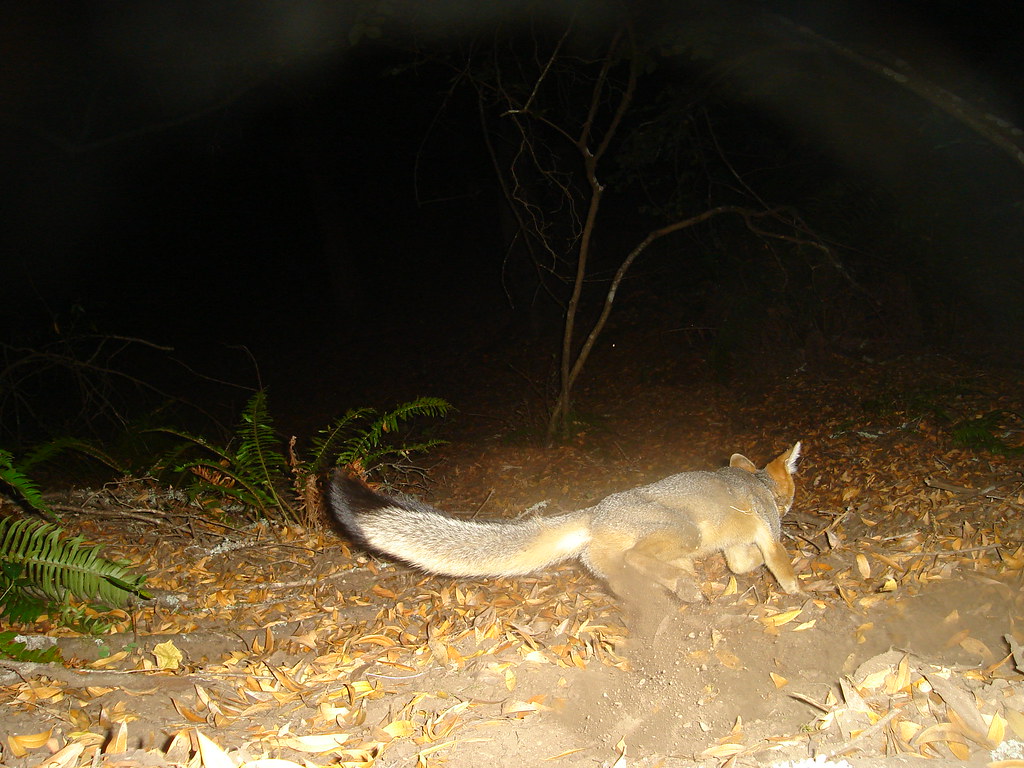
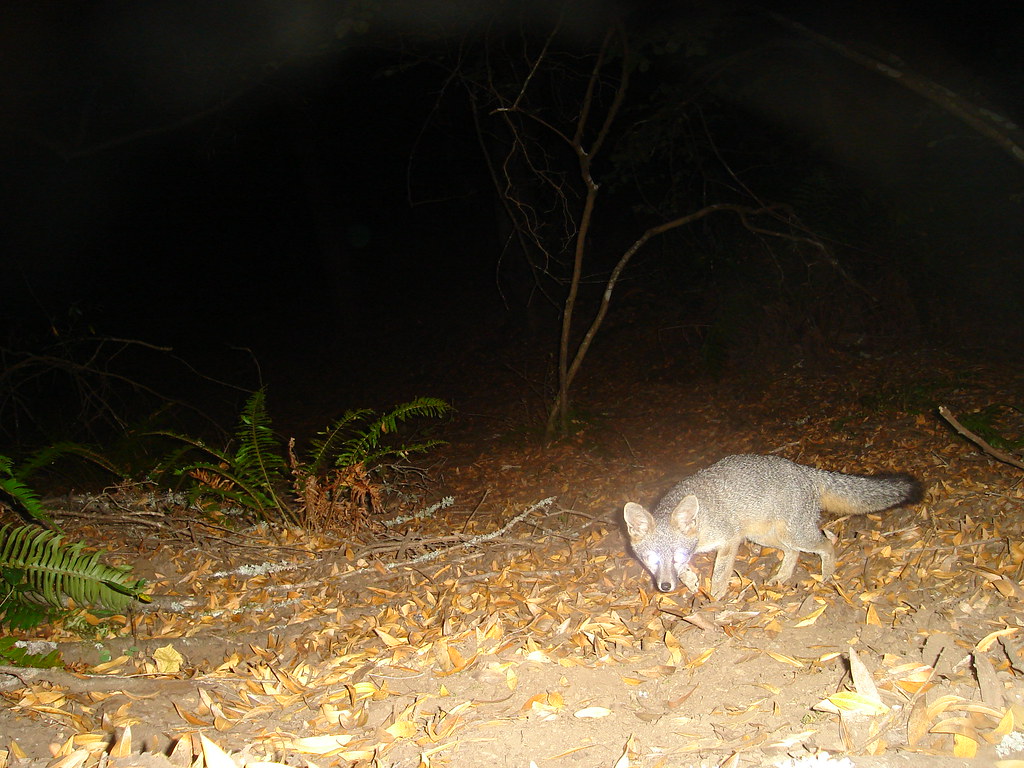
These shots are from the JENGA location in Mt. Tam Watershed, except I moved the camera to the other side of the trail fork with a ~45 degree angle rather than the 90 degree side view.

First!

Peeling out / Digging?

Coming in for a closer inspection.

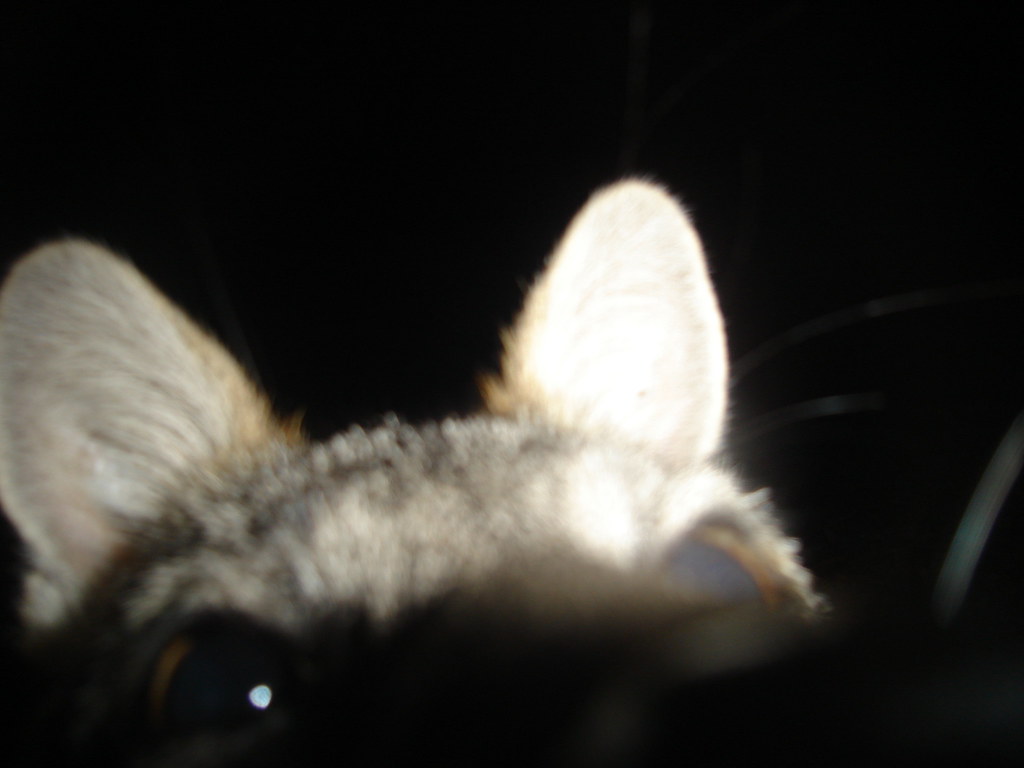
Even closer.

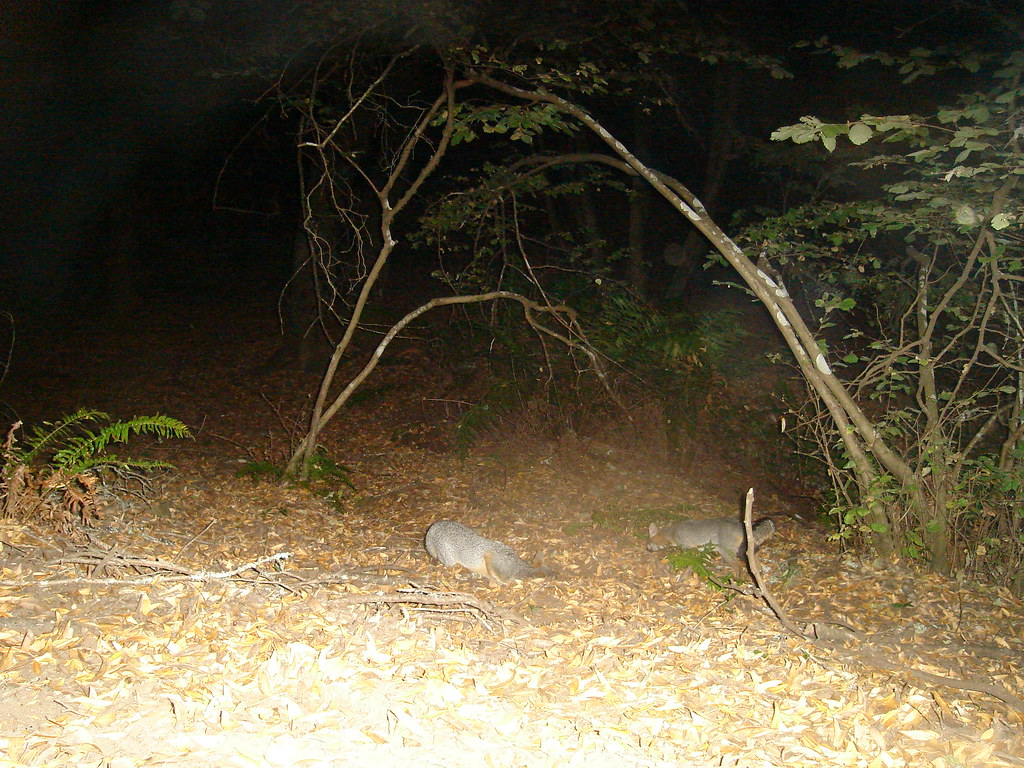
Now a duo.

Closer look at this crew

Fox images totalled 40 out of 103 captures, with 14 unique visits over 38 days.


A few other non-Mountain Lions dropped by:

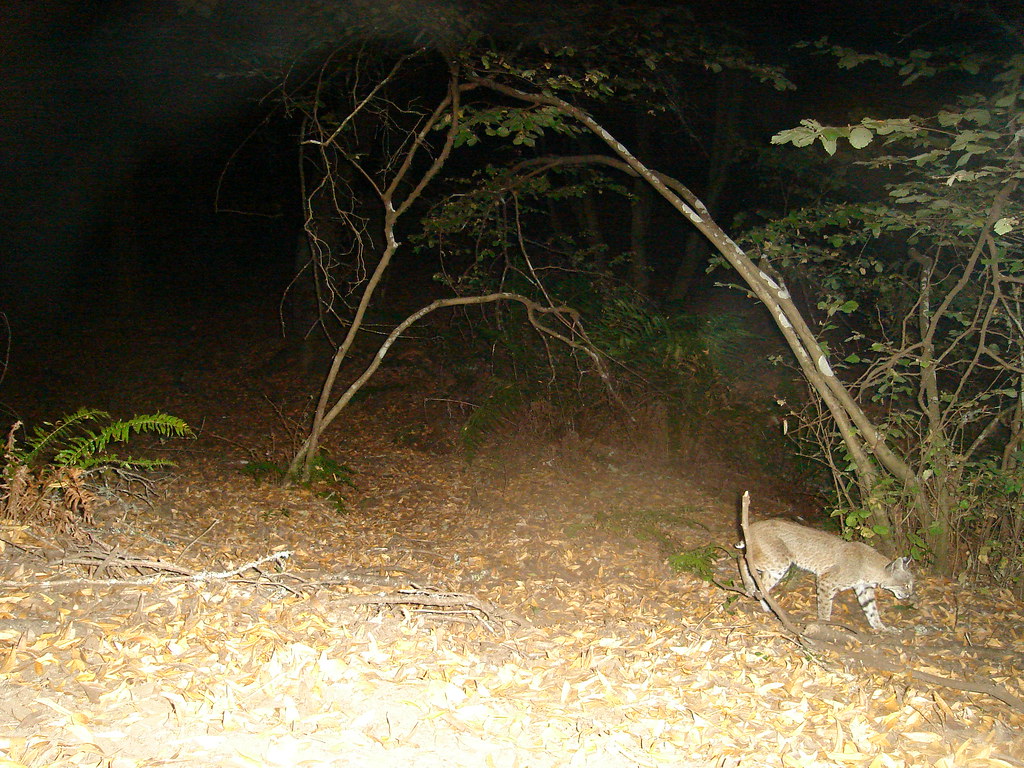
focused Bobcat

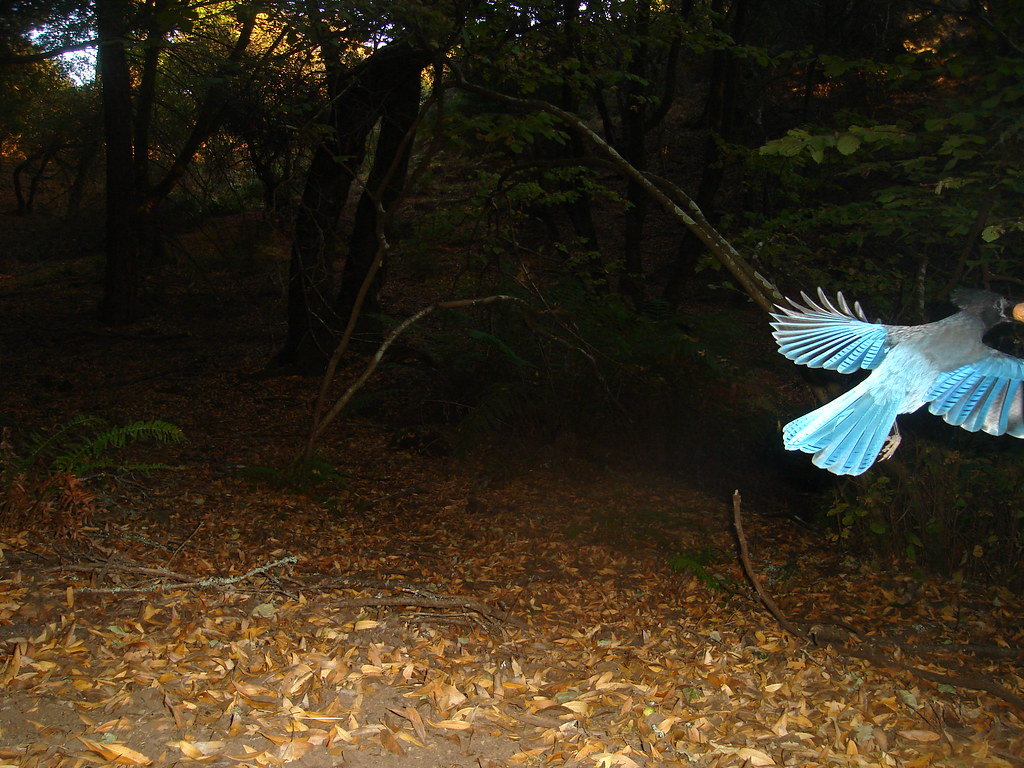
Almost sweet shot of Steller's Jay

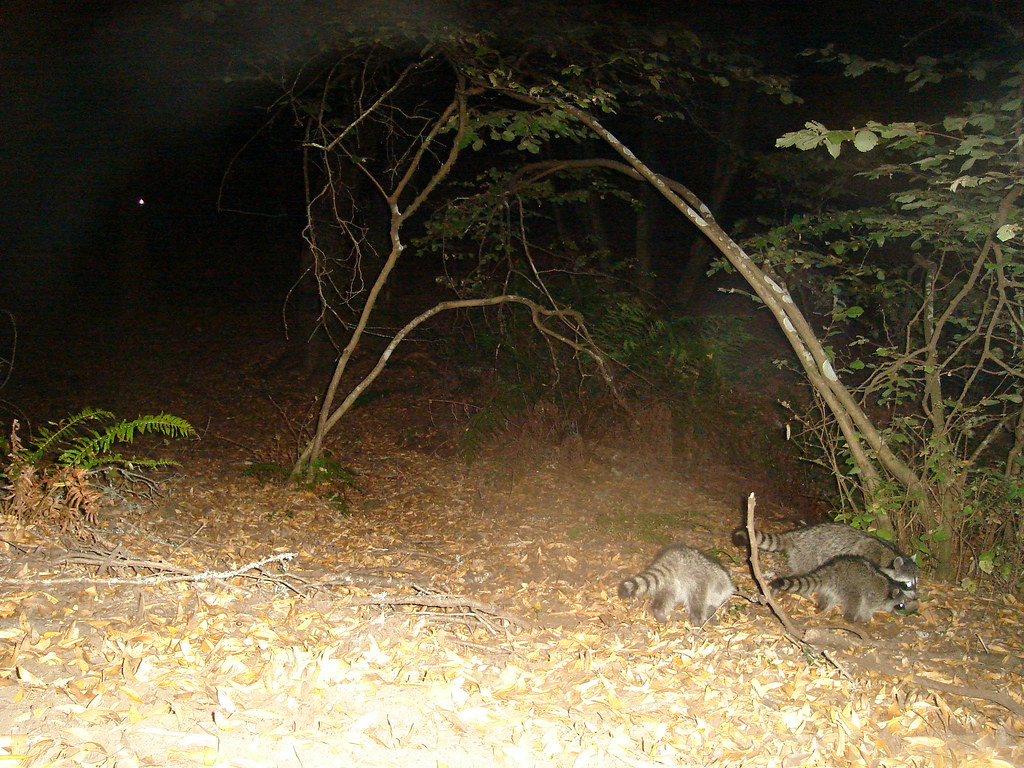
Raccoon Fam

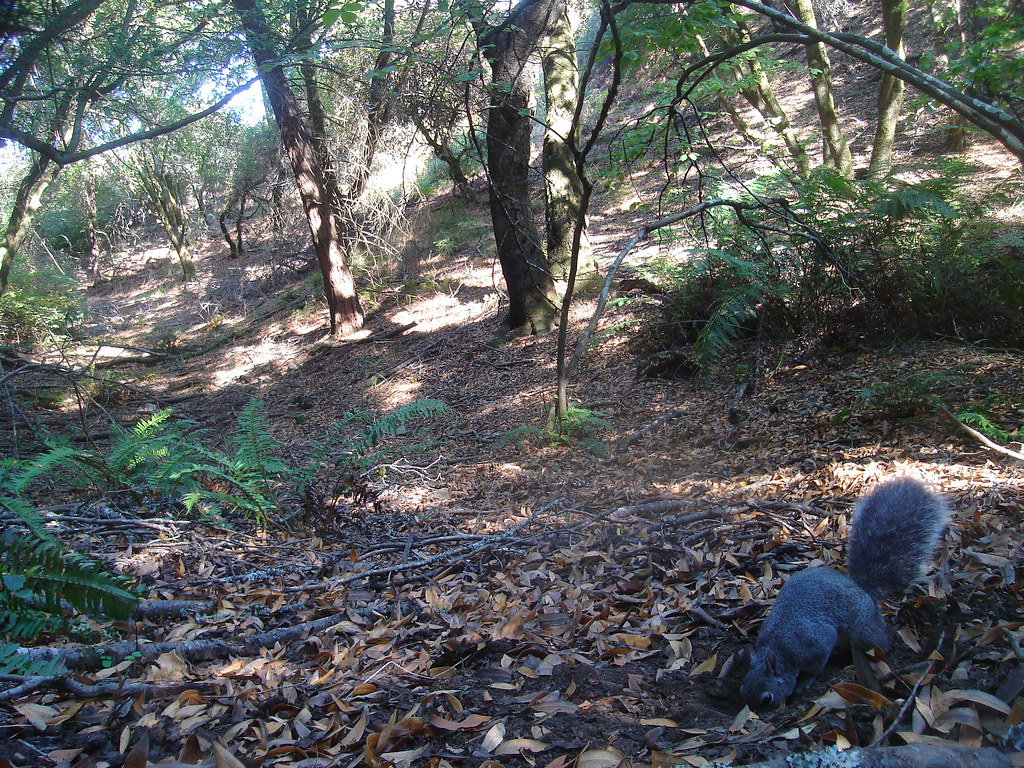
Western Gray creating  / accessing seed cache.


As much as it pains me, I might have to move from this location unless signs of the Shadow Cat become apparent.


Next post, I will be in my own backyard across in the East Bay for the first time with camera trap !
Will the foxes follow me?

Tuesday, November 6, 2012

Just a couple of birds

The Aplodontia set didn't only get rodents large and small. No, unfortunately not mustelids, but it did get a few birds.

I present them with little commentary for your viewing pleasure.

DSC01647
Swainson's Thrush, Catharus ustulatus. First time on camera trap for CTC

DSC01669
House Wren, Troglodytes aedon. Also first time on camera trap for CTC


DSC01669.crop
Crop of above image. This is where the lack of a good angle on the bill led me astray. I thought I saw a lack of yellow on the base of the lower bill which caused me to prematurely eliminate House Wren. But after Seagull Steve corrected me I can now see that this bird has House Wren jizz written all over it. 

The trouble with IDing birds by camera trap is that you might get only one image and be lacking angles to key features used to properly ID the bird. The nice thing about IDing birds by camera trap is that they cannot fly away while you are trying to ID them. I have also found that it is a way to get images of some of the shyer species that like to stay deep in the brush. I have never made a set specifically for passerines, but it might be something to try in the future.

Thanks as always to Seagull Steve for ID confirmations and corrections.

Now all you Americans, be good and go VOTE!

Thursday, November 1, 2012

Battery Suckin' Varmits

Back to the Aplodontia set on the Yuba River this past Summer.

I mentioned that the camera only took pictures for 6 days. Well, that's what happens when you have a little rodent running in front of your camera causing the flash to go off all night long.  These guys were using the Aplodontia burrow as a highway. There was nothing left at this location by me that would have attracted mice (ie. no seeds or other food). They did seem to have some interest in the Aplodontia's hay piles.

The major culprit (I believe) was Zapus princeps pacificus (Merriam 1897).  Zapus come out of hibernation when the soil temperatures reach 8-9.5°C. These images were from late June after they had come out of hibernation and were busy putting on all the body fat they had lost over winter.
Zapus princeps most commonly occurs in mesic, montane habitats. It occupies plant communities dominated by alder (Alnus) or aspen (Populus tremuloides), stands of willow (Salix), and meadows where forbs and grasses are abundant. Typically they are found in close proximity to water in areas of dense vegetation along streams 
The above paragraph just about perfectly describes the habitat that these images were taken in. The set was in the undergrowth of an alder thicket, with nearby willows and 50m or so from an open meadow. The Mt. Beaver tunnel had standing water itself and the nearby meadow also has a stream running through it and many flooded plains.

DSC01473

DSC01475
Mid-jump!


DSC01575

DSC01495

DSC01574
Bi-colored pilage

DSC01595
Scratch, scratch, scratch

DSC01653

DSC01654
Look how long that tail is. It drags all the way to the ground.

DSC01655

DSC01657

DSC01656

The second culprit below I am a lot less sure about. It is definitely a member of the genus Peromyscus. The huge ears lead me to Peromyscus truei. It could also be P. boylii or P. maniculatus and the large ears are just a juvenile characteristic as the set was also in their range.

The tail does appear shorter than the head and body combined (strike against P. boylii). It is hard to tell because of shadows but the tail may slightly be bi-colored (P. maniculatus should have a sharply contrasting bi-colored tail), but seems to lack any tufts on the end (strikes against boylii and truei adults). P. truei juveniles have a grayer pilage which seems consistent with this individual. Hard to tell from the angles of these pictures but it appears that the hind foot is smaller than the ears (strike against P. truei) and the ears don't appear to be heavily furred (consistent with P. maniculatus). The fur is slightly darker on the dorsal side than the flanks (P. boylii might expect more distinct lateral line, but may be missing in a juvenile). There is extensive white on the belly, legs and ankles (Maybe too much for P. boylii).

So a lot of words to come to no conclusion. We need to look at its teeth and measure its hind foot, but any thoughts from the comment gallery are most welcome. Thanks to the Codger for talking me out of thinking I was sure on this ID.

Hart et al suggest that "Zapus princeps competitively excludes the deer mouse, Peromyscus maniculatus, in the field".  If is also the case that it competitively excludes all deer mice then this Zapus is not doing a very good job. Maybe the lack of exclusion has to do with the niche being a Mt. Beaver tunnel rather than a tunnel exclusive to smaller rodents.

DSC01704.crop
Cropped image. Could probably hear the campus mess hall 400m away with those ears

DSC01730.crop
Tail considerably shorter than head + body. Hard to tell if it is bi-colored or just a shadow

DSC01726.crop
Appears from this angle that the tail may be slightly bi-colored, but again may be a shadow.
DSC01701


DSC01704


DSC01726

DSC01730


Works Cited:
Hart EB, Belk MC, Jordan E, and Gonzalez MW, "Zapus princeps",  Mammalian Species 2004 749, 1-7 [Link]

Merriam CH, "Three new jumping mice (Zapus) from the northwest." Proceedings of the Biological Society of Washington 1897 11:103-104


Monday, October 29, 2012

Sights of Fall in the Great Basin

I went to the Mono Basin with Randomtruth and the Codger in early October with thoughts of grandeur dancing in my head. We might see trees that actually change color in the Fall, we might see life birds, we would pick up a couple of RTs cameras filled with the possibility of exotic (to us coastal dwellers) critters, we might even see a late season Great Basin Rattlesnake, but we were guaranteed to have good company, some good beer and great food.

We saw Fall colors. We saw wild canyons. We saw bizarre geology.

Life-birds will have to wait for another post.

Mono-1-2

Mono-1-3

Mono-1-4

Mono-1-6
Yes, basically the same image as above that my post-processing software really wanted to make more orange than yellow, probably due to the image being under-exposed. The true color may have been somewhere in between, but I honestly cannot remember. I was mesmerized by the quacking leaves. Don't judge, you would have been too.


Mono-1-7

Mono-1-8

Mono-1-9

Mono-1-11

Mono-1-12

Mono-1


WTF, with that last image you are thinking?!?

That doesn't look like Fall colors. Well you would be right. It doesn't look like Fall.

What it looks like is the snowstorm we hit going over Tioga Pass into Yosemite Valley on our way home.  A few hours later the pass was closed because of the snow. We made it through just in time.