Title Image

Title Image

About:

This blog is predominately about camera trapping in California. We camera trap to save our souls and to teach primary school students about biology and conservation. We will also touch on other camera trapping news and musings, sets from afar, mediocre herpetology, sucky birding, and other natural history discussions.

Wednesday, September 7, 2011

Dune Critters

I forgot I still owe you all more desert photos.  Hope you still care enough to take a look and can make it through this looooooong post.

IMG_6705.CR2.jpg


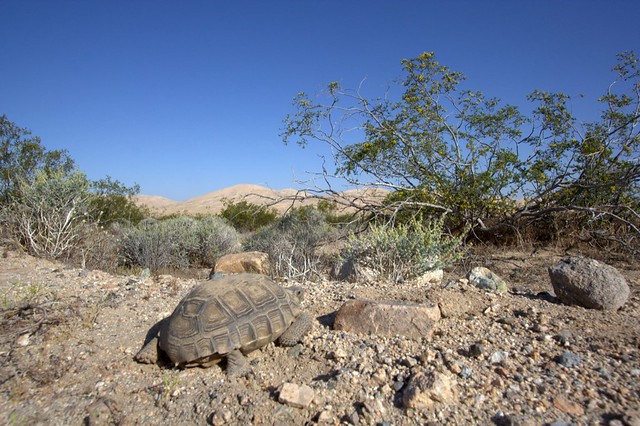
In case you weren't able to guess where we found this previous desert tortoise at the end of the post, it was in the Kelso Dunes.


IMG_6639-1.jpg


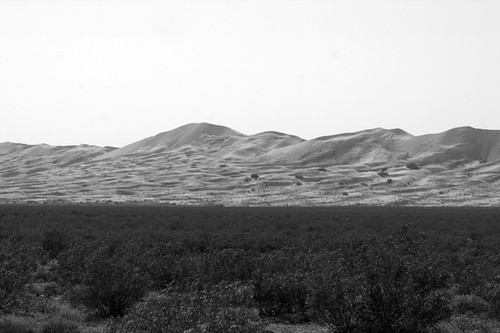
Speaking of the Kelso Dunes, Randomtruth, reminded me of this video from the BBC's "Life in the Undergrowth," that was filmed in our dunes.  Welcome to our playground Sir Attenborough.  The video tells the fascinating life history of the blister beetle, Meloe franciscanus, which can be seen running around frantically all over the dunes and on the road into them.


Now back to the pictures and our story of the dunes.

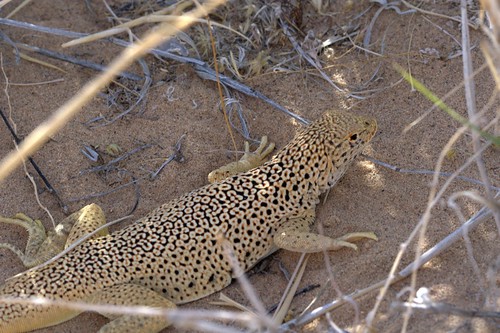
Uma are a species of lizard known by the common moniker, fringe-toed lizard. They are endemic to a few isolated dunes in the deserts of the American Southwest and Baja California. The Mojave species is Uma scoparia.  These guys are quite easy to see running around the dunes, but unless you are looking hard you usually only see a tail in the air as they speed away from you.  Early in the day before they have had a chance to warm all the way up they move a little slower and are easier to sneak up on and photograph.
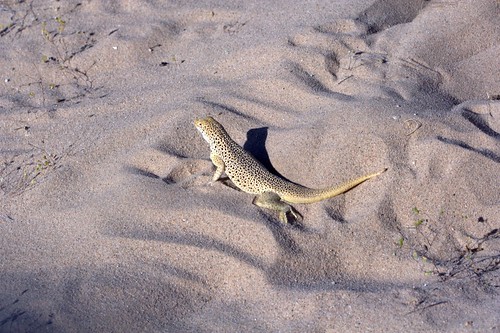
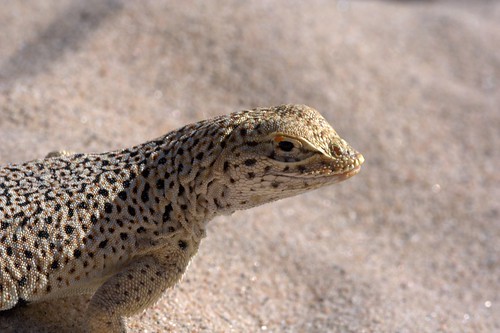
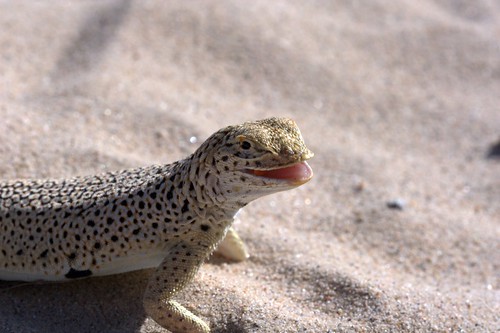
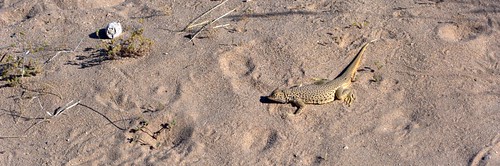
IMG_6673.jpg

IMG_6657.jpg

IMG_6648.jpg

IMG_6652.jpg

IMG_6720.jpg


While pictures are nice you have to see these guys move to really appreciate them.  Here is a short video of a fringe-toed lizard in a PBS Nature special on Death Valley.


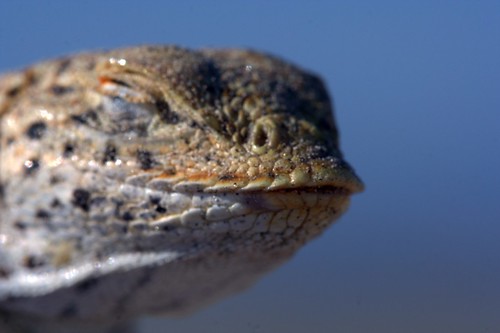
Here are a couple of close-ups to show the adaptations that make them swim through the sand.
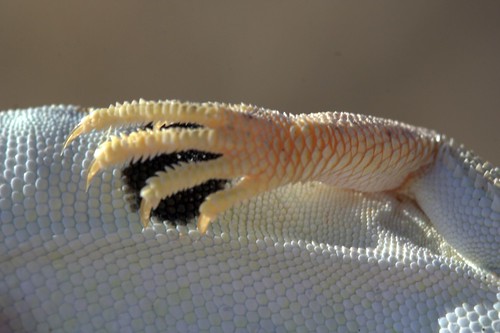

IMG_6670.jpg
The fringe-toes that give Umas their common name. A little out of focus, sorry.


IMG_6667.jpg
A snout made for diving into the sand

IMG_6662.jpg
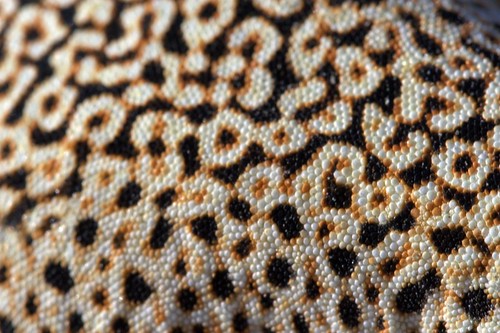
Pretty patterns don't really help them swim in sand but are nice to look at anyways


John and I spent well over an hour with the sun radiating off of the white sands tracking a sidewinder.  Most every night the wind blows and erases the day's tracks giving a fresh slate every morning.  This allows for excellent tracking. We followed its tracks losing them and refinding them, losing and refinding, over and over again for hundreds of meters.  The rest of the group would wander over to check our progress get bored and move on.  Come back a bit later to see if the crazy men had found their prize and move along again. Unlike in years past we had to give up, out of water, hotter than hell and embarrassed at our defeat.
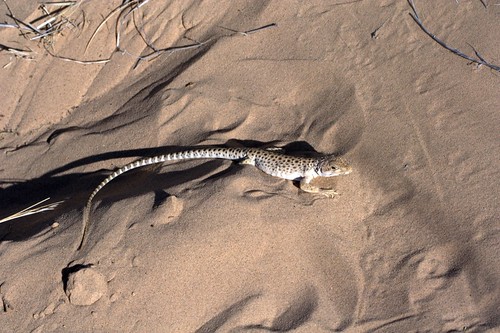

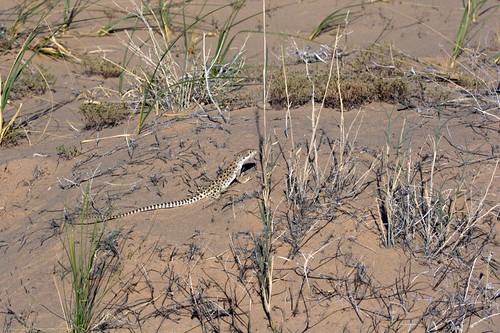
IMG_6679.jpg
Long-nosed leopard lizard, Gambelia wislizenii


IMG_6659.jpg
Long-nosed leopard Lizard, Gambelia wislizenii

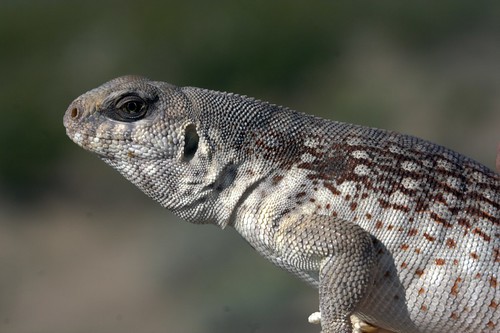
IMG_6719.jpg
Desert Iguana, Dipsosaurus dorsalis


Along the way we found many a coyote track, lizard and snake tracks, rodent tracks and a veritable kit fox highway.
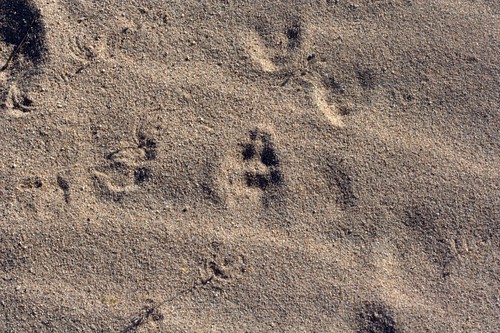
IMG_6674.jpg


It is quite fun to look at all the tracks and imagine all these creatures plying their way through the dunes overnight and early morning.  I just love the idea of trotting Canidae out on the prowl before it gets hot, prancing among the dune evening primrose.
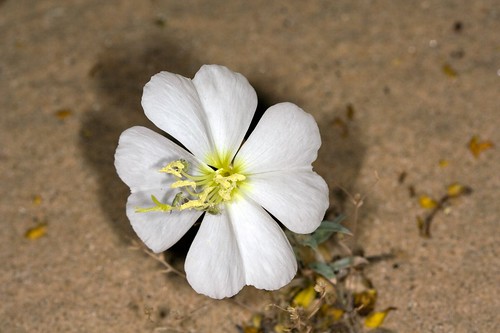

EBV-5196.jpg
Oenothera deltoides

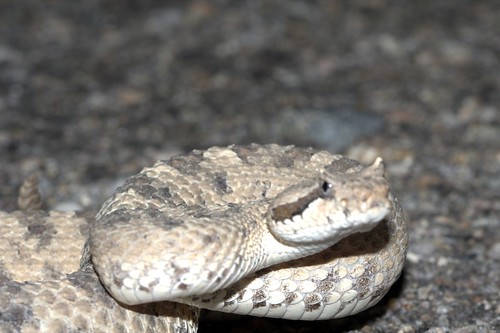
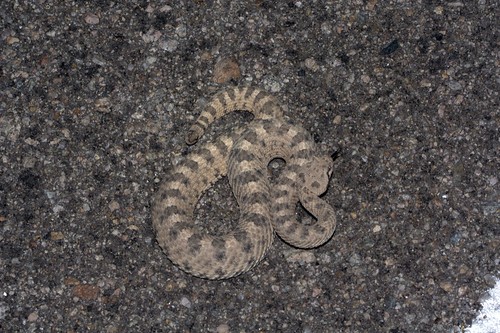
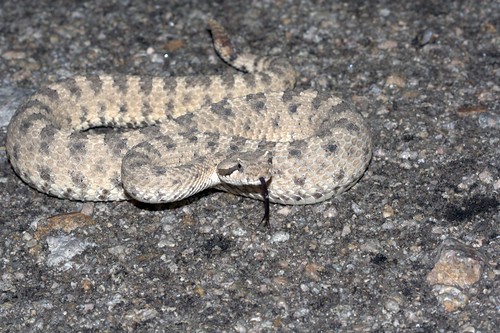
Despite being shook by the Crotalus cerastes, all was not lost.  We ended up find nine of them on the road during our two-hour or so night drive.  I am not sure I would have put in all that time tracking if I had known our best cerastes night ever lay ahead of us, but I do really get enjoyment out of tracking in the sand.


IMG_6772.jpg


IMG_6770.jpg


IMG_6767.jpg


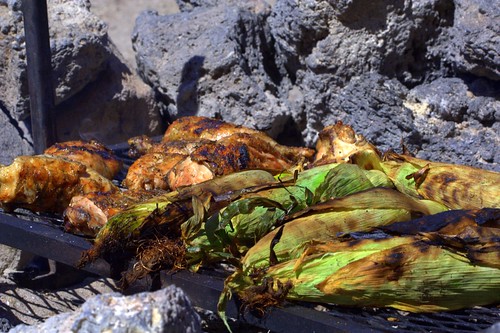
I will leave you with one campfire lunch picture from the day.


IMG_6627-1.jpg

Monday, September 5, 2011

Link Dump


Photo of 2nd White Shark at MBA by friend and Flickr user baltus15

African Golden Cat video from a camera trap with multiple videos.  You can see another camera in the background so they got both sides of the cat.  Wonder if the other one was set to video or still?

The Green Anole, Anolis carolinensis, genome is published in Nature.

Humpback Whale is hanging out in Monterey Bay and is visible from the Boardwalk on many days. Hopefully it doesn't do this.

Wishing the Chancellor a speedy recovery.

Mt. Lion roadkill on the 405 in Los Angeles.  Bummer.

The story of the WWF logo.

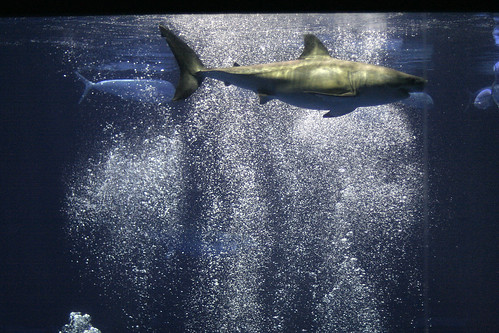
Monterey Bay Aquarium has a White Shark on display again. GO SEE IT!

UC Berkeley Scientists discover a supernova within hours of its explosion (well within hours of the first light from the explosion to make its long journey to Earth). You can even see it with a pair of binoculars. GO SEE IT!

I originally had a photo of a monster (for us coastal folks) buck for this link dump, but the shark wins with authority.  Those of you who drool over big bucks will have to wait another week.

Friday, September 2, 2011

Sierra Valley Foxes

As the Codger alluded to, we picked up some cameras in the High Sierras a little while back.  I also did a short set at a cabin I was staying at in Sierra Valley.  First, because this blog is in desperate need of some camera trapped mammals before we get back to the birds I present two, one-night sets.

The first night I put up my camera on a rock 10 feet or so from the rock we (CTC, The Codger, Randomtruth and SPP) used to get the brother fox visitor that was so interested in the Mr. Screechy doll back in June.

Right on cue, we got a fox visitor in five images. 2 for 2 for foxes in this locale. Randomtruth and I discussed the fact that the property must be on the regular nightly loop for this fox.


Only later did I realize that there were two foxes in this image.


The next day I was wandering around the property looking at the Native American acorn grinding pestles (I gotta start taking handheld shots for these posts) in the granite rocks when I started to notice a lot of fox scat. I mean A LOT.  Hundreds of them. Around the base of a rock outcropping.  In between the rocks. Everywhere.  Some old. Some attracting flies.  I figured that the foxes might be living in the dark recesses of these rocks mere feet from the campfire ring. The property may not just be on the nightly loop, but it appeared that it was on the daily hide-spot circuit too.

I soon found a rabbit foot.  Then a squirrel haunch. Then a bird wing. A wing that may or may not have been a chicken. Boggis, Bunce and Bean are not happy.

So I reset on this outcropping hoping that I would get them again, this time with both foxes in full frame.


3 for 3.


Not sure if this is a mated pair of foxes or Mrs. Fox, that sexy vixen, and her older pup.  One of them seems to have those fluffy paws that are a touch too big for their body, making me lean towards mom and pup.

This potential pup looks more Ash than Kristofferson Silverfox though.


I always enjoy the out of focus nose right in the camera image.


Are either of these foxes the same brother fox from two months ago?

One of them found the stick dipped in Predator 700 lure.  Carried it to lower ground and licked it and moved it again. Or maybe ate it as the stick disappears in the next image. Yum. Notice the not-so-fluffy paws.


The eye shine is pretty rough in some of these images, but I am not really sure there is any good way to reduce it, other than post-processing which I was not able to do without the eyes looking fake.  No perfect picture in the bunch but a good number of decent ones.

We will see if we can make it 4 for 4 the next time we are up in the area.

I will delay the traditional (if 5 weeks is a tradition) Friday Link Dump until Monday to keep from stepping on a busy week of posting by CTC standards.  Hopefully the Codger doesn't steal too many of our links. :)

Wednesday, August 31, 2011

Arabian Leopards


Friend of the Blog, Sebastian Kennerknecht, is doing a fundraiser over at kickstarter for a camera-trapping and wildlife photography project on the endangered Arabian Leopard.  Check out the pumapix blog for more details. Sebastian is offering 40% discounts on his work for anyone making a donation of $50 or more, on top of the other goodies you receive for your donation. The project is spear-headed by David B. Stanton who has a very ambitious goal of raising $15000 in the next month. $15000, will fund the project for an entire year. As readers of this blog know, camera traps of endangered animals is a great way to bring publicity to the cause via the Main-Stream Media. Seabass will be headed to Yemen to work on this project in the coming months.

I have donated through kickstarter before and it is a great way to fund small projects.  In my experience project leaders are very good at regularly updating their donors on the progression of the project. The way kickstarter works is that you pledge a donation.  When, (if) the goal is reached you are charged for your donation.  If the project falls short of its donation goal, all pledges are canceled and you are not charged.  This method insures that projects are fully funded or not funded at all.

I know times are tough economically but funding small projects ensure you get way more bang for your buck than traditional non-profits.

CTC is in for $50 $100

Tuesday, August 30, 2011

Going In

image from www.sierraclub.org

"I only went out for a walk and finally concluded to stay out till sundown, for going out, I found, was really going in."
John Muir

Growing up in the Bay Area, John Muir was a constant presence. Whether it was exploring the coast redwood forest in Marin named for him, visiting his home in Martinez on family day trips, or reminders of his passion and adventure every summer from teachings of the greatly missed Mrs. Terwilliger, his name and life continued to present itself; for his impact on our world and especially for that of Californians, cannot be undervalued.

Thankfully, the Oakland Museum of California has put on an exhibition celebrating his wild adventures, scientific contributions and ardent spirit that is well worth a visit. Each section of the exhibit provides interactive elements that appeal to both kids and the older folk. It also introduces modern day followers that carry the torch for preserving, appreciating and interacting with the natural world.

Highlights include animal dioramas connected to his behavioral observations, multi-sensory interactive explorations of some of his favorite lands (the vivid panoramic photos of Yosemite alone caused drooling from this particular nut) and selections from his journals and plant pressings.

The lone disappointment was the attempt to recreate some of his hairier adventures. These included sitting inside a tree during a wildfire and climbing to a ledge behind Yosemite Falls to view the moon. For such surely awe-inspiring events, the payoff was quite low.