Title Image

Title Image

About:

This blog is predominately about camera trapping in California. We camera trap to save our souls and to teach primary school students about biology and conservation. We will also touch on other camera trapping news and musings, sets from afar, mediocre herpetology, sucky birding, and other natural history discussions.
Showing posts with label herpetology. Show all posts

Friday, July 10, 2015

#FAIL

I was in Chicago a couple of weeks ago and saw this book in the Art Institute of Chicago.


Books with a Fennec Fox on the cover are always going to grab my attention.

As I flipped through it I enjoyed the photographic style

But then ....


Epic FAIL

Wednesday, September 10, 2014

Finding My White Whale

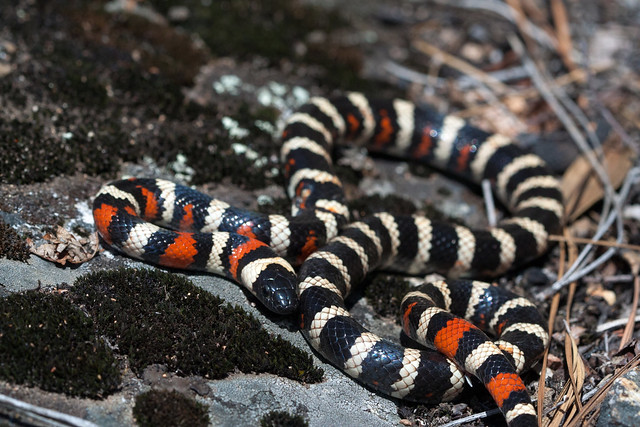
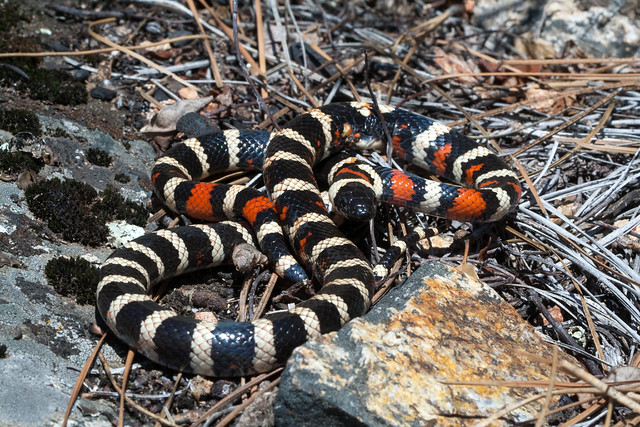
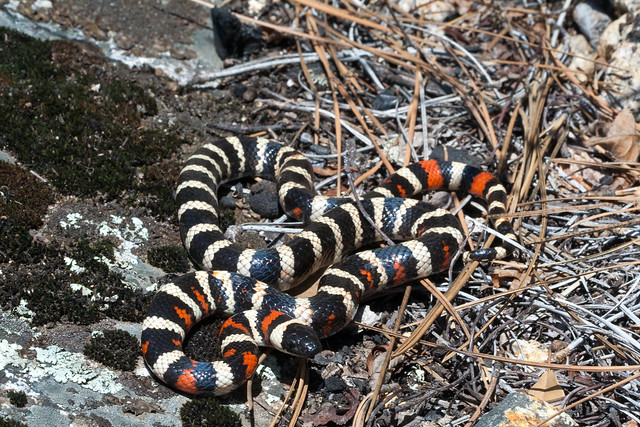
In Spring of this year, I got the call from Sean that we were on for a Zonata hunt, if I could get out during the week. Coming with us (more accurately taking us) was the esteemed California Mountain King researcher Mitch Mulks. If I was finally going to slay my white whale, Mitch was the person to help me do it. Mitch is the author of a beautiful book with lots of great photos of the different locales of Zonata (which looks to be out of print and going for $300 on Amazon!, maybe I need to sell my spare copy?!?). You should still be able to buy a copy for less than that at the East Bay Vivarium though.

We wandered around El Dorado County a bit and actually found this snake at the first spot we stopped at after about 30 minutes of searching. It was in a crack in the rocks, barely exposed. Mitch called me over to see it in situ before we pulled it out to get a good look. I have to admit I never would have seen it, and I don't know how he did. I guess thousands of hours in the field looking for Mt Kings make your eyes sharper. We admired it for 10 minutes and photographed it and then put it back in its little crack of a home.

ElDorado-8203


ElDorado-8202

We never sexed the snake, but we did notice an old wound on its side that was mostly healed. It looked like maybe it had been pecked with a beak.

ElDorado-8198

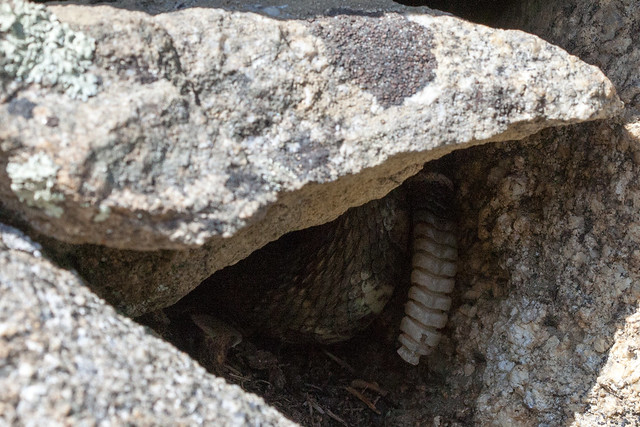
The other guys had seen 4-5 rattlesnakes on the day and I hadn't seen a single one. In the midst of complaining about this fact, while walking along stacked granite wall, I got buzzed good. The rattles came about 12" at thigh height and I did the hip sway dance as I passed them. Walking back there were two individuals in this crack. One was calm and not bothered, the other shook that rattle constantly. I snapped a couple of proof photos and let them be.

ElDorado-8209


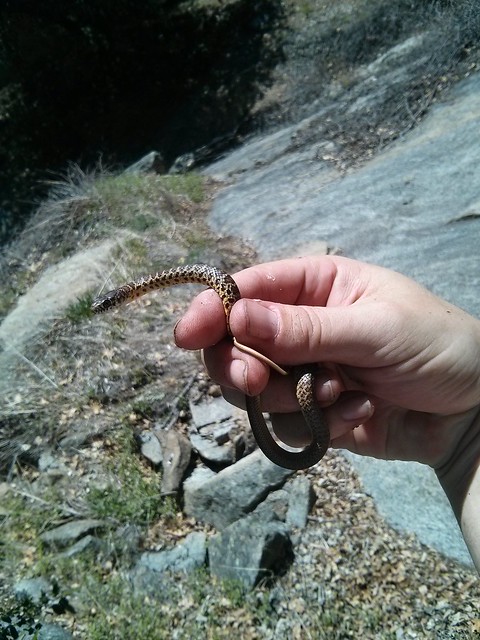
Lastly we had a few other snakes on the day. This young yellow-bellied racer that I managed to mis-identify originally. My mind went to gopher snake, even though I knew it wasn't right by body shape and size. This was likely born this year.

We also saw, but didn't photograph including three whipsnakes, and a couple of garternsnakes.

IMG_20140409_133020

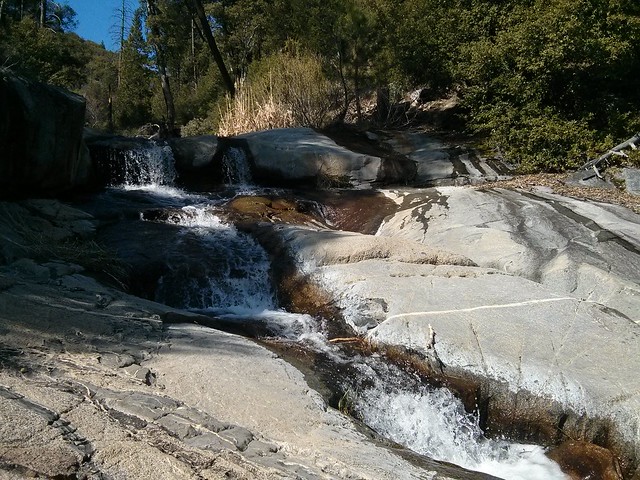
The scenery wasn't half bad either. Remember when California Creeks had water in them?

IMG_20140409_152607

Many thanks to Mitch for playing tour guide and sharing some of his spots with us. Looking forward to doing it again next Spring.

Wednesday, July 9, 2014

Calling All Frogs

A couple of videos of a male, Oophaga pumilio, calling. The female is in the upper part of the first video. Sorry about the dirty glass.

Isle Cristobal locale


Monday, October 15, 2012

Dart Frog Mate Choice

I first saw a paper on Dart Frog mating choice being discussed in a blog post journal club. Molecular Ecology.  Might be my favorite topic! F Epigenetics.

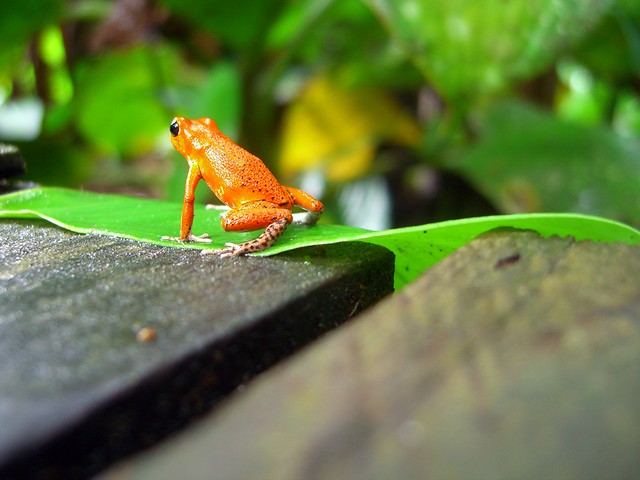
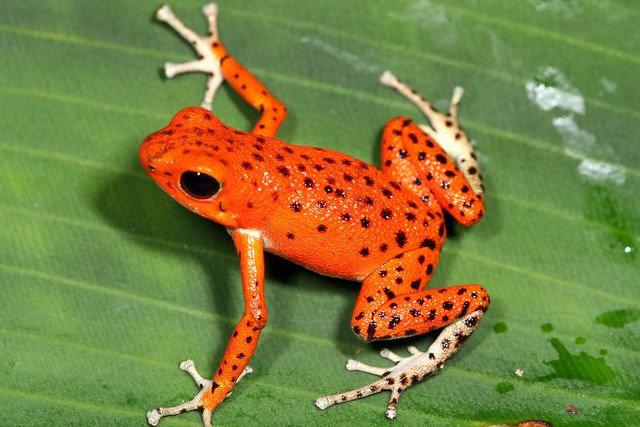
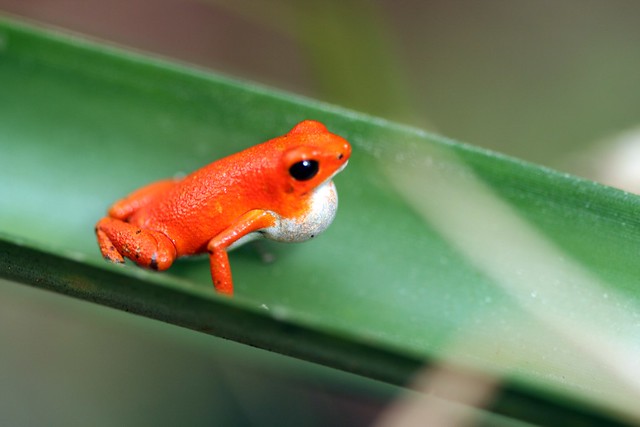
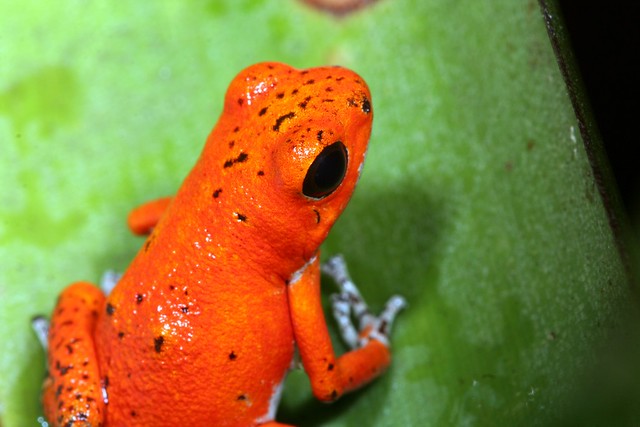
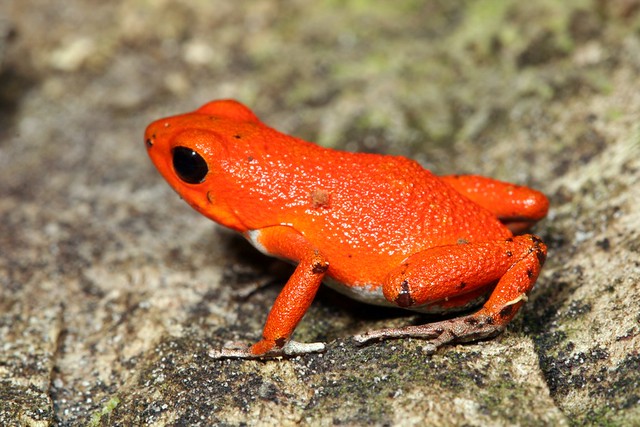
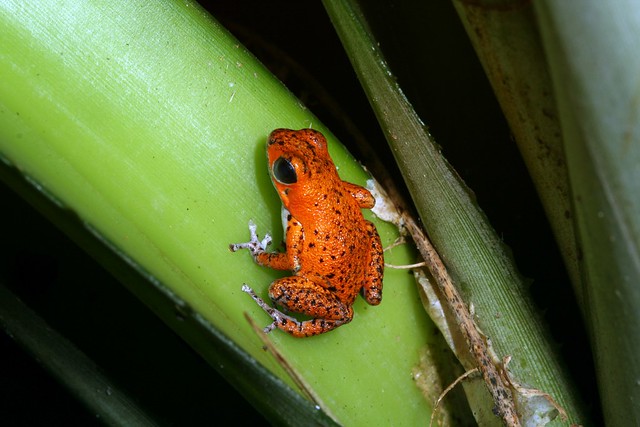
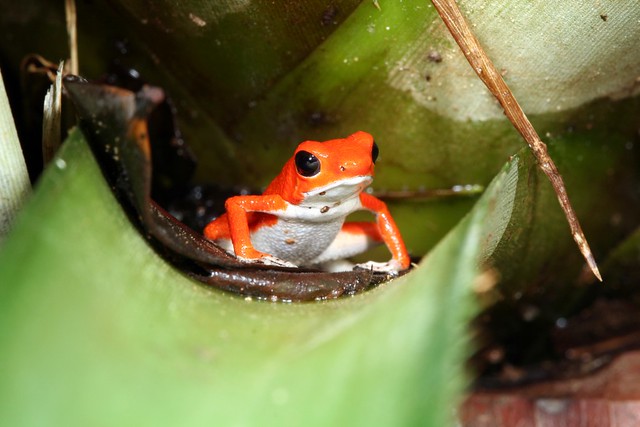
The first image in the blog post immediately struck me. It was of an Strawberry Dart Frog, Oophaga pumilio. Note that this frog used to be in the genus Dendrobates, most have accepted to the switch to its own genus Oophaga and I will use that. This one was a deep orange, with minimal small black spots and a nice creamy-white belly. It looked exactly like a small population that occurs on Isle Bastimentos in Panama. But not just on Isla Bastimentos, a population that only occurs on part of the island, a population that I have spent two different trips getting to know. A similar morph also occurs on Isle Solarte, but again is limited in its range on Bastimentos. As you move East and South on Bastimentos the frogs again get redder and have minimal to no spotting, but the creamy white belly gets greener and darker and climbs up from the feet up the legs. I went back and read the caption that stated
"Strawberry dart frog, Dendrobates pumilio, photographed at La Loma Jungle Lodge on Isla Bastimentos, Panama." 
And this was where I got excited. It was the same population I was thinking of. I too saw these guys on the property of La Loma Jungle Lodge. If you go west on the Island the frogs got brighter red and the black spots got much larger, almost like a lady bug. These large spotted frogs can also be yellow, greenish or blue, but always have large black spots. There are different morphs on this single Island, and many other morphs on other islands in the archipelago and on mainland Panama and Costa Rica.

I then realized that I met the senior investigator on this paper at La Loma, three or four years ago. If I remember right she was working through the MVZ at UC Berkeley and was recording calling male dart frogs at La Loma and was also doing some of the work that appears in this paper and a previous one at the Smithsonian Tropical Research Institute Field Station in Bocas. Dr Richards-Zawaki now has her own lab at Tulane University. I was able to talk to Cori when she got in from the field at the lodge. She invited my girlfriend and I out to the Field Station the next day before we took a flight to Panama City. She was kind enough to take over an hour giving us a tour of the station, including research done on coral reefs, birds and her own on dart frogs. She explained her experimental set-up and showed us her pairings on pumilio of different morphs (check Fig 1. in second paper cited below) and how she was testing for color selection in mating type choice and was doing experiments to determine if tadpoles raised by a parent of a different morph (she switched tadpoles and gave them to foster parents) chose mates based on what morph they were or what morph "they were raised as" (my words) ie. the morph of the foster parent.

Now this is where I am going to use this post to shamelessly plug some of my Oophaga pumilio, images taken 3 and 4 years ago at the La Loma Jungle Lodge.  The folks who own and run La Loma, Henry and Maggie, their son Lucho, and their head assistant Mr. Kelly are fantastic people and it is a great place to stay. It is a true Eco Lodge in that has only three cabins, not one of those giant fake Eco Lodges. They do a great job and the food is fantastic. The Maracuya custard is to die for. Oh to be a rich lab tech again. *sigh*

All images of wild frogs.
IMG_2611.JPG


IMG_2582.JPG


Dendrobates Pumilio Bastimentos


IMG_2890.JPG


IMG_2700.JPG


IMG_2607.JPG


IMG_2575.JPG


IMG_2706.JPG


Look for another Oophaga pumilio post in a couple of weeks.

Works Cited:
Richards-Zawacki, C. L., I. J. Wang and K. Summers. 2012. Mate choice and the genetic basis for color variation in a polymorphic dart frog: Inferences from a wild pedigree. Molecular Ecology, 21: 3879-3892.

Richards-Zawacki, C.L. and M. E. Cummings. 2011. Intraspecific reproductive character displacement in a polymorphic poison dart frog, Dendrobates pumilioEvolution, 65: 259-267.

Santos, J. C., L. A. Coloma, K. Summers, J. P. Caldwell, R. Ree, and D. C. Cannatella. 2009. Amazonian amphibian diversity is primarily derived from late Miocene Andean lineages. PLoS Biol. 7:448–461.


Friday, March 30, 2012

More Mojave

I somehow managed to stretch out Mojave Desert pictures for almost a year. It was not really my plan, I just kept forgetting to post pictures. But it is time to start thinking of this year's trip and it reminded me that it was time to finish up these posts.


IMG_6787.jpg


IMG_6778.jpg


IMG_6780.jpg


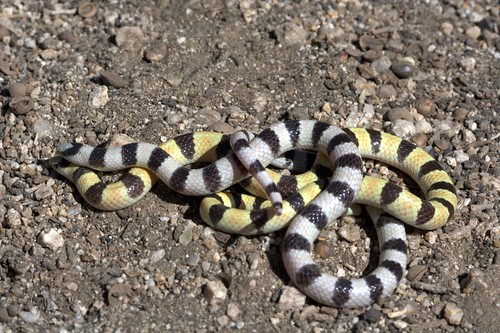
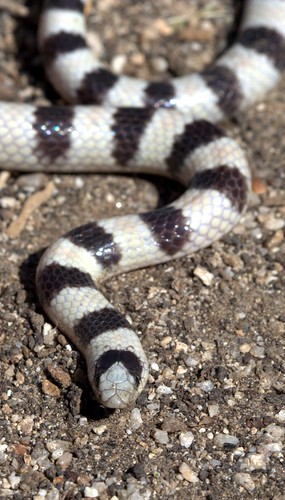
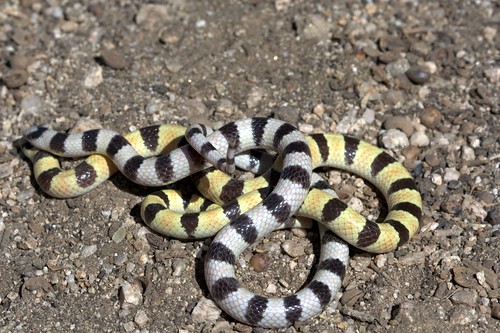
Here are two different Mohave Shovel-nosed snakes, Chionactis occipitalis occipitalis, with two very different color patterns. This is the first white shovel-nosed snake I have seen. Okay so it was the first yellow one I have seen too. This was a lifer species for me in 2011. That being said this was the first time others on the trip had seen a white banded shovel-nose too despite seeing dozens of yellows. They are much less common than the yellow guys.


IMG_6723.jpg


IMG_6722.jpg


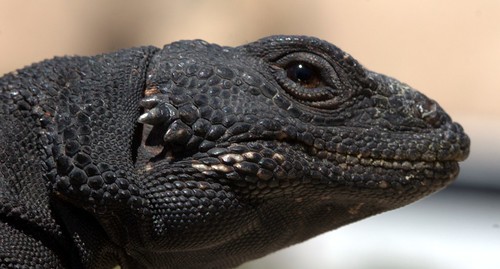
A plant eating dinosaur in hand. Common Chuckwalla, Sauromalus ater. Not a very pretty individual. When let go, he dove back into his rock crack but was back a few minutes later standing tall looking out for invading males.


IMG_6689.jpg


IMG_6694.jpg


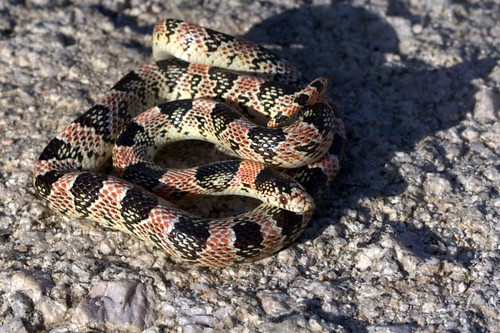
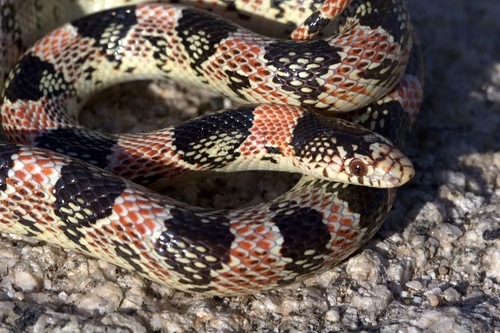
Lastly a Long-nosed Snake, Rhinocheilus lecontei. This was the most common snake we found outside of Sidewinders.  Turned up half a dozen or so Rhinocheilus. The lighting wasn't great for these images but I kind of like the long shadows.

One last desert post coming up that lacks animals but has some of that good ol' desert weirdness.

Tuesday, February 21, 2012

2012 Wish List


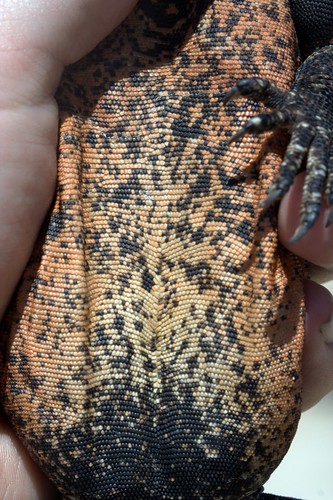
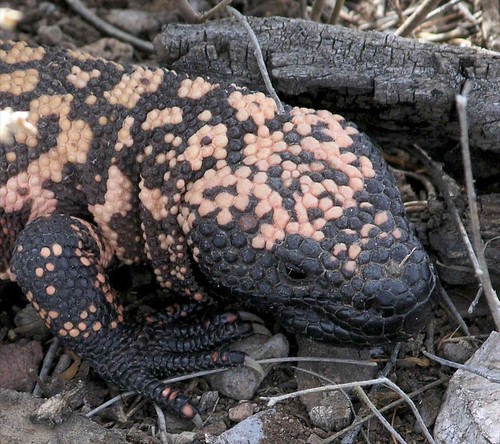
Gila Monster
Photo by Flickr user Lon&Queta used under a Creative Commons License

Instead of a New Year's Resolution to lose weight, or drink less beer (those two may go hand in hand and should get done) I decided to go with something I am more likely to accomplish.

In 2012 I am going to check off some species on my herp life list.  I am going to set an ambitious goal for 4 of the top 10. Here are the top 10 that I actually have the possibility of checking off.  I am not going to get to Hellbender or Pseudotriton habitat this year. These are not in strict order so I reserve the right to switch the order around as I deem fit.

(1) California Mt Kingsnake: Pyromelana zonata (embarrassing I don't have this yet, I know)

(2) Santa Cruz Long-toe Salamander:  Ambystoma macrodactylum croceum

(3) Gila Monster: Heloderma suspectum


(4) Large-blotched Salamander, Ensatina eschscholtzii klauberi: I will be in San Diego in March if any one has tips on this guy.

(5) Black-headed Snake, Tantilla sp.: I am not picky and I will take any species.

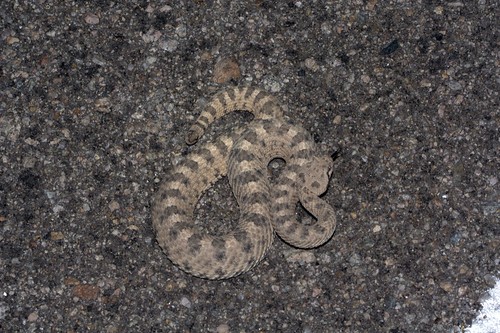
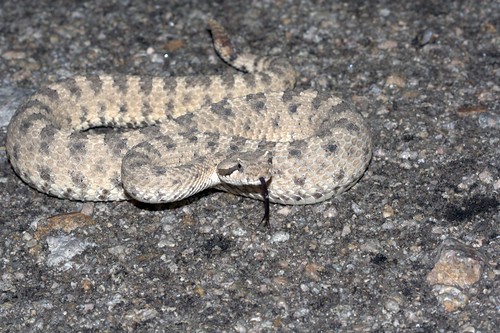
(6) Speckled Rattlesnake: Crotalus mitchellii

(7) Regal Horned Lizard, Phrynosoma solare: Not sure if I will get far enough South but it is going on the list

(8) Black-tailed Rattlesnake: Crotalus molossus

(9) Western Spadefoot Toad: Spea hammondii

(10a) Variable Groundsnake, Sonora semiannulata semiannulata (Another mystifying miss)


(10b) Green Toad: Anaxyrus debilis

I cheated and went with 10a and 10b because I could not decide what to leave off the list, yet wanted to give myself a chance at getting 4. If forced I might narrow the list down by cutting one of the two Crotalus species. If I don't make it to Arizona as planned, this is going to be a really tough goal to reach.

Last year I got the biggies Ambystoma macrodactylum sigillatum, Chionactis occipitalis occipitalis,
and Anniella pulchra. Which reminds me that I never posted on either of these latter great finds. The Shovel-nose was found in the Mojave and the Legless lizard was found with the guidance of Randomtruth.

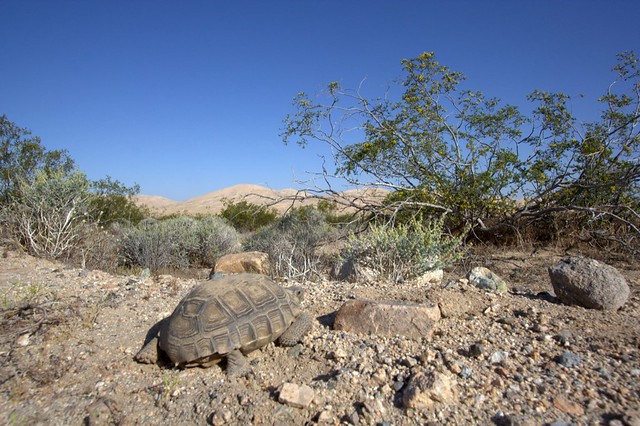
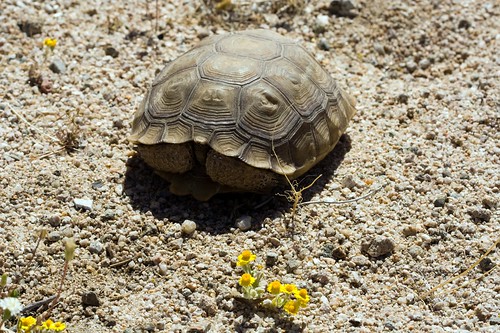
Two years ago, the biggest find was California Desert Tortoise. I went from seeing none to seeing both a male and a female, and a yearling.  Desert tortoises showed their faces again last year (this post  includes the pictures from 2010 as well as 2011).

What is on your 2012 wish list?  I will even accept modern dinosaurs (aka birds).

Wednesday, September 7, 2011

Dune Critters

I forgot I still owe you all more desert photos.  Hope you still care enough to take a look and can make it through this looooooong post.

IMG_6705.CR2.jpg


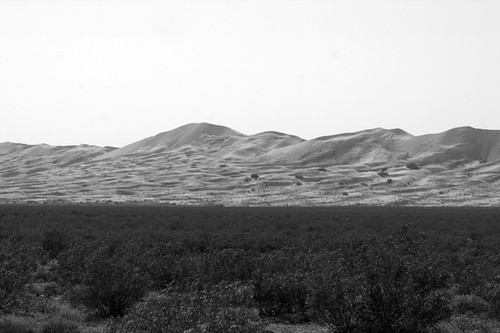
In case you weren't able to guess where we found this previous desert tortoise at the end of the post, it was in the Kelso Dunes.


IMG_6639-1.jpg


Speaking of the Kelso Dunes, Randomtruth, reminded me of this video from the BBC's "Life in the Undergrowth," that was filmed in our dunes.  Welcome to our playground Sir Attenborough.  The video tells the fascinating life history of the blister beetle, Meloe franciscanus, which can be seen running around frantically all over the dunes and on the road into them.


Now back to the pictures and our story of the dunes.

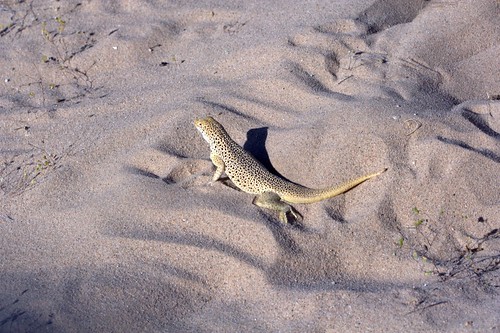
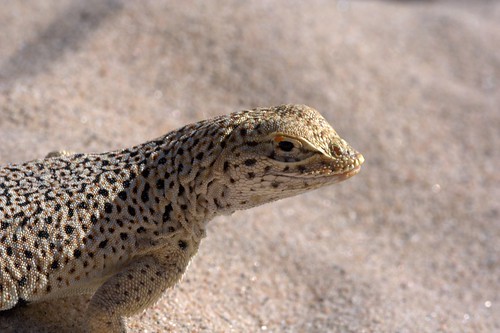
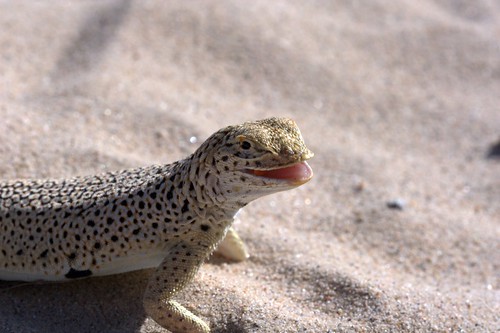
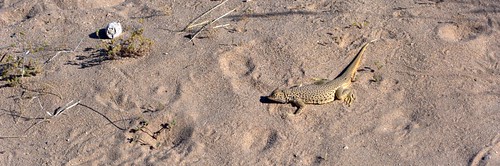
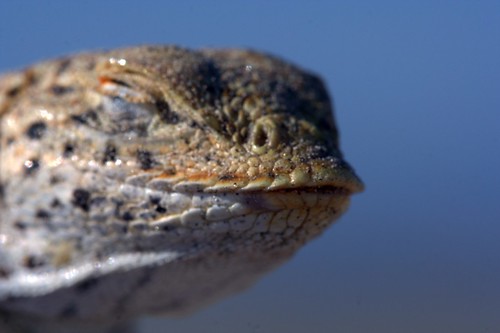
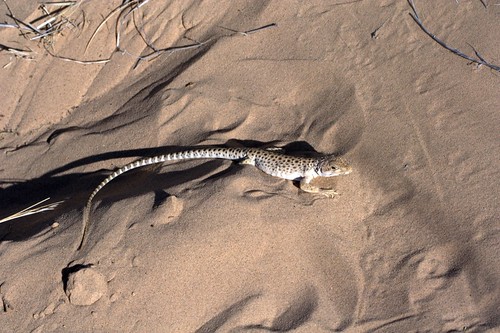
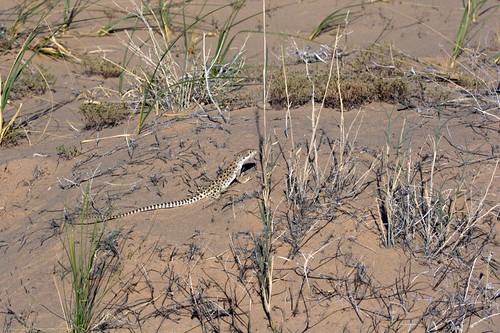
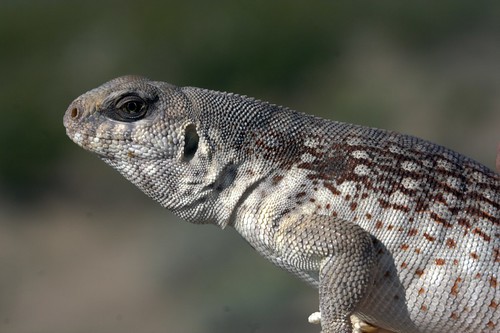
Uma are a species of lizard known by the common moniker, fringe-toed lizard. They are endemic to a few isolated dunes in the deserts of the American Southwest and Baja California. The Mojave species is Uma scoparia.  These guys are quite easy to see running around the dunes, but unless you are looking hard you usually only see a tail in the air as they speed away from you.  Early in the day before they have had a chance to warm all the way up they move a little slower and are easier to sneak up on and photograph.


IMG_6673.jpg

IMG_6657.jpg

IMG_6648.jpg

IMG_6652.jpg

IMG_6720.jpg


While pictures are nice you have to see these guys move to really appreciate them.  Here is a short video of a fringe-toed lizard in a PBS Nature special on Death Valley.


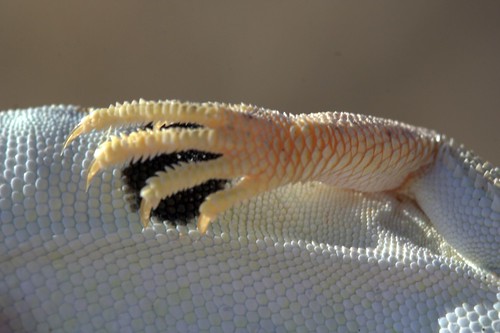
Here are a couple of close-ups to show the adaptations that make them swim through the sand.


IMG_6670.jpg
The fringe-toes that give Umas their common name. A little out of focus, sorry.


IMG_6667.jpg
A snout made for diving into the sand

IMG_6662.jpg
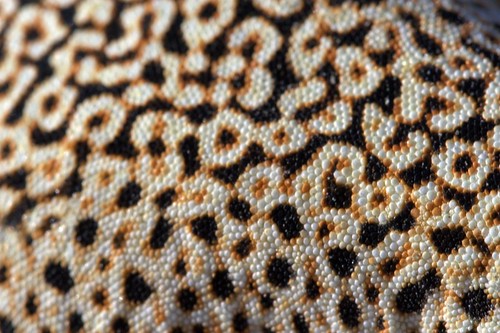
Pretty patterns don't really help them swim in sand but are nice to look at anyways


John and I spent well over an hour with the sun radiating off of the white sands tracking a sidewinder.  Most every night the wind blows and erases the day's tracks giving a fresh slate every morning.  This allows for excellent tracking. We followed its tracks losing them and refinding them, losing and refinding, over and over again for hundreds of meters.  The rest of the group would wander over to check our progress get bored and move on.  Come back a bit later to see if the crazy men had found their prize and move along again. Unlike in years past we had to give up, out of water, hotter than hell and embarrassed at our defeat.


IMG_6679.jpg
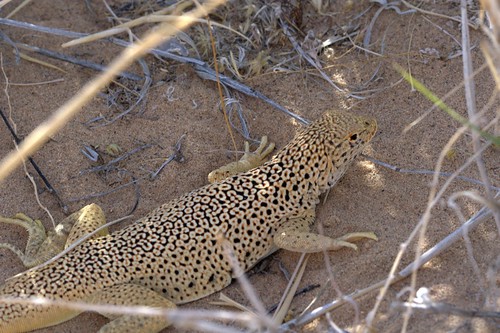
Long-nosed leopard lizard, Gambelia wislizenii


IMG_6659.jpg
Long-nosed leopard Lizard, Gambelia wislizenii

IMG_6719.jpg
Desert Iguana, Dipsosaurus dorsalis


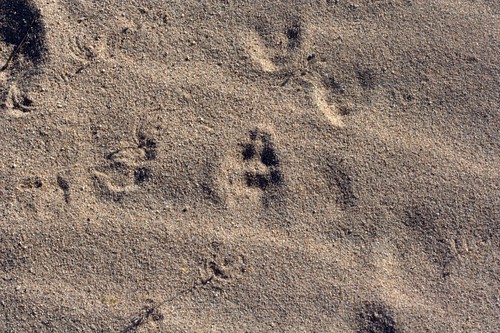
Along the way we found many a coyote track, lizard and snake tracks, rodent tracks and a veritable kit fox highway.

IMG_6674.jpg


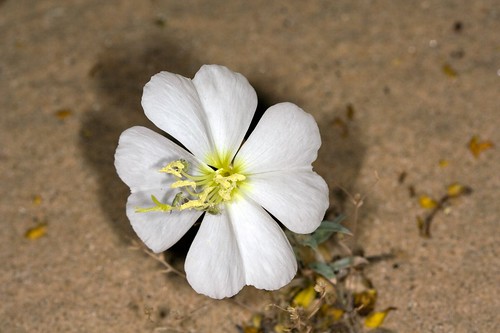
It is quite fun to look at all the tracks and imagine all these creatures plying their way through the dunes overnight and early morning.  I just love the idea of trotting Canidae out on the prowl before it gets hot, prancing among the dune evening primrose.


EBV-5196.jpg
Oenothera deltoides

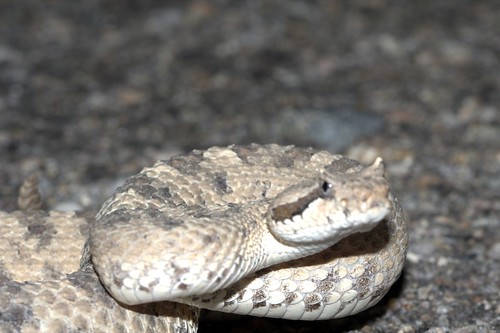
Despite being shook by the Crotalus cerastes, all was not lost.  We ended up find nine of them on the road during our two-hour or so night drive.  I am not sure I would have put in all that time tracking if I had known our best cerastes night ever lay ahead of us, but I do really get enjoyment out of tracking in the sand.


IMG_6772.jpg


IMG_6770.jpg


IMG_6767.jpg


I will leave you with one campfire lunch picture from the day.


IMG_6627-1.jpg

Tuesday, July 12, 2011

Desert Tortoises

I have posted Desert Trip photos about as fast as the desert tortoise crosses the road, probably even slower.

RandomTruth did a great run-down of the species we saw and shared some great pictures, so be sure to check his post out.  I also recommend checking out his Flickr account linked in the post for some awesome flower pictures.  It was such a treat to have a botanist on the trip with us to tell us what each of the 70+ flowers we saw were. In the past we were confined to "That's a pretty flower." "Have we seen this one yet? It is pretty." Randomtruth taught us herpers a lot about the flora of the Mojave.

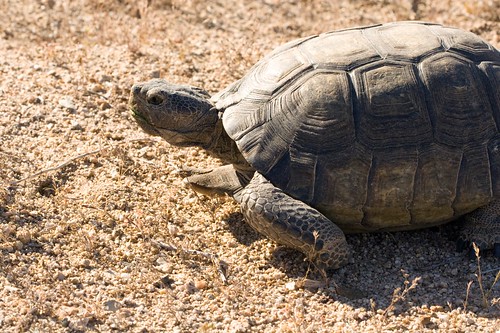
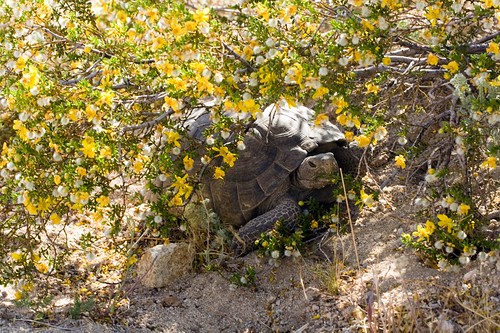
Speaking of crossing the road, that is the only time you should ever touch a desert tortoise.  If you find a tortoise on the road, you should pick it up lifting it no more than 6" off the ground, still very upright and move it 50 feet or so off of the road and make sure it keeps heading away from the road.  It is important to do it in this manner so that the tortoise does not expel is bladder in defense and lose all that precious water. This is the only time you are legally allowed to touch these guys and CTC strongly recommends following this law.  On our 2011 trip, we found three different tortoises.  One male, one female, and one sex undetermined.  See, unless they are pretty big it is tough to tell sex without looking at the bottom of the shell or carapace which is slightly more concave in males.  They notch between the anal scutes may also have a different angle if you know what you are looking for.  But since we cannot look at the ventral carapace of desert tortoises because we cannot pick them up the only thing we can really determine sex with is tail length.  Males have a longer tail as it has to house their hemipene.

Here are a the three tortoises we found in the Eastern Mojave.

Moving across the road all on his own

Off the road and still moving faster than I can post

Found a good hiding spot


Creosote flowers on the lips

What a backdrop for this sweet gal. Can you guess where we found her?

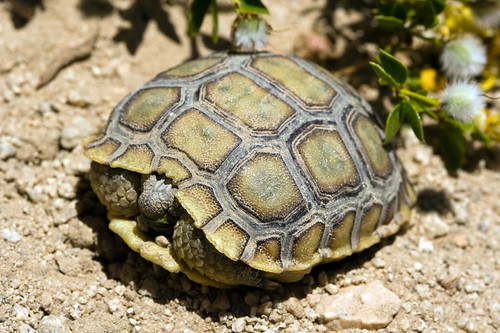
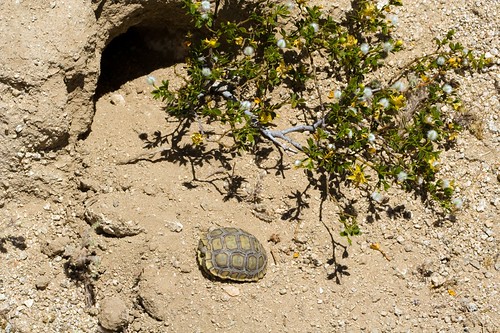
I did not have a blog during the time of our 2010 trip so I will include pictures of the three tortoises we found in 2010.  In 2010 we found one male that had to be moved off of the road, a huge female almost right in our camp and a very small yearling.  The yearling was spotted from the car in the side of a bank as we drove in reverse because we had hit an impassable section of road with no turn around point.  Talk about some good bizarre luck!.

EBV-5234.jpg
Male after moving it off the road.  First wild desert tortoise for me.


EBV-5372.jpg
Female roaming near camp.


EBV-5350.jpg
Big Female hiding in the creosote a few hours before the above picture above was taken


EBV-5332.jpg
Yearling hiding from the monkeys


EBV-5338.jpg
Yearling near hide spot

EBV-5238.jpg
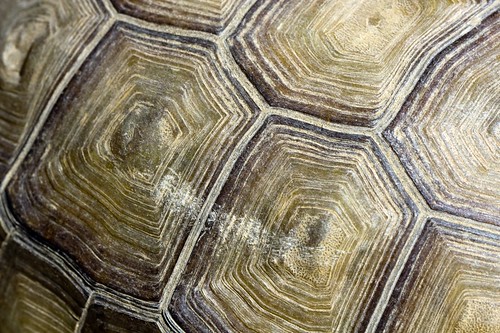
Shell close-up

If you want to familiarize yourself better with tortoise anatomy I recommend the aptly names Anatomy of a Tortoise, by J. Stuart Thomson.  I got this book about 3 months ago from the publisher, but it looks like it has gone out of print and now costs $64-222!.  Maybe the library or peruse my copy if you are in my neck of the woods?